


A Conceptual Model to Assess Stress-Associated Health Effects of Multiple Ecosystem Services Degraded by Disaster Events in the Gulf of Mexico and Elsewhere
- PMID: 30596189
- PMCID: PMC6309401
- DOI: 10.1002/2016GH000038
A Conceptual Model to Assess Stress-Associated Health Effects of Multiple Ecosystem Services Degraded by Disaster Events in the Gulf of Mexico and Elsewhere
Abstract
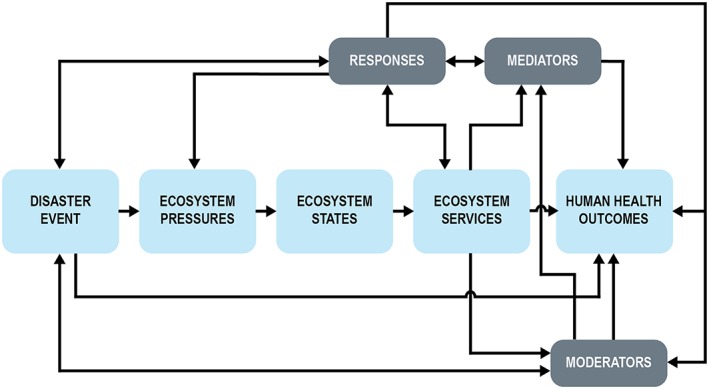
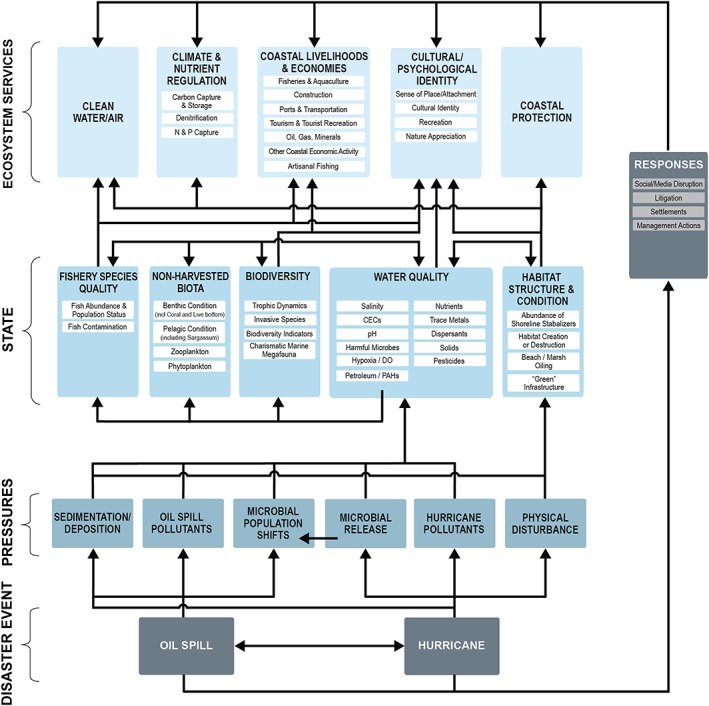
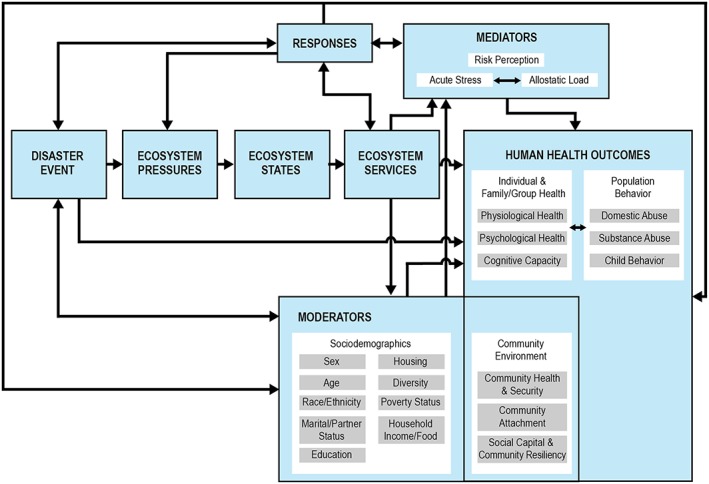
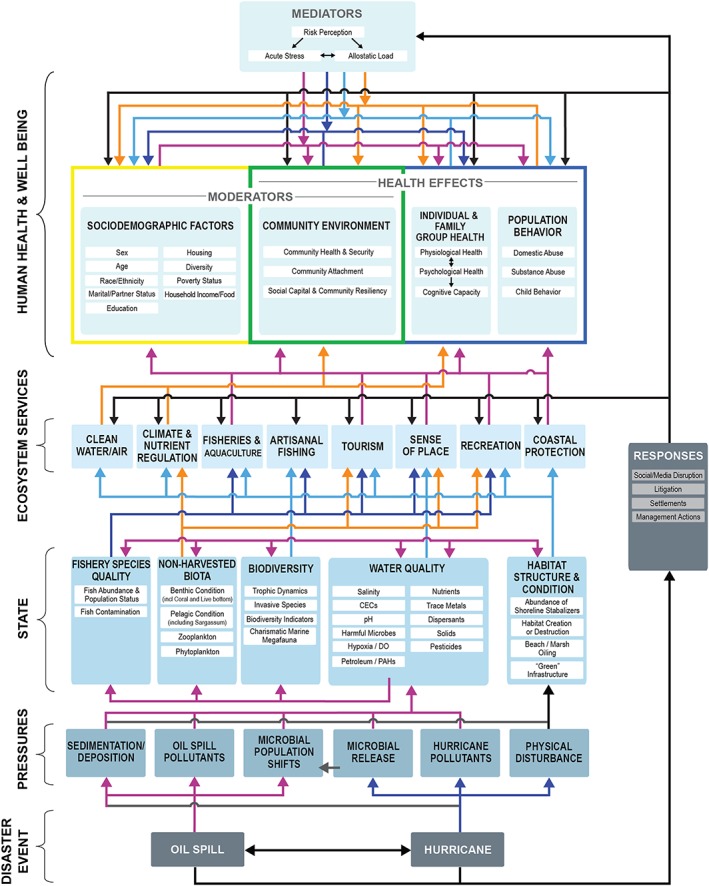
Few conceptual frameworks attempt to connect disaster-associated environmental injuries to impacts on ecosystem services (the benefits humans derive from nature) and thence to both psychological and physiological human health effects. To our knowledge, this study is one of the first, if not the first, to develop a detailed conceptual model of how degraded ecosystem services affect cumulative stress impacts on the health of individual humans and communities. Our comprehensive Disaster-Pressure State-Ecosystem Services-Response-Health (DPSERH) model demonstrates that oil spills, hurricanes, and other disasters can change key ecosystem components resulting in reductions in individual and multiple ecosystem services that support people's livelihoods, health, and way of life. Further, the model elucidates how damage to ecosystem services produces acute, chronic, and cumulative stress in humans which increases risk of adverse psychological and physiological health outcomes. While developed and initially applied within the context of the Gulf of Mexico, it should work equally well in other geographies and for many disasters that cause impairment of ecosystem services. Use of this new tool will improve planning for responses to future disasters and help society more fully account for the costs and benefits of potential management responses. The model also can be used to help direct investments in improving response capabilities of the public health community, biomedical researchers, and environmental scientists. Finally, the model illustrates why the broad range of potential human health effects of disasters should receive equal attention to that accorded environmental damages in assessing restoration and recovery costs and time frames.
Keywords: 0400 Biogeosciences; 0439 (Ecosystems, structure and dynamics); 4300 Natural Hazards: 4304 (Natural hazards, oceanic); 4322 (Natural hazards, health impacts); 4335 (Natural hazards, disaster management); Conceptual model; Ecosystem services; Environmental disasters; Gulf of Mexico; Human health; Stress and health problems.
Conflict of interest statement
The authors declare no conflicts of interest relevant to this study.
Figures
References
-
- Abramson, D. M. , Grattan L. M., Mayer B., Colten C. E., Arosemena F. A., Bedimo‐Rung A., and Lichtveld M. (2015), The resilience activation framework: A conceptual model of how access to social resources promotes adaptation and rapid recovery in post‐disaster settings, J. Behav. Health Serv. Res., 42(1), 42–57, doi:10.1007/s114114-014-9420-2. - DOI - PMC - PubMed
-
- Adeola, F. O. , and Picou J. S. (2012), Race, social capital, and the health impacts of Katrina: Evidence from the Louisiana and Mississippi Gulf Coast, Res. Hum. Ecol., 19(1), 10–24.
-
- Adeola, F. O. , and Picou J. S. (2014), Social capital and the mental health impacts of Hurricane Katrina: Assessing long‐term patterns of psychosocial distress, IJMED, 32(1), 121–156.
Grants and funding
LinkOut - more resources
Full Text Sources