


Parallel but independent reduction of emotional awareness and corpus callosum connectivity in older age
- PMID: 30596756
- PMCID: PMC6312250
- DOI: 10.1371/journal.pone.0209915
Parallel but independent reduction of emotional awareness and corpus callosum connectivity in older age
Abstract
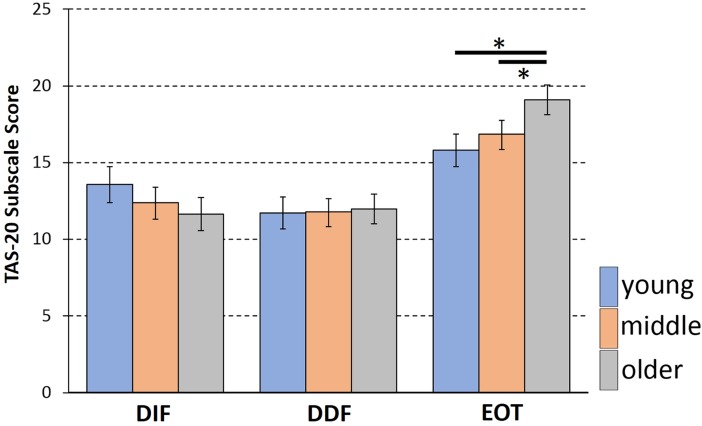
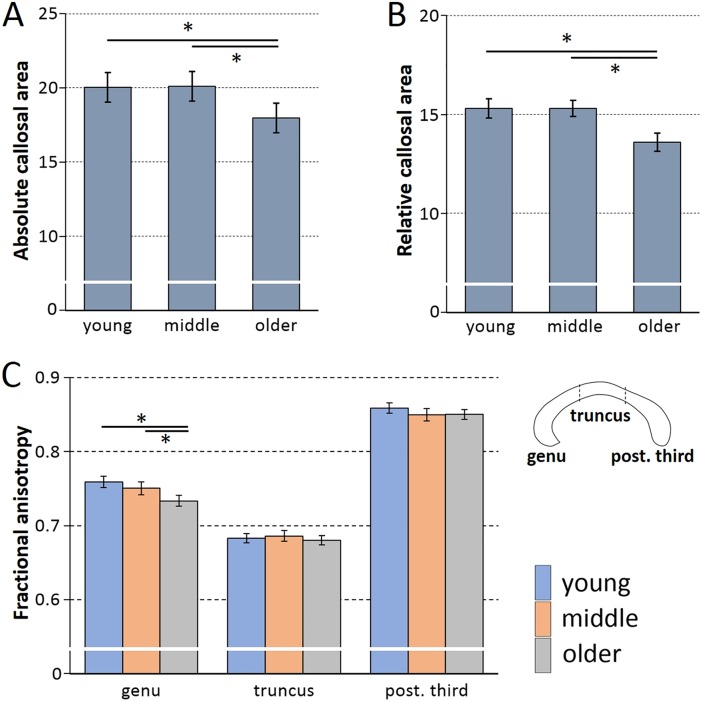
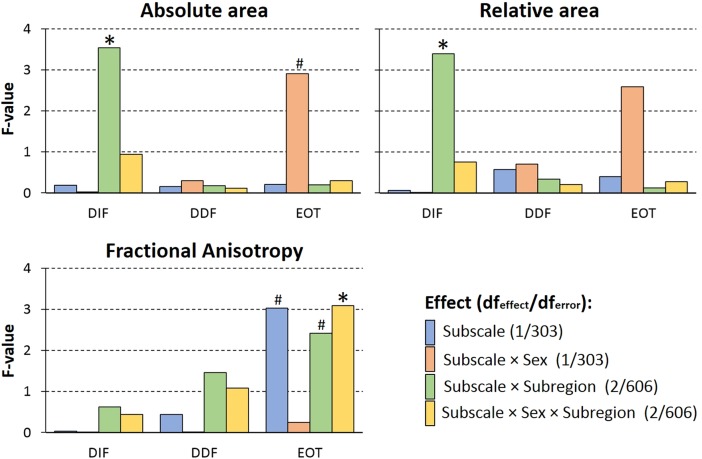
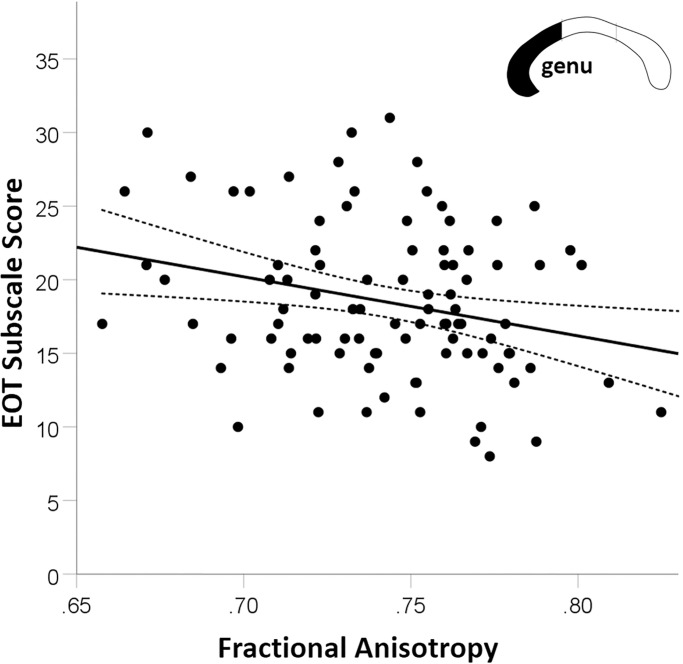
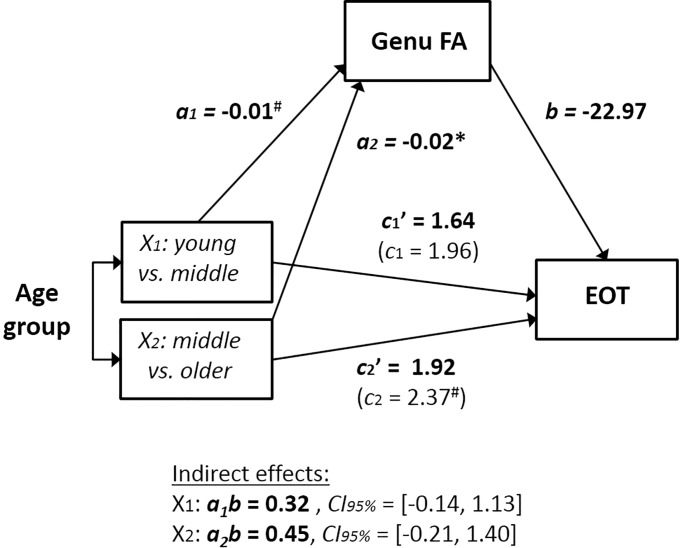
Differential functional specialization of the left and right hemispheres for linguistic and emotional functions, respectively, suggest that interhemispheric communication via the corpus callosum is critical for emotional awareness. Accordingly, it has been hypothesized that the age-related decline in callosal connectivity mediates the frequently demonstrated reduction in emotional awareness in older age. The present study tests this hypothesis in a sample of 307 healthy individuals between 20-89 years using combined structural and diffusion-tensor magnetic resonance imaging (MRI) of the corpus callosum. As assumed, inter-hemispheric connectivity (midsagittal callosal area and thickness, as well as fractional anisotropy, FA) and emotional awareness (i.e., increase in externally-oriented thinking, EOT; assessed with the Toronto Alexithymia Scale, TAS-20) were found to be reduced in older (> 60 years) compared to younger participants. Furthermore, relating callosal measures to emotional awareness, FA in the genu of the corpus callosum was found to be negatively correlated with EOT in male participants. Thus, "stronger" structural connectivity (higher FA) was related with higher emotional awareness (lower EOT). However, a formal mediation analysis did not support the notion that age-related decline in emotional awareness is mediated by the corpus callosum. Thus, the observed reduction of emotional awareness and callosal connectivity in older age likely reflects parallel but not inter-dependent processes.
Conflict of interest statement
The authors have declared that no competing interests exist.
Figures
References
-
- Coffey E, Berenbaum H, Kerns J. The dimensions of emotional intelligence, alexithymia, and mood awareness: Associations with personality and performance on an emotional stroop task. Cognition & Emotion. 2003;17(4):671–9. - PubMed
-
- Gohm CL, Clore GL. Individual differences in emotional experience: Mapping available scales to processes. Personality and Social Psychology Bulletin. 2000; 26(6):679–97.
Publication types
MeSH terms
LinkOut - more resources
Full Text Sources
Medical
Research Materials
