Silicone breast implant modification review: overcoming capsular contracture
- PMID: 30598837
- PMCID: PMC6302391
- DOI: 10.1186/s40824-018-0147-5
Silicone breast implant modification review: overcoming capsular contracture
Abstract
Background: Silicone implants are biomaterials that are frequently used in the medical industry due to their physiological inertness and low toxicity. However, capsular contracture remains a concern in long-term transplantation. To date, several studies have been conducted to overcome this problem. This review summarizes and explores these trends.
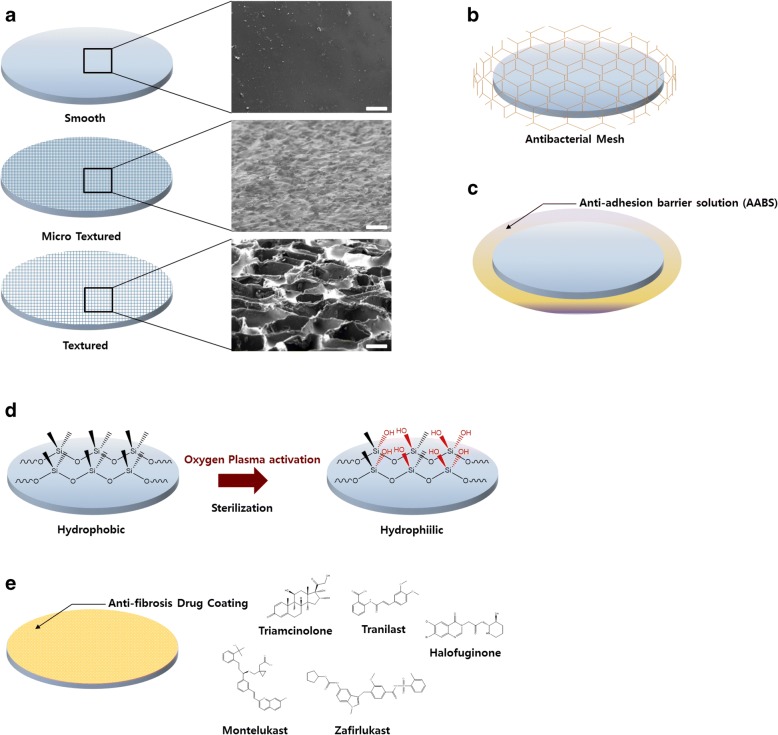
Main body: First, we examined the overall foreign body response from initial inflammation to fibrosis capsule formation in detail and introduced various studies to overcome capsular contracture. Secondly, we introduced that the main research approaches are to inhibit fibrosis with anti-inflammatory drugs or antibiotics, to control the topography of the surface of silicone implants, and to administer plasma treatment. Each study examined aspects of the various mechanisms by which capsular contracture could occur, and addressed the effects of inhibiting fibrosis.
Conclusion: This review introduces various silicone surface modification methods to date and examines their limitations. This review will help identify new directions in inhibiting the fibrosis of silicone implants.
Keywords: Capsular contracture; Fibrosis; Foreign body reaction; Inflammation; Modification; Silicone implant.
Conflict of interest statement
Not applicableNot applicableThe authors declare that they have no competing interests.Springer Nature remains neutral with regard to jurisdictional claims in published maps and institutional affiliations.
Figures
References
-
- Malahias M, Jordan D, Hughes L, Hindocha S, Juma A. A literature review and summary of capsular contracture: An ongoing challenge to breast surgeons and their patients. International Journal of Surgery Open. 2016;3:1–7. doi: 10.1016/j.ijso.2016.04.001. - DOI
-
- Cronin TD. Augmentation mammaplasty: a new" natural feel" prosthesis. Transact, III Internat Congr Plast Surg. 1964.
Publication types
LinkOut - more resources
Full Text Sources