. 2019 Jan 2;14(1):e0209221.
doi: 10.1371/journal.pone.0209221. eCollection 2019.

Characterization of novel lignocellulose-degrading enzymes from the porcupine microbiome using synthetic metagenomics

Affiliations

Characterization of novel lignocellulose-degrading enzymes from the porcupine microbiome using synthetic metagenomics

Mackenzie Thornbury et al. PLoS One. .

Abstract

Plant cell walls are composed of cellulose, hemicellulose, and lignin, collectively known as lignocellulose. Microorganisms degrade lignocellulose to liberate sugars to meet metabolic demands. Using a metagenomic sequencing approach, we previously demonstrated that the microbiome of the North American porcupine (Erethizon dorsatum) is replete with genes that could encode lignocellulose-degrading enzymes. Here, we report the identification, synthesis and partial characterization of four novel genes from the porcupine microbiome encoding putative lignocellulose-degrading enzymes: β-glucosidase, α-L-arabinofuranosidase, β-xylosidase, and endo-1,4-β-xylanase. These genes were identified via conserved catalytic domains associated with cellulose- and hemicellulose-degradation. Phylogenetic trees were created for each of these putative enzymes to depict genetic relatedness to known enzymes. Candidate genes were synthesized and cloned into plasmid expression vectors for inducible protein expression and secretion. The putative β-glucosidase fusion protein was efficiently secreted but did not permit Escherichia coli (E. coli) to use cellobiose as a sole carbon source, nor did the affinity purified enzyme cleave p-Nitrophenyl β-D-glucopyranoside (p-NPG) substrate in vitro over a range of physiological pH levels (pH 5-7). The putative hemicellulose-degrading β-xylosidase and α-L-arabinofuranosidase enzymes also lacked in vitro enzyme activity, but the affinity purified endo-1,4-β-xylanase protein cleaved a 6-chloro-4-methylumbelliferyl xylobioside substrate in acidic and neutral conditions, with maximal activity at pH 7. At this optimal pH, KM, Vmax, and kcat were determined to be 32.005 ± 4.72 μM, 1.16x10⁻⁵ ± 3.55x10⁻⁷ M/s, and 94.72 s-1, respectively. Thus, our pipeline enabled successful identification and characterization of a novel hemicellulose-degrading enzyme from the porcupine microbiome. Progress towards the goal of introducing a complete lignocellulose-degradation pathway into E. coli will be accelerated by combining synthetic metagenomic approaches with functional metagenomic library screening, which can identify novel enzymes unrelated to those found in available databases.


Conflict of interest statement

The authors have declared that no competing interests exist.

Figures
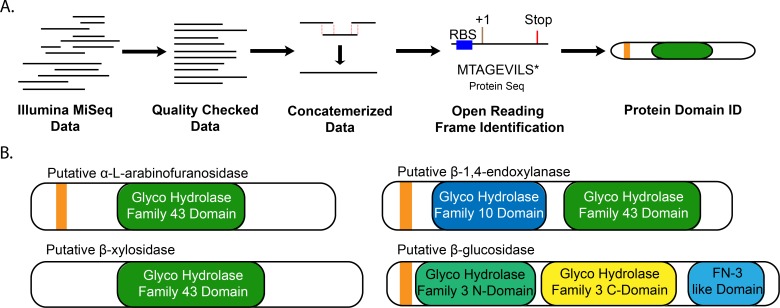
Fig 1
Fig 1. Identification of four genes from the porcupine microbiome with putative cellulose- and/or hemicellulose-degrading activity using a metagenomic sequencing pipeline.
The bioinformatic pipeline (A) began with Illumina MiSeq data previously collected from a porcupine fecal DNA sequencing project [14]. Reads were checked for quality and trimmed, concatemerized via MegaHit [15], and open reading frames were identified using Prodigal [16]. Protein sequences of interest were identified by pHMMER [17] using various protein databases and were selected for matches of interest based on e-value selection. (B) Top putative microbial enzymes identified by the metagenomic sequencing pipeline; putative signal sequences are shown in orange and predicted conserved protein domains are shown.
Fig 2
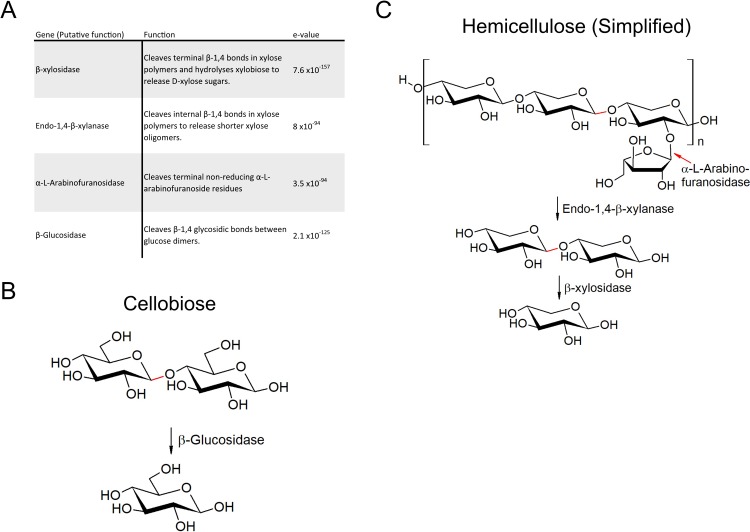
Fig 2. Four putative cellulose-/hemicellulose-degrading enzymes identified from the porcupine microbiome.
A) Functional description of putative enzymes with corresponding e-values. The e-value is a measure of confidence, with lower values denoting higher confidence. B) The catabolic pathway that converts cellobiose to glucose. C) The catabolic pathway that converts hemicellulose to xylose.
Fig 3
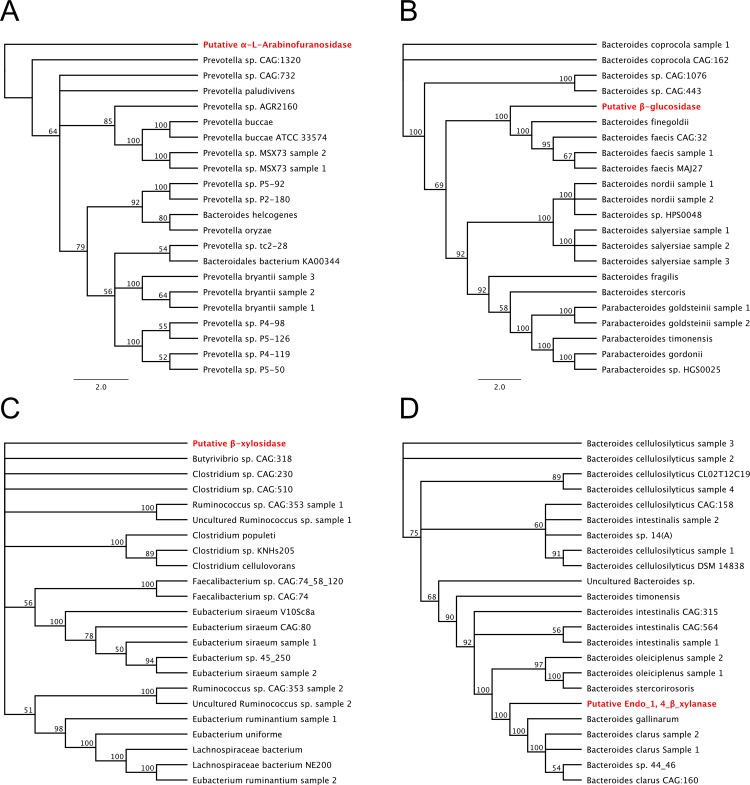
Fig 3. Phylogenetic analysis of putative enzymes.
Phylogenetic analysis of A) α-L-arabinofuranosidase, B) β-glucosidase, C) β-xylosidase, and D) Endo-1,4-β-xylanase were created from primary amino acid sequence that were aligned using ClustalW and generated using RAxML 7.2.8. Sequences were taken from highly related proteins from the BLASTP database. Trees were replicated 100 times for statistical strength with bootstrap values presented at each node. Putative enzymes are highlighted in red.
Fig 4
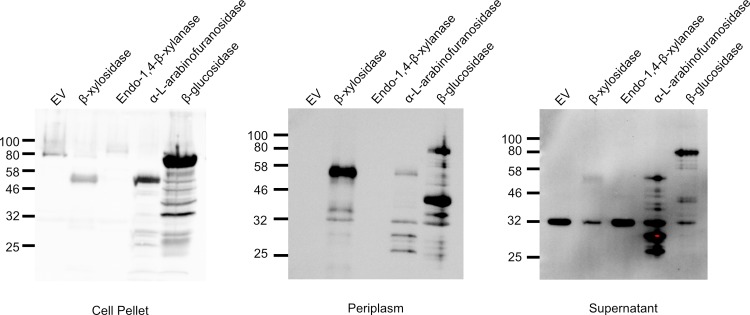
Fig 4. Secretion assay of putative enzymes.
Log-phase BL21(DE3) E. coli containing a putative enzyme or empty vector control were treated with 0.1 mM IPTG to induce T7-promoter-dependent transcription. After 3 hours, A) cells were lysed, B) cells were treated with cold osmotic shock to extract periplasmic protein fraction, or C) the supernatant was filtered, and protein was precipitated by addition of TCA. All protein fractions were prepared for SDS-PAGE and analyzed by western blot with an anti-His-antibody.
Fig 5
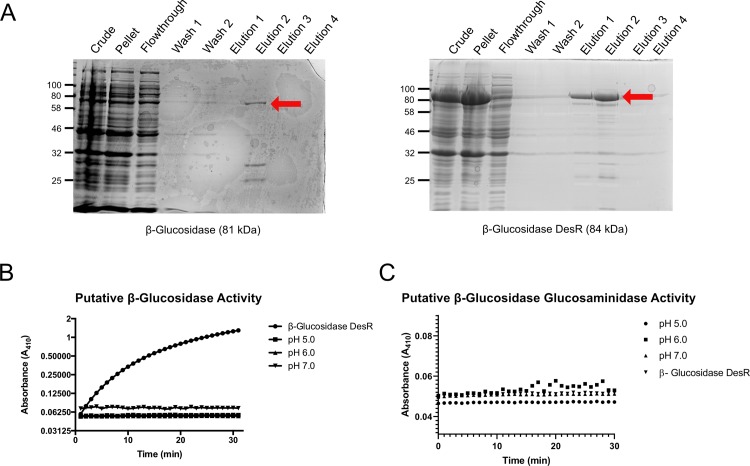
Fig 5. Purification and characterization of β-glucosidase.
A) Putative β-glucosidase and positive control β-glucosidase DesR (marked with red arrows) were affinity purified by 6xHis purification. B) Activity of the putative β-glucosidase against p-NPG at pH 5.0, 6.0 and 7.0; positive control β-glucosidase DesR was only tested at pH 7.0. C) Activity of putative β-glucosidase against p-NP-N-acetylglucosamine at pH 5.0, 6.0, and 7.0. Negative control β-glucosidase DesR was only tested at pH 7.0.
Fig 6
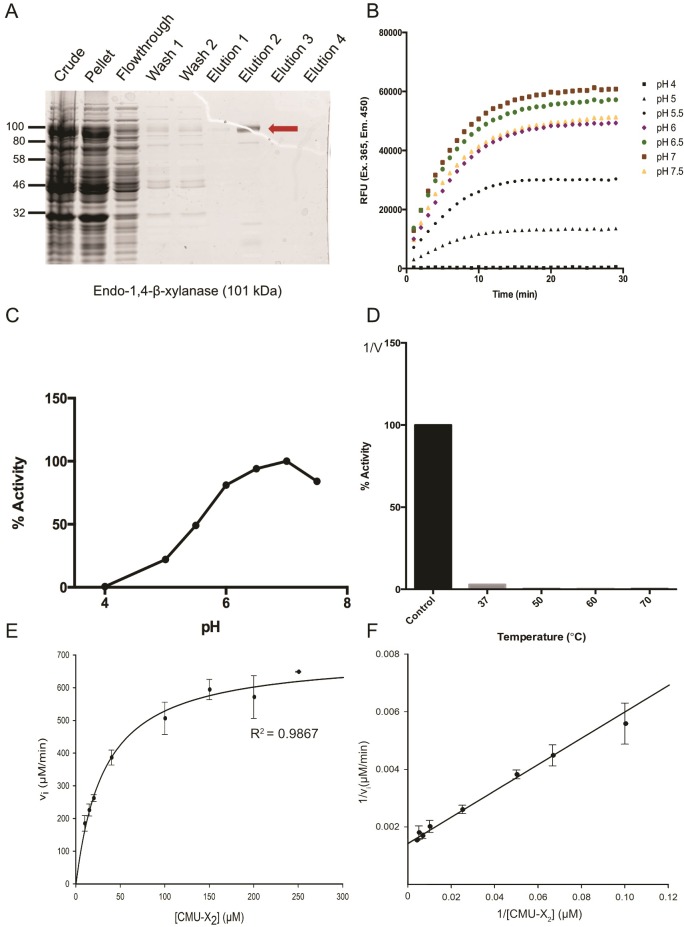
Fig 6. Characterization of endo-1,4- β-xylanase.
A) Putative endo-1,4-β-xylanase was purified by 6xHis purification. B) 0.6 μg of endo-1,4-β-xylanase was combined with 100 μM of CMU-X2 to assess enzyme activity at different pH values. Samples were assessed via fluorescence in sodium citrate buffer (pH 4, 5, 5.5, 6) or sodium phosphate buffer (pH 6.5, 7, 7.5). A reading of raw fluorescent units (450 nm) was taken every minute for 30 minutes at 37°C. C) Relative activity of endo-1,4-β-xylanase at different pH levels compared to pH 7. D) Thermostability of endo-1,4-β-xylanase was assessed. Samples containing 0.6 μg of endo-1,4-β-xylanase in 50 mM sodium phosphate buffer were incubated for 30 minutes at 37°C, 50°C, 60°C, or 70°C before addition of 100 μM of CMU-X2 and fluorescence detection. Control is unincubated endo-1,4-β-xylanase. E) Michaelis-Menten plot was generated with initial reaction rate against substrate concentrations above at 37°C, pH 7. F) Lineweaver-Burk plot was used to generate kinetic constants KM, Vmax, and kcat.

References

    1. Kumar A, Kushal S, Saraf SA, Singh JS. Microbial biofuels: A solution to carbon emissions and energy crisis. Front Biosci-Landmrk. 2018;23: 1789–1802. - PubMed
    1. Hasunuma T, Okazaki F, Okai N, Hara KY, Ishii J, Kondo A. A review of enzymes and microbes for lignocellulosic biorefinery and the possibility of their application to consolidated bioprocessing technology. Bioresour Technol. 2013;135: 513–22. 10.1016/j.biortech.2012.10.047 - DOI - PubMed
    1. Hongzhang C. Biotechnology of Lignocellulose: Theory and Practice. [Internet]. 1st ed Dordrecht: Springer Netherlands; c2014. http://www.springer.com/gp/book/9789400768970. 10.1007/978-94-007-6898-7 - DOI
    1. Ravindran R, Jaiswal AK. A comprehensive review on pre-treatment strategy for lignocellulosic food industry waste: Challenges and opportunities. Bioresour Technol. 2016;199: 92–102. 10.1016/j.biortech.2015.07.106 - DOI - PubMed
    1. Wi SG, Cho EJ, Lee DS, Lee SJ, Lee YJ, Bae HJ. Lignocellulose conversion for biofuel: a new pretreatment greatly improves downstream biocatalytic hydrolysis of various lignocellulosic materials. Biotechnol Biofuels. 2015;8(1):228. - PMC - PubMed

Publication types

MeSH terms