


Compound climate events transform electrical power shortfall risk in the Pacific Northwest
- PMID: 30602781
- PMCID: PMC6315041
- DOI: 10.1038/s41467-018-07894-4
Compound climate events transform electrical power shortfall risk in the Pacific Northwest
Abstract
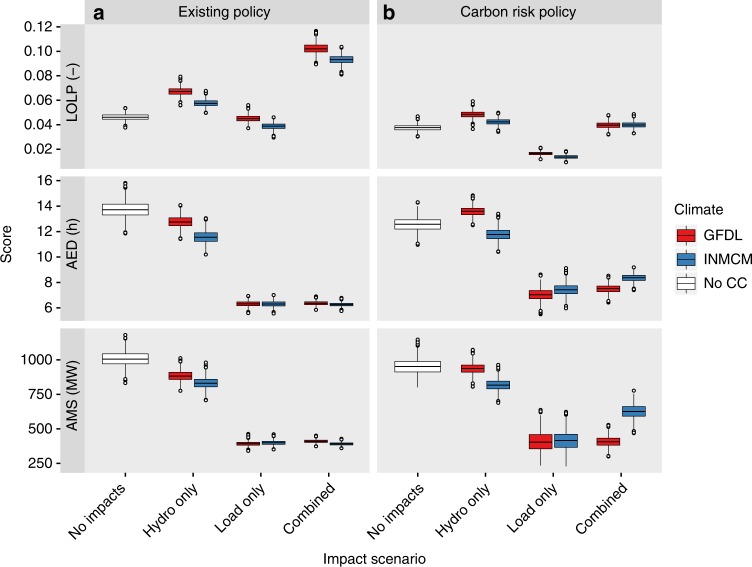
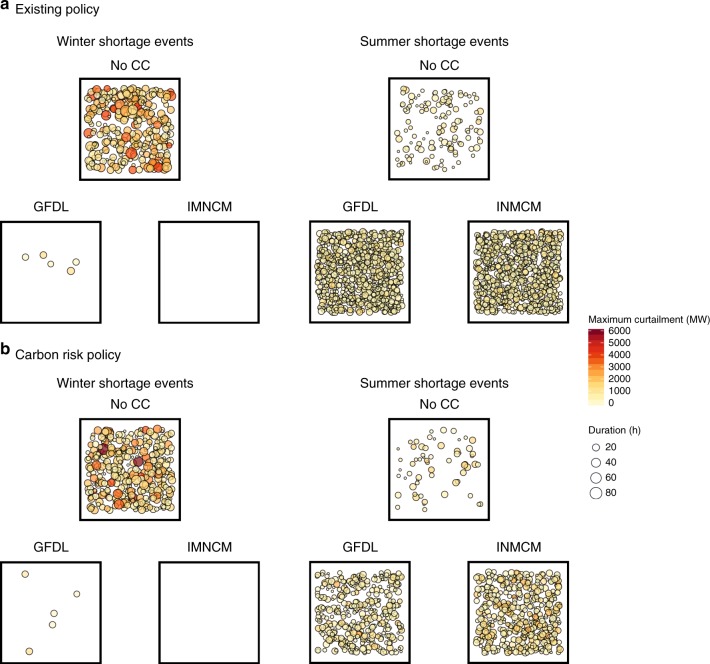
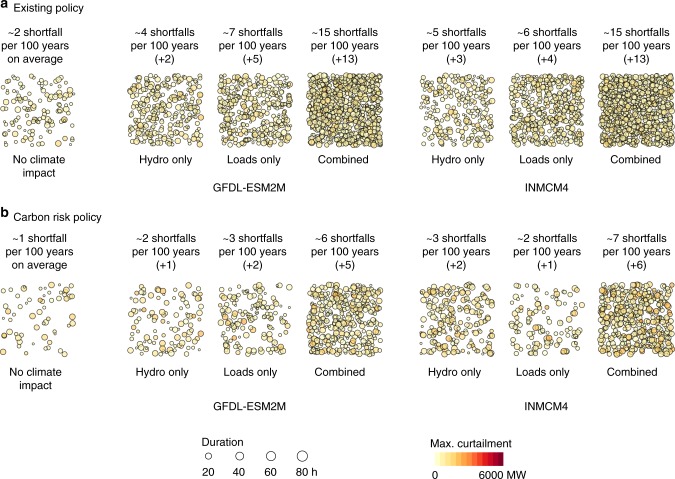
Power system reliability is sensitive to climate-driven variations in both energy demand and water availability, yet the combined effect of these impacts is rarely evaluated. Here we show that combined climate change impacts on loads and hydropower generation may have a transformative effect on the nature and seasonality of power shortfall risk in the U.S. Pacific Northwest. Under climate change, potential shortfall events occur more readily, but are significantly less severe in nature. A seasonal reversal in shortfall risk occurs: winter shortfalls are eradicated due to reduced building heating demands, while summer shortfalls multiply as increased peak loads for day-time cooling coincide with impaired hydropower generation. Many of these summer shortfalls go unregistered when climate change impacts on loads and hydropower dispatch are analyzed in isolation-highlighting an important role of compound events.
Conflict of interest statement
The authors declare no competing interests.
Figures
References
-
- Tarroja B, AghaKouchak A, Samuelsen S. Quantifying climate change impacts on hydropower generation and implications on electric grid greenhouse gas emissions and operation. Energy. 2016;111:295–305. doi: 10.1016/j.energy.2016.05.131. - DOI
-
- Turner SW, Hejazi M, Kim SH, Clarke L, Edmonds J. Climate impacts on hydropower and consequences for global electricity supply investment needs. Energy. 2017;141:2081–2090. doi: 10.1016/j.energy.2017.11.089. - DOI
-
- Bartos MD, Chester MV. Impacts of climate change on electric power supply in the Western United States. Nat. Clim. Change. 2015;5:748. doi: 10.1038/nclimate2648. - DOI
-
- Van Vliet MT, Wiberg D, Leduc S, Riahi K. Power-generation system vulnerability and adaptation to changes in climate and water resources. Nat. Clim. Change. 2016;6:375. doi: 10.1038/nclimate2903. - DOI
Publication types
LinkOut - more resources
Full Text Sources
