


Roles of the interorgan neuronal network in the development of metabolic syndrome
- PMID: 30603265
- PMCID: PMC6224984
- DOI: 10.1007/s13340-016-0277-8
Roles of the interorgan neuronal network in the development of metabolic syndrome
Abstract
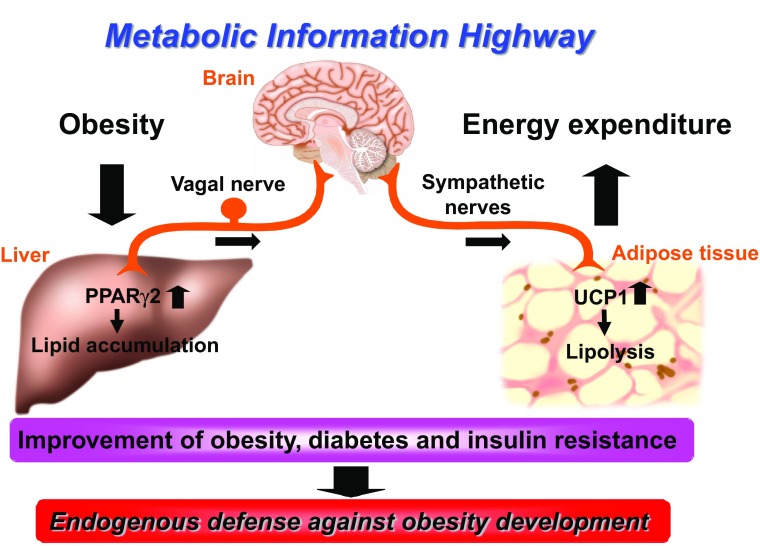
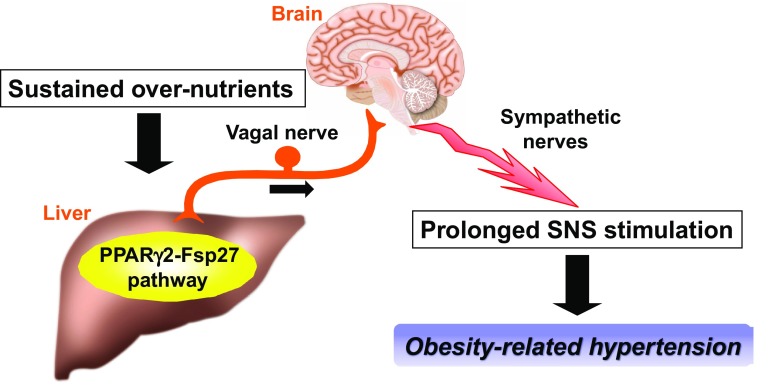
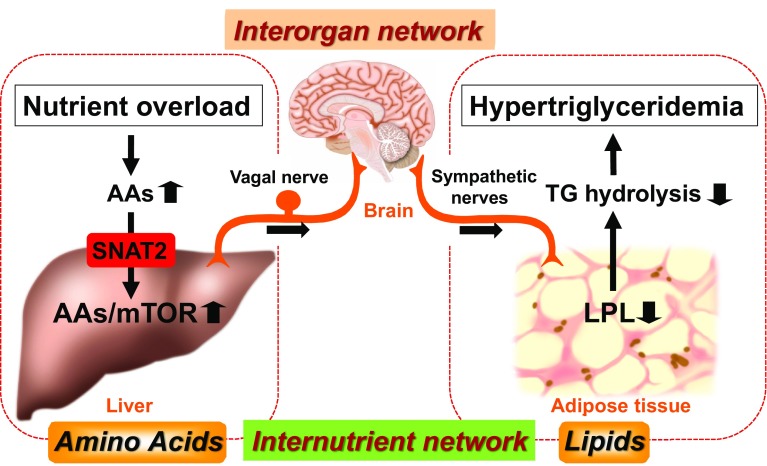
Metabolic processes in different tissues and remote organs are under coordinated systemic regulation, allowing adaptation to a variety of external circumstances. Neuronal signals as well as humoral factors, such as nutrients, growth factors, and hormones, have attracted increasing attention for their roles in this interorgan metabolic network, responsible for the maintenance of metabolic homeostasis at the whole-body level. These interorgan communications within an organism are considered to be diverse and, in fact, we identified previously unknown neuronal relay systems originating in the liver which modulate energy, glucose, and lipid metabolism. Furthermore, when nutrient overload is prolonged, these neuronal mechanisms, which function as an endogenous defense system against obesity development, contribute to the pathophysiological states of metabolic syndrome characterized by obesity-associated features. Therefore, these interorgan neuronal systems are considered to be possible molecular targets for treating metabolic syndrome. We herein review the precise mechanisms underlying the functions of the mammalian interorgan neuronal network, especially the pathways from the liver to several other organs, focusing on their significance and roles in the development of metabolic syndrome.
Keywords: Amino acids; Hypertension; Hypertriglyceridemia; Interorgan neuronal network; Metabolic syndrome; PPARγ; mTOR.
Conflict of interest statement
The author has no conflicts of interest to declare.Animal studies were conducted in accordance with Tohoku University institutional and national guidelines for the care and use of laboratory animals.
Figures
References
-
- Haffner S, Taegtmeyer H. Epidemic obesity and the metabolic syndrome. Circulation. 2003;108:1541–1545. doi: 10.1161/01.CIR.0000088845.17586.EC. - DOI - PubMed
LinkOut - more resources
Full Text Sources
Miscellaneous