Approach to wild-type gastrointestinal stromal tumors
- PMID: 30603728
- PMCID: PMC6286923
- DOI: 10.21037/tgh.2018.10.13
Approach to wild-type gastrointestinal stromal tumors
Abstract
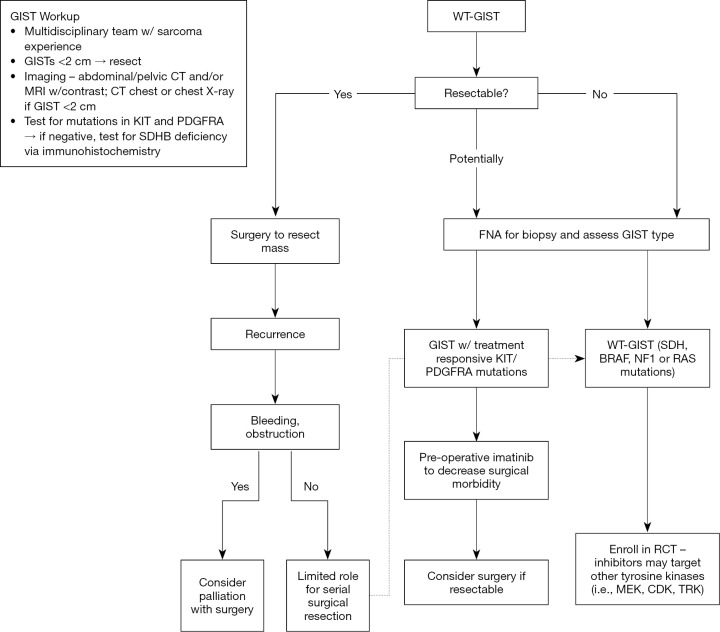
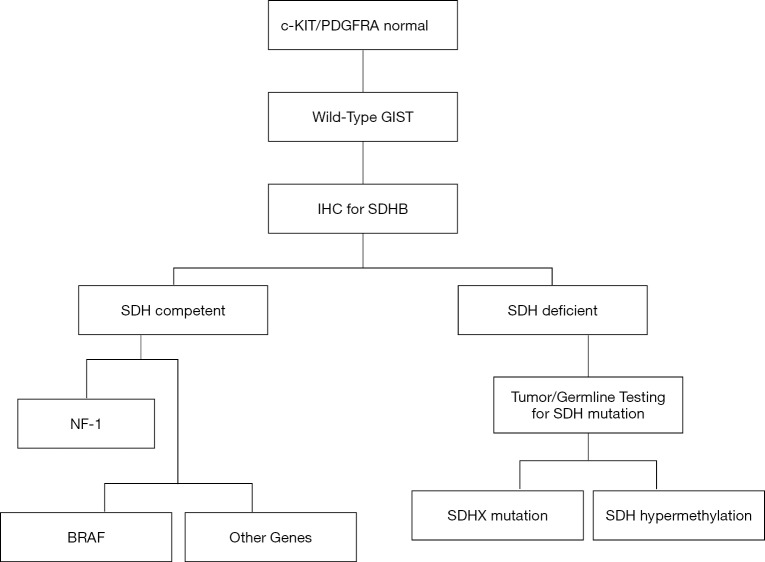
Gastrointestinal stromal tumors (GISTs) arise from the intestinal pacemaker cells of Cajal. Wild-type gastrointestinal stromal tumors (WT-GIST) are a unique and uncommon subtype of GISTs that lack activating mutations in the tyrosine kinase c-KIT or platelet derived growth factor receptor alpha (PDGFRA) receptors. The lack of these growth-stimulating mutations renders tyrosine kinase receptor inhibitors, such as imatinib mesylate, relatively ineffective against these tumors. WT-GIST arises most commonly due to underlying alternate proliferative signals associated with germ-line, genetic mutations. WT-GIST frequently arises in patients with BRAF mutations, Carney's Triad or neurofibromatosis type-1 (NF-1). All patients with WT-GIST require a careful examination for germ-line mutations and very close observation for recurrent tumors. Surgery remains a mainstay therapy for these patients. This review aims to discuss the most recent data available on the diagnosis and treatment of WT-GIST.
Keywords: Gastrointestinal stromal tumor (GIST); sarcoma; succinate dehydrogenase (SDH); wild-type gastrointestinal stromal tumor (WT-GIST).
Conflict of interest statement
Conflicts of Interest: The authors have no conflicts of interest to declare.
Figures
References
Publication types
LinkOut - more resources
Full Text Sources
Research Materials
Miscellaneous