


Youth Adversities Amplify the Association between Adult Stressors and Chronic Inflammation in a Domain Specific Manner: Nuancing the Early Life Sensitivity Model
- PMID: 30603835
- PMCID: PMC7685217
- DOI: 10.1007/s10964-018-0977-4
Youth Adversities Amplify the Association between Adult Stressors and Chronic Inflammation in a Domain Specific Manner: Nuancing the Early Life Sensitivity Model
Abstract
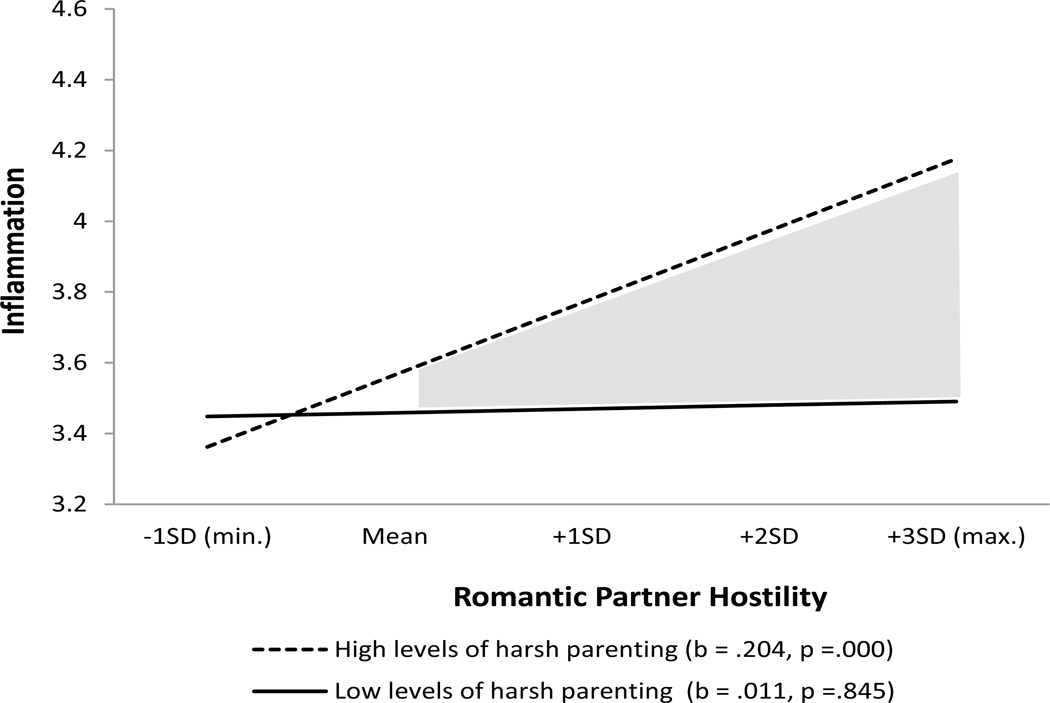
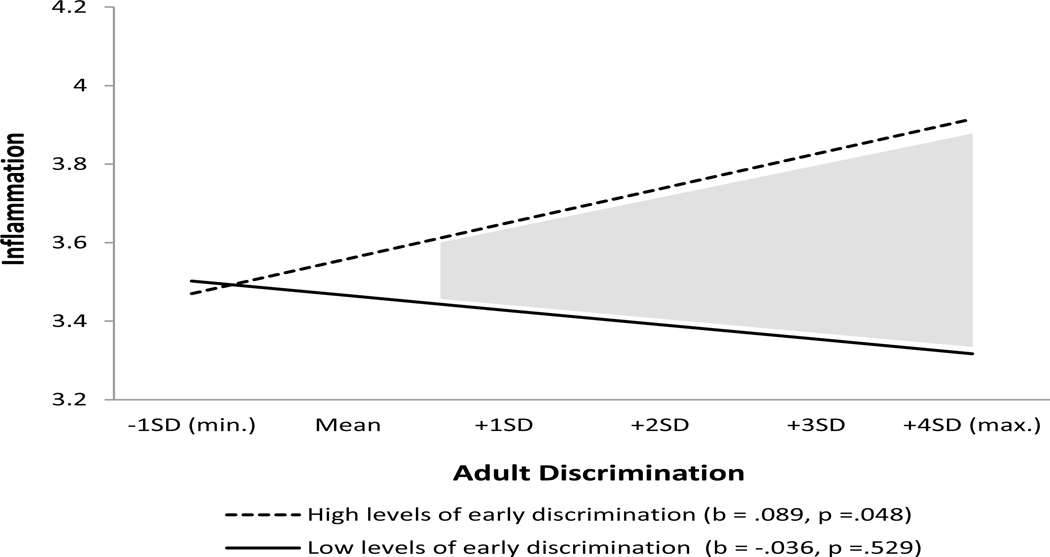
There is strong evidence that chronic, systemic inflammation hastens onset of the diseases of old age that ultimately lead to death. Importantly, several studies suggest that childhood adversity predicts chronic inflammation. Unfortunately, this research has been plagued by retrospective reports of childhood adversity, an absence of controls for adult stressors, and a failure to investigate various competing models of the link between childhood adversity and chronic inflammation. The present study was designed to address these limitations. Using 18 years of data collected from 413 African Americans (58% female) included in the Family and Community Health Study, hierarchical regression analyses provided support for a nuanced early life sensitivity explanation for the link between early adversity and adult chronic inflammation. Controlling for health risk behaviors and adult SES, late childhood (ages 10-12) adversity amplified the association between adult adversity (age 29) and chronic inflammation. This interaction operated in a domain-specific fashion. Harsh parenting amplified the relation between intimate partner hostility and inflammation, whereas early discrimination amplified the relation between adult discrimination and inflammation. These findings suggest that individuals may be primed to respond physiologically to adverse adult circumstances that resemble those experienced earlier in life.
Keywords: Childhood adversity; Discrimination; Early life sensitivity model; Harsh parenting; Inflammation.
Conflict of interest statement
Conflicts of Interest
The authors report no conflicts of interest.
Figures
References
-
- Abbas A, Lichtman AH, & Pillai S. (2011). Cellular Molecular Immunology. 7th ed. Philadelphia: Saunders.
-
- Aiken LS & West SG. (1991). Multiple Regression: Testing and Interpreting Interactions. Newbury Park: Sage.
-
- Assari S. (2018). Health disparities due to diminished return among black Americans: Public policy solutions. Social Issues and Policy Review, 12, 1–34.
-
- Bae D, & Wickrama KA (2017). Stress Processes Linking Parent–Child Disconnection to Disease Risk in Young Adulthood: Amplification by Genotype. Journal of Youth and Adolescence, 46(5), 1137–1148. - PubMed
-
- Bandura A. (1986). Social Foundations of Thought and Action: A Social Cognitive Theory. Englewood Cliffs, NJ: Prentice-Hall.
MeSH terms
Grants and funding
LinkOut - more resources
Full Text Sources
