


Effect of Bedside vs. Non-bedside Patient Case Presentation During Ward Rounds: a Systematic Review and Meta-analysis
- PMID: 30604116
- PMCID: PMC6420670
- DOI: 10.1007/s11606-018-4714-1
Effect of Bedside vs. Non-bedside Patient Case Presentation During Ward Rounds: a Systematic Review and Meta-analysis
Abstract
Background: Ward rounds are important for communicating with patients, but it is unclear whether bedside or non-bedside case presentation is the better approach.
Methods: We conducted a comprehensive search up to July 2018 to identify randomized controlled trials (RCTs) comparing bedside and non-bedside case presentations. Data was abstracted independently by two researchers and study quality was assessed using the Cochrane Risk of Bias Tool. Our primary outcome was patient's satisfaction with ward rounds. Our main secondary outcome was patient's understanding of disease and the management plan.
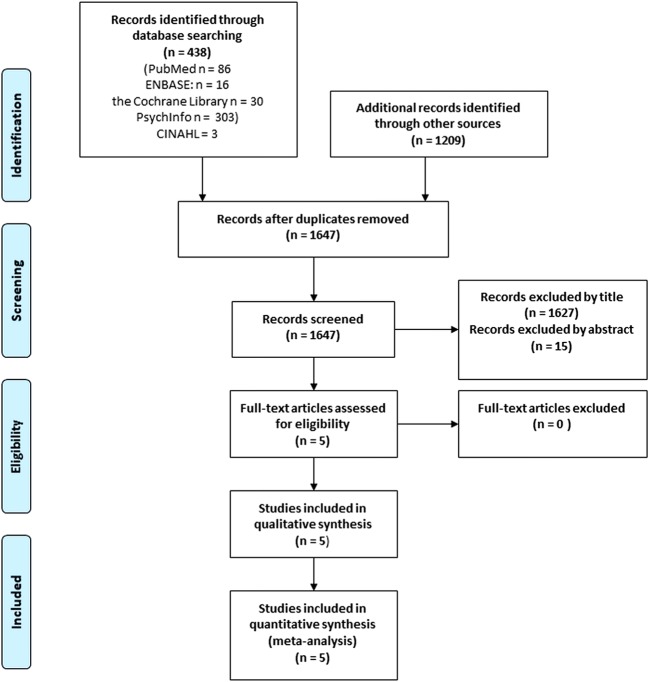
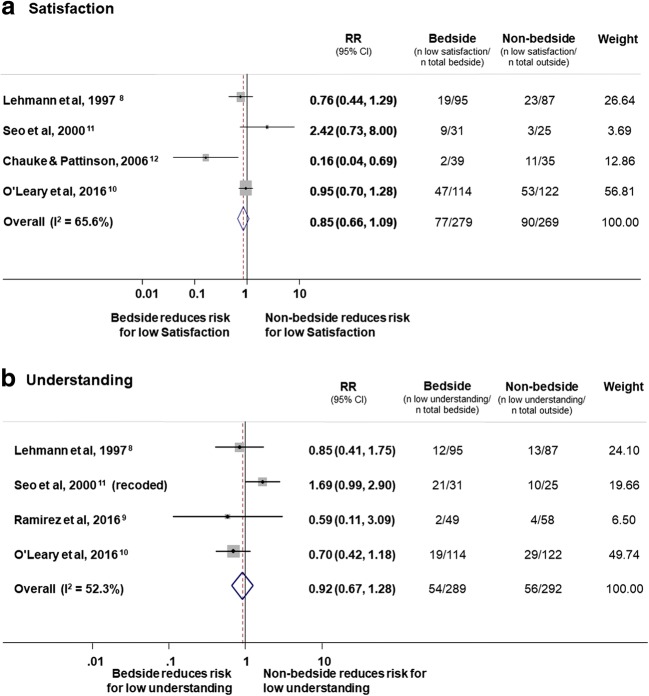
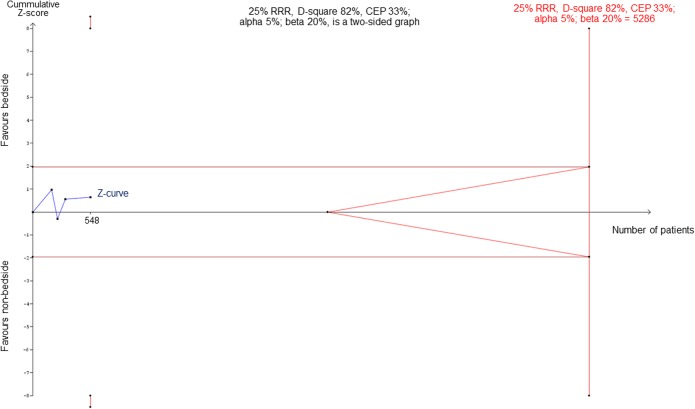
Results: Among 1647 identified articles, we included five RCTs involving 655 participants with overall moderate trial quality. We found no difference in having low patient's satisfaction between bedside and non-bedside case presentations (risk ratio [RR], 0.85; 95% CI, 0.66 to 1.09). We also found no impact on patient's understanding of their disease and management plan (RR, 0.92; 95% CI, 0.67 to 1.28). Trial sequential analysis (TSA) indicated low power of our main analysis.
Discussion: We found no differences in patient-relevant outcomes between bedside and non-bedside case presentations with a lack of statistical power among current trials. There is a need for larger studies to find the optimal approach to patient case presentation during ward rounds.
Keywords: communication; health communication; hospital medicine; meta-analysis; patient-centered care.
Conflict of interest statement
The authors declare that they do not have a conflict of interest.
Figures
References
-
- Committee on Quality of Health Care in America. Institute of Medicine . Crossing the quality chasm : A new health system for the 21st century. Washington: CC: National Academy Press; 2001.
Publication types
MeSH terms
LinkOut - more resources
Full Text Sources
Research Materials
