


Evaluation of an eHealth intervention aiming to promote healthy food habits from infancy -the Norwegian randomized controlled trial Early Food for Future Health
- PMID: 30606197
- PMCID: PMC6318886
- DOI: 10.1186/s12966-018-0763-4
Evaluation of an eHealth intervention aiming to promote healthy food habits from infancy -the Norwegian randomized controlled trial Early Food for Future Health
Abstract
Background: Strategies to optimize early-life nutrition provide an important opportunity for primary prevention of childhood obesity. Interventions that can be efficiently scaled-up to the magnitude needed for sustainable childhood obesity prevention are needed. The objective of this study was to evaluate the effects of an eHealth intervention on parental feeding practices and infant eating behaviors.
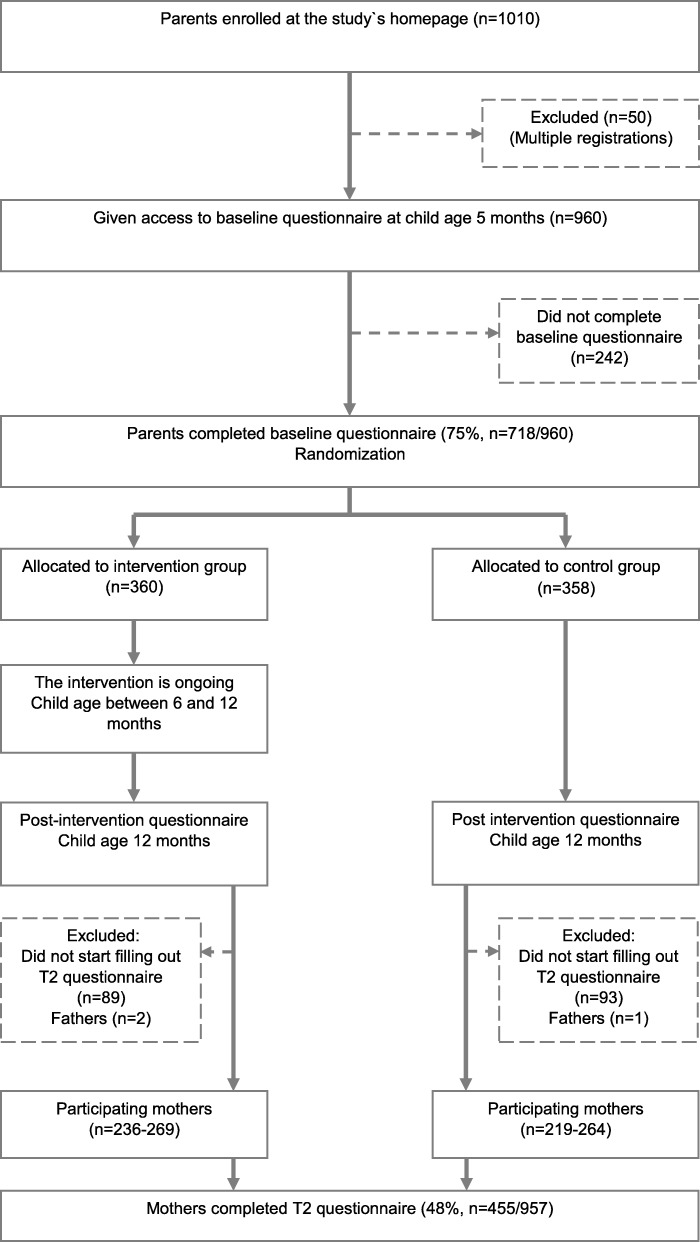
Methods: The Norwegian study Early Food for Future Health is a randomized controlled trial. Parents were recruited via social media and child health clinics during spring 2016 when their child was aged 3 to 5 months. In total 718 parents completed a web-based baseline questionnaire at child age 5.5 months. The intervention group had access to a webpage with monthly short video clips addressing specific infant feeding topics and age-appropriate baby food recipes from child age 6 to 12 months. The control group received routine care. The primary outcomes were child eating behaviors, dietary intake, mealtime routines and maternal feeding practices and feeding styles. The secondary outcomes were child anthropometry. This paper reports outcomes at child age 12 months.
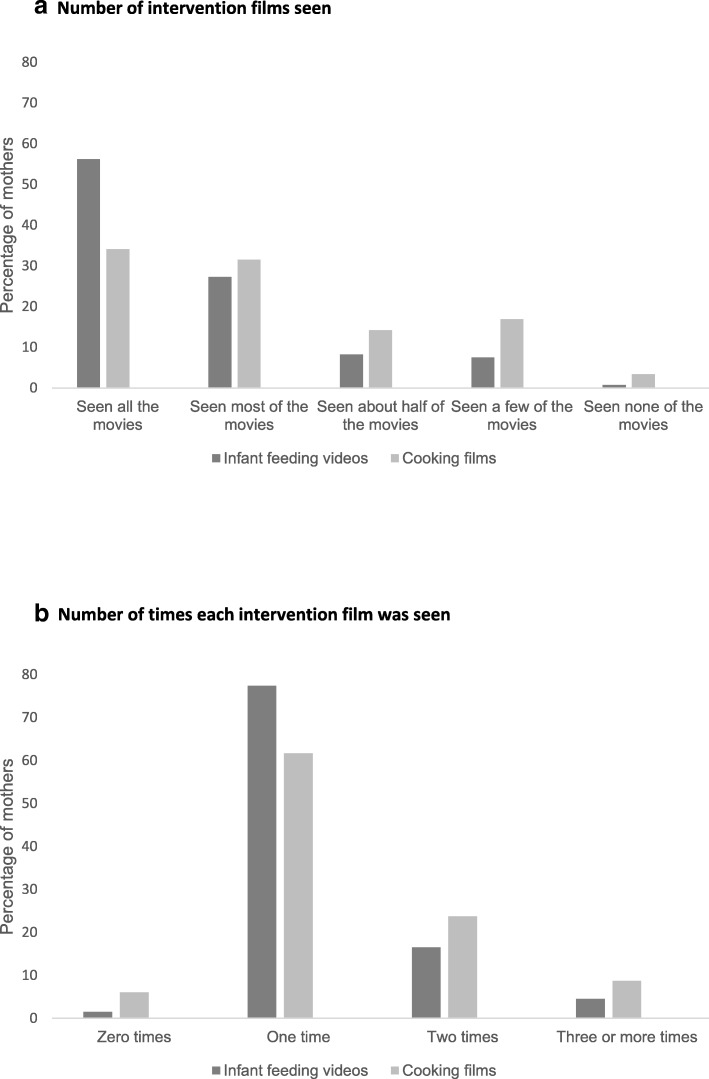
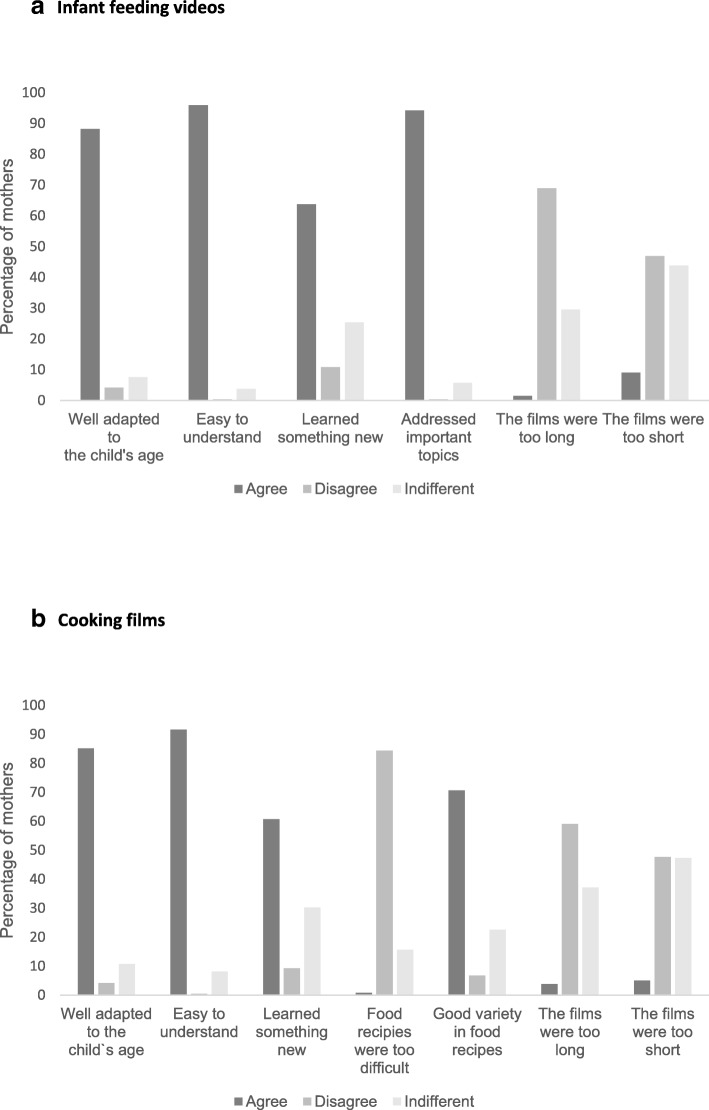
Results: More than 80% of the intervention group reported viewing all/most of the video clips addressing infant feeding topics and indicated that the films were well adapted to the child's age and easy to understand. Children in the intervention group were served vegetables/fruits more frequently (p = 0.035) and had tasted a wider variety of vegetables (p = 0.015) compared to controls. They were also more likely to eat family breakfast (p = 0.035) and dinner (p = 0.011) and less likely to be playing or watching TV/tablet during meals (p = 0.009) compared to control-group children. We found no group differences for child anthropometry or maternal feeding practices.
Conclusions: Our findings suggest that the eHealth intervention is an appropriate and feasible tool to propagate information on healthy infant feeding to Norwegian mothers. Our study also suggests that anticipatory guidance on early protective feeding practices by such a tool may increase young children's daily vegetable/fruit intake and promote beneficial mealtime routines.
Trial registration: ISRCTN, ISRCTN13601567. Registered 29 February 2016, http://www.isrctn.com/ISRCTN13601567.
Keywords: Child eating behavior; Childhood obesity; Infant nutrition; Maternal feeding practices; Public health; eHealth.
Conflict of interest statement
Ethics approval and consent to participate
The study is conducted in accordance with the Helsinki Declaration of 1975 as revised in 1983. The Norwegian Centre for Research Data evaluated and approved the study (
Consent for publication
Not applicable.
Competing interests
The authors declare that they have no competing interests.
Publisher’s Note
Springer Nature remains neutral with regard to jurisdictional claims in published maps and institutional affiliations.
Figures
References
-
- Scaglioni S, Salvioni M, Galimberti C. Influence of parental attitudes in the development of children eating behaviour. Br J Nutr. 2008;99(Suppl 1):S22–S25. - PubMed
-
- Redsell SA, Edmonds B, Swift JA, Siriwardena AN, Weng S, Nathan D, et al. Systematic review of randomised controlled trials of interventions that aim to reduce the risk, either directly or indirectly, of overweight and obesity in infancy and early childhood. Matern Child Nutr. 2016;12:24–38. - PMC - PubMed
Publication types
MeSH terms
Associated data
LinkOut - more resources
Full Text Sources
Medical
