


Monocyte chemoattractant protein-1 (MCP-1/CCL2) in diabetic retinopathy: latest evidence and clinical considerations
- PMID: 30607767
- PMCID: PMC6946768
- DOI: 10.1007/s12079-018-00500-8
Monocyte chemoattractant protein-1 (MCP-1/CCL2) in diabetic retinopathy: latest evidence and clinical considerations
Abstract
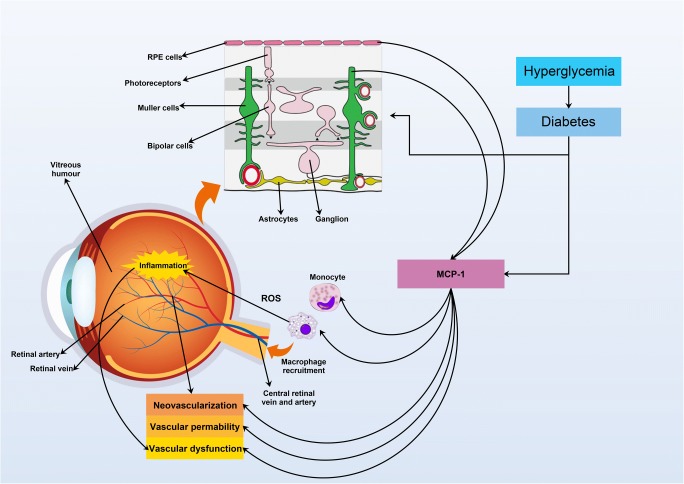
Diabetic retinopathy (DR) is considered as a diabetes-related complication that can render severe visual impairments and is also a risk factor for acquired blindness in both developed as well as developing countries. Through fibrovascular epiretinal membranes (ERMs), this condition can similarly lead to tractional retinal detachment. Laboratory efforts evaluating the DR pathogenesis can be provided by ocular vitreous fluid and ERMs resulting from vitrectomy. The clinical stages of DR are significantly associated with expression levels of certain chemokines, including monocyte chemotactic protein-1 (MCP-1) in the intraocular fluid. The MCP-1 is also a known potent chemotactic factor for monocytes and macrophages that can stimulate them to produce superoxide and other mediators. Following hyperglycemia, retinal pigmented epithelial (RPE) cells, endothelial cells, and Müller's glial cells are of utmost importance for MCP-1 production, and vitreous MCP-1 levels rise in patients with DR. Increased expression of the MCP-1 in the eyes can also play a significant role in the pathogenesis of DR. In this review, current clinical and laboratory progress achieved on the MCP-1 and the DR concerning neovascularization and inflammatory responses in vitreous and/or aqueous humor of DR patients was summarized. It was suggested that further exploration of the MCP-1/CCR2 axis association between clinical stages of DR and expression levels of inflammatory and angiogenic cytokines and chemokines, principally the MCP-1 might lead to potential therapies aiming at neutralizing antibodies and viral vectors.
Keywords: CCL2; DR; MCP-1; PDR; Retinopathy.
Conflict of interest statement
All of the authors declared no conflict of interest.
Figures
References
-
- Adamis AP, Berman AJ (2008) Immunological mechanisms in the pathogenesis of diabetic retinopathy. Seminars in immunopathology. Springer - PubMed
-
- Aiello LP, Avery RL, Arrigg PG, Keyt BA, Jampel HD, Shah ST, Pasquale LR, Thieme H, Iwamoto MA, Park JE. Vascular endothelial growth factor in ocular fluid of patients with diabetic retinopathy and other retinal disorders. N Engl J Med. 1994;331(22):1480–1487. - PubMed
-
- Antunica AG, Karaman K, Znaor L, Sapunar A, Buško V, Puzović V. IL-12 concentrations in the aqueous humor and serum of diabetic retinopathy patients. Graefes Arch Clin Exp Ophthalmol. 2012;250(6):815–821. - PubMed
LinkOut - more resources
Full Text Sources
Research Materials
Miscellaneous
