


Do doctors who order more routine medical tests diagnose more cancers? A population-based study from Ontario Canada
- PMID: 30609320
- PMCID: PMC6382726
- DOI: 10.1002/cam4.1925
Do doctors who order more routine medical tests diagnose more cancers? A population-based study from Ontario Canada
Abstract
Background: The overuse of medical tests leads to higher costs, wasting of resources, and the potential for overdiagnosis of disease. This study was designed to determine whether the patients of family doctors who order more routine medical tests are diagnosed with more cancers.
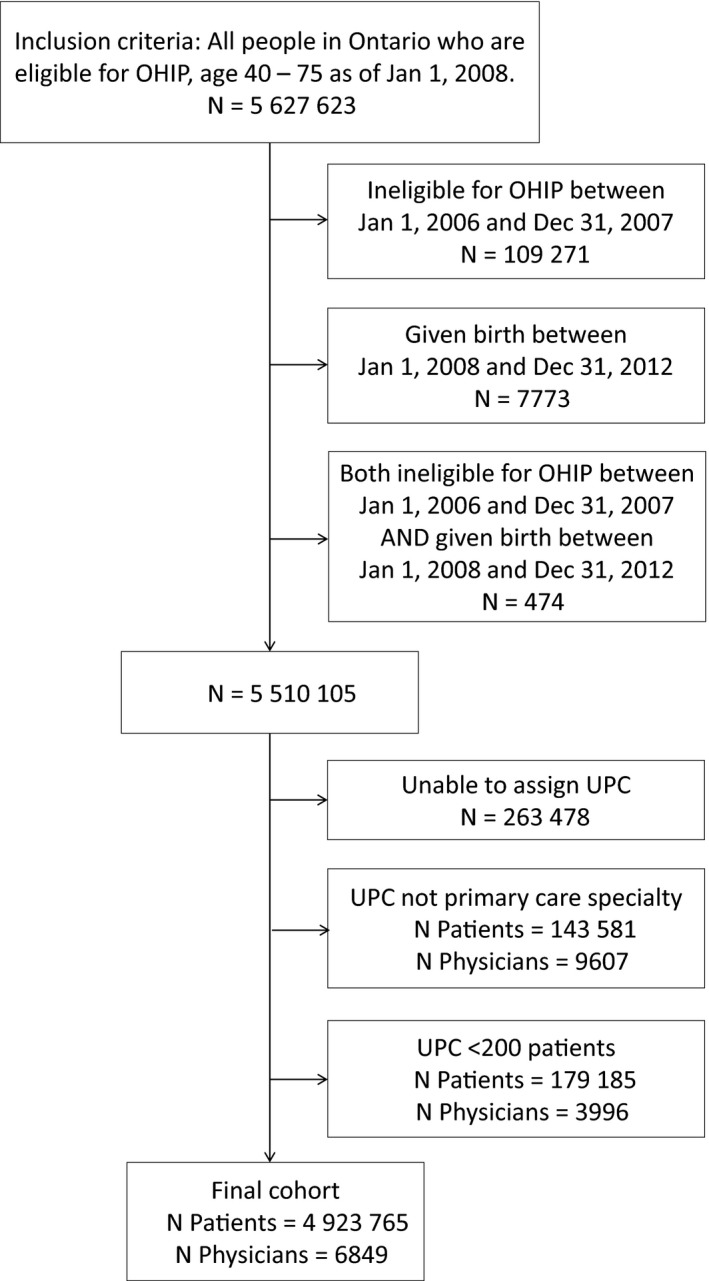
Method: A retrospective population-based cross-sectional study using administrative health care data in Ontario Canada. We investigated the ordering of 23 routine laboratories and imaging tests 2008-20012 by 6849 Ontario family physicians on their 4.9 million rostered adult patients. We compared physicians' test utilization and calculated case-mix adjusted observed to expected (O:E) utilization ratios to categorize physicians as Typical, Higher or Lower testers. Age-sex standardized rates (cases/10 000 patient years) and Rate Ratios were determined for cancers of the thyroid, prostate, breast, lymphoma, kidney, melanoma, uterus, ovary, lung, esophagus, and pancreas for each tester group.
Results: There was wide variation in the use of the 23 tests by Ontario physicians. 26% and 24% of physicians were deemed Higher Testers for laboratory and imaging tests, while 41% and 38% were Typical Testers. The patients of higher test users were diagnosed with more cancers of thyroid (laboratory [RR 1.61, 95% CI 1.39-1.87] and imaging [RR 2.08, 95% CI 0.88-2.30]) and prostate (laboratory [RR 1.10, 95% CI 1.03-1.18] and imaging [RR 1.05, 95% CI 1.00-1.10]).
Conclusion: There is a wide variation in the ordering of routine and common medical tests among Ontario family doctors. The patients of higher testers were diagnosed with more thyroid and prostate cancers.
Keywords: cancer overdiagnosis; imaging tests; laboratory tests; overuse; population-based.
© 2019 The Authors. Cancer Medicine published by John Wiley & Sons Ltd.
Figures


References
-
- Korentstein D, Falk R, Howell E, Bishop T, Keyhani S. Overuse of health care services in the united states: an understudied problem. Arch Int Med. 2012;172:171‐178. - PubMed
Publication types
MeSH terms
LinkOut - more resources
Full Text Sources
Medical
