


Green Natural Colorants
- PMID: 30609768
- PMCID: PMC6337735
- DOI: 10.3390/molecules24010154
Green Natural Colorants
Abstract
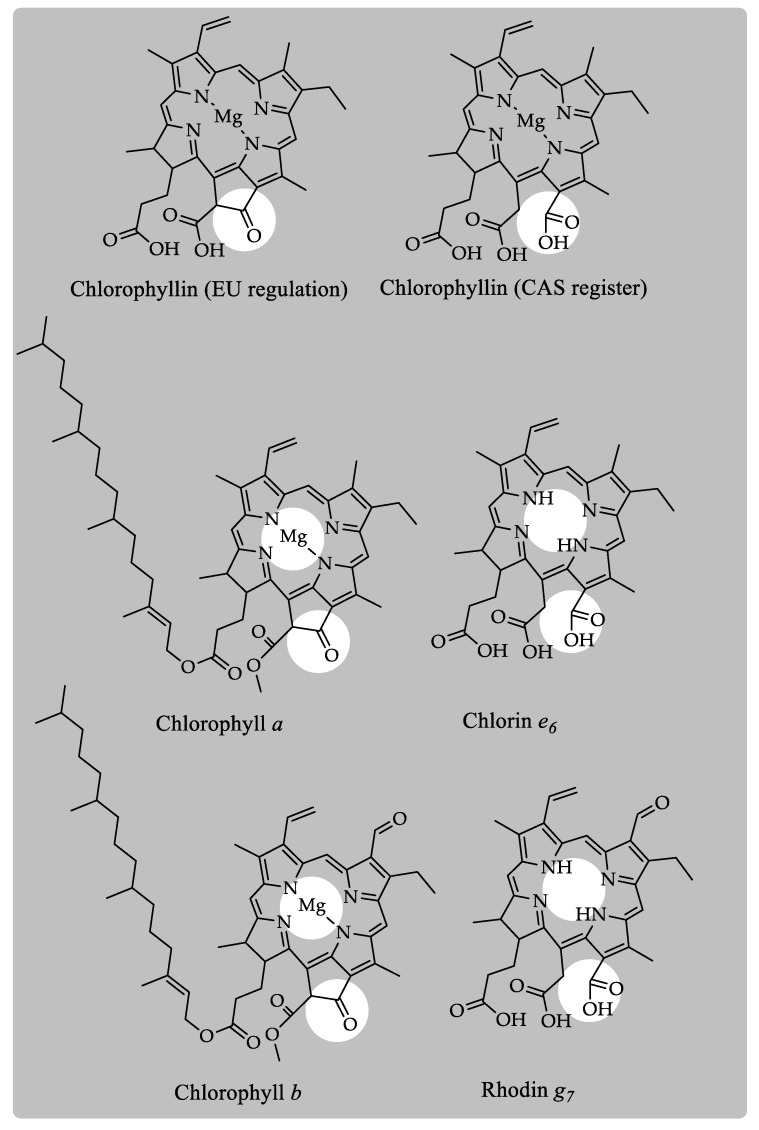
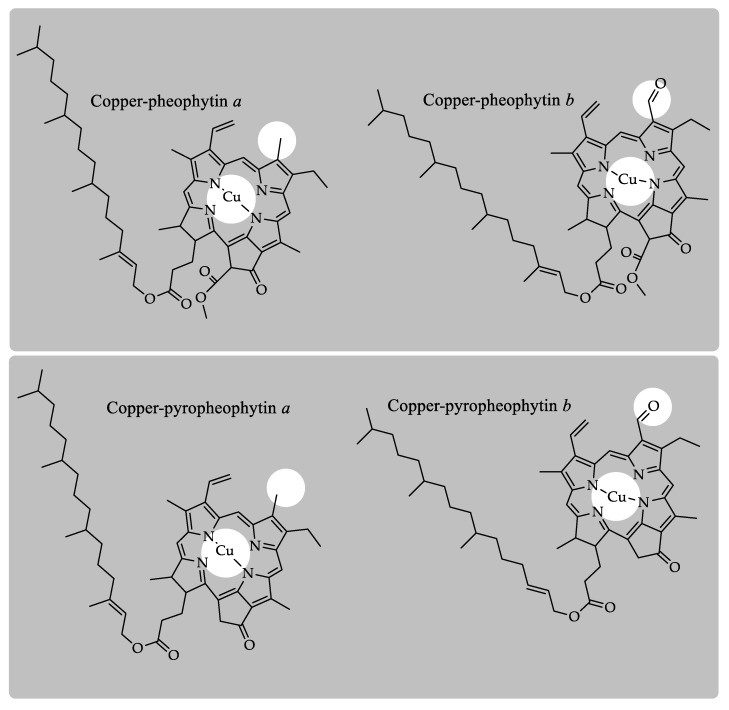
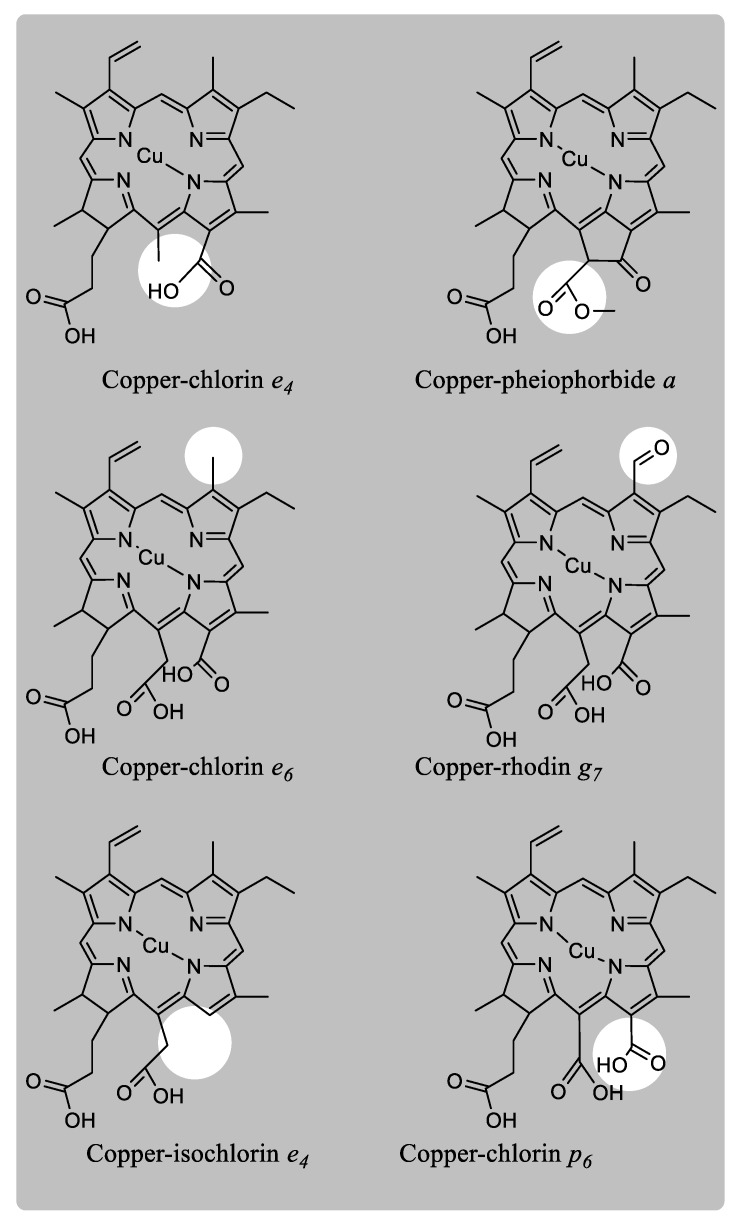
Although there is no legal and clear definition of the term "natural food colorant", the market trends, and consequently industrial and commercial interest, have turned to foods with added natural pigments. This progressive substitution of artificial colorants has faced chemical complications with some colors, with a lack of stable green hues being one of them. Several strategies have been applied for green color stabilization in processed foods, from the formation of metallochlorophylls to the microencapsulation of green pigments. However, at present, the utilization of green coloring foodstuffs, which are considered an ingredient in the EU, seems to be the more successful solution for the market. Besides those topics, the present review aims to clarify the current confusion between the different chlorophyll compounds that form part of the authorized green food colorants. In this sense, legislations from different countries are compared. Finally, and in line with current concerns, the knowledge gathered so far in relation to the absorption, distribution, metabolism and excretion of all green natural food colorants is reviewed.
Keywords: ADME; absorption; chlorophyllin; chlorophylls; coloring foodstuff; copper-chlorophyll; food colors; green colorant; natural colorants; zinc-chlorophylls.
Conflict of interest statement
The authors declare no conflict of interest.
Figures
References
-
- First Moment of Truth by Procter and Gamble. [(accessed on 5 November 2018)]; Available online: https://news.pg.com/video/first-moment-truth-30-s-reel.
-
- Singh S. Impact of color on marketing. Manag. Decis. 2006;44:783–789. doi: 10.1108/00251740610673332. - DOI
-
- Food Colors Market Size, Share & Trend Analysis Report by Product (Synthetic, Natural), by Application (Non-Dairy Food, CSD & Non-Alcoholic Beverages), and Segment Forecasts, 2018–2025. [(accessed on 24 September 2018)]; Available online: https://www.grandviewresearch.com/industry-analysis/food-colorants-market.
-
- Martins N., Roriz C.L., Morales P., Barros L., Ferreira I.C.F.R. Food colorants: Challenges, opportunities and current desires of agroindustries to ensure consumer expectations and regulatory practices. Trends Food Sci. 2016;52:1–15. doi: 10.1016/j.tifs.2016.03.009. - DOI
-
- Delgado-Vargas F., Paredes-López O. Natural Colorants for Food and Nutraceultical Uses. CRC Press; Boca Raton, FL, USA: 2003. pp. 27–34.
Publication types
MeSH terms
Substances
LinkOut - more resources
Full Text Sources
