


Metatranscriptomic Analysis of the Bacterial Symbiont Dactylopiibacterium carminicum from the Carmine Cochineal Dactylopius coccus (Hemiptera: Coccoidea: Dactylopiidae)
- PMID: 30609847
- PMCID: PMC6463064
- DOI: 10.3390/life9010004
Metatranscriptomic Analysis of the Bacterial Symbiont Dactylopiibacterium carminicum from the Carmine Cochineal Dactylopius coccus (Hemiptera: Coccoidea: Dactylopiidae)
Abstract
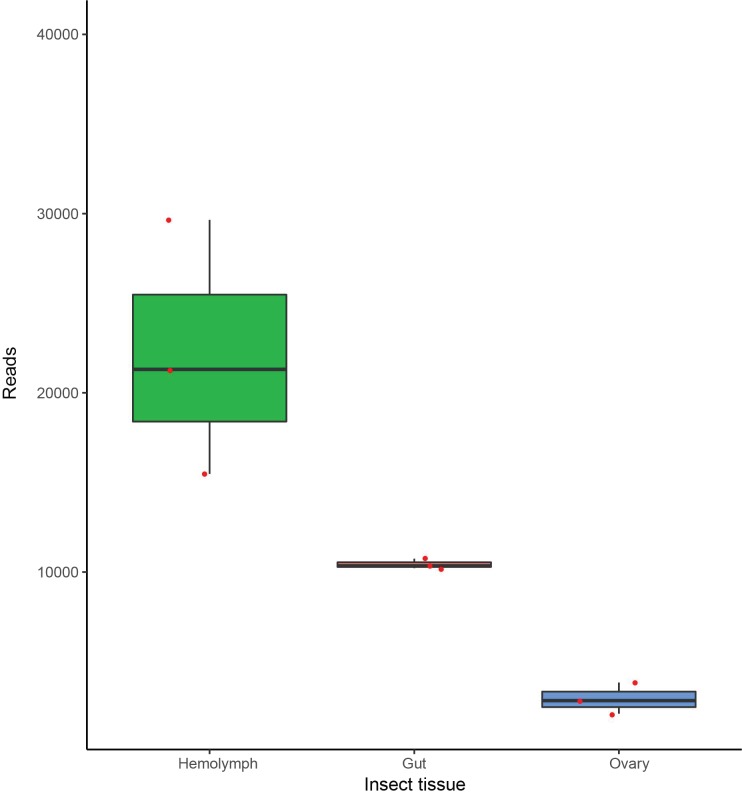
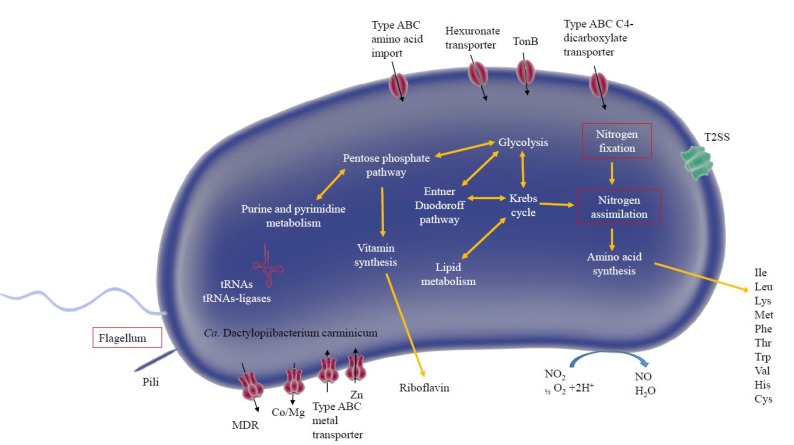
The scale insect Dactylopius coccus produces high amounts of carminic acid, which has historically been used as a pigment by pre-Hispanic American cultures. Nowadays carmine is found in food, cosmetics, and textiles. Metagenomic approaches revealed that Dactylopius spp. cochineals contain two Wolbachia strains, a betaproteobacterium named Candidatus Dactylopiibacterium carminicum and Spiroplasma, in addition to different fungi. We describe here a transcriptomic analysis indicating that Dactylopiibacterium is metabolically active inside the insect host, and estimate that there are over twice as many Dactylopiibacterium cells in the hemolymph than in the gut, with even fewer in the ovary. Albeit scarce, the transcripts in the ovaries support the presence of Dactylopiibacterium in this tissue and a vertical mode of transmission. In the cochineal, Dactylopiibacterium may catabolize plant polysaccharides, and be active in carbon and nitrogen provisioning through its degradative activity and by fixing nitrogen. In most insects, nitrogen-fixing bacteria are found in the gut, but in this study they are shown to occur in the hemolymph, probably delivering essential amino acids and riboflavin to the host from nitrogen substrates derived from nitrogen fixation.
Keywords: Opuntia; betaproteobacteria; endosymbiont; nitrogen-fixation: gut microbiota; polysaccharide catabolism; scale insect.
Conflict of interest statement
All the authors declare no conflict of interest associated with this study that might potentially bias this work.
Figures
References
-
- Rosenblueth M., Martínez-Romero J., Ramírez-Puebla S.T., Vera-Ponce de León A., Rosas-Pérez T., Bustamante-Brito R., Rincón-Rosales R., Martínez-Romero E. Endosymbiotic microorganisms of scale insects. TIP Revista Especializada en Ciencias Químico-Biológicas. 2018;21:53–69. doi: 10.1016/j.recqb.2017.08.006. - DOI
-
- Morrison J.F. Master’s Thesis, Master of Science. Rhodes University; Grahamstown, South Africa: Jan, 1984. Protection from Beetle-Predation in Cochineal Insects (Dactylopiidae: Homoptera)
Grants and funding
LinkOut - more resources
Full Text Sources
Miscellaneous
