


Binding of the Magnaporthe oryzae Chitinase MoChia1 by a Rice Tetratricopeptide Repeat Protein Allows Free Chitin to Trigger Immune Responses
- PMID: 30610168
- PMCID: PMC6391695
- DOI: 10.1105/tpc.18.00382
Binding of the Magnaporthe oryzae Chitinase MoChia1 by a Rice Tetratricopeptide Repeat Protein Allows Free Chitin to Trigger Immune Responses
Abstract
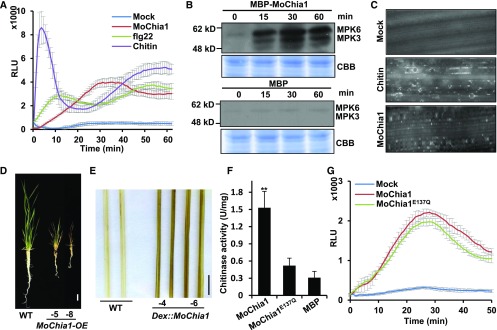
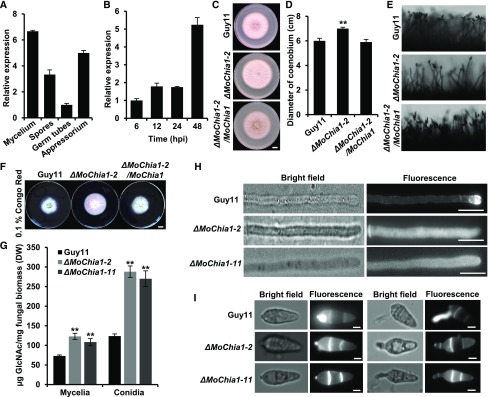
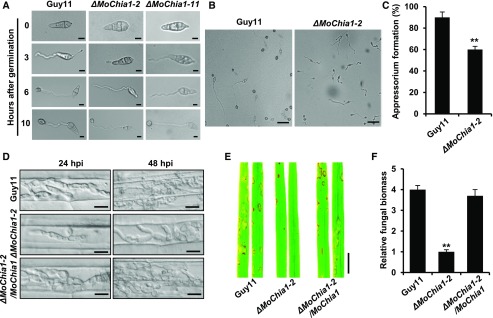
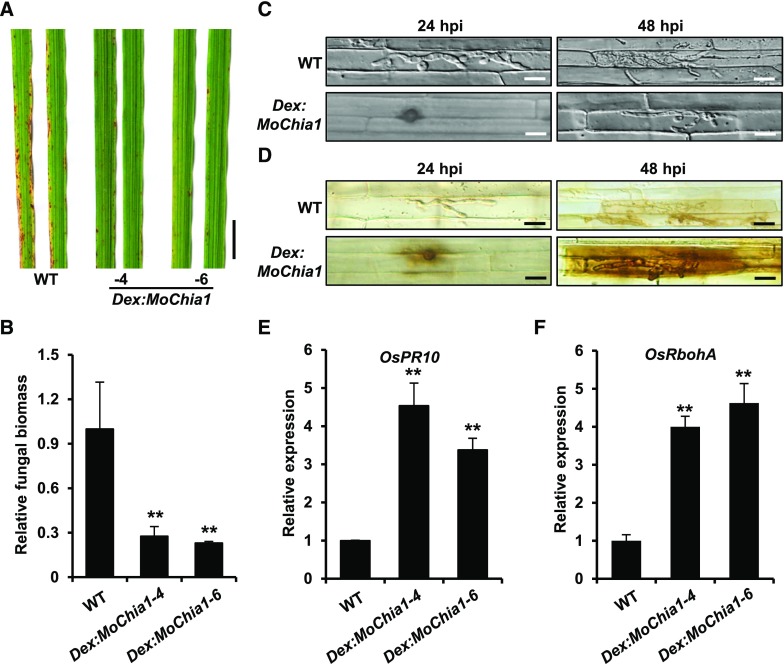
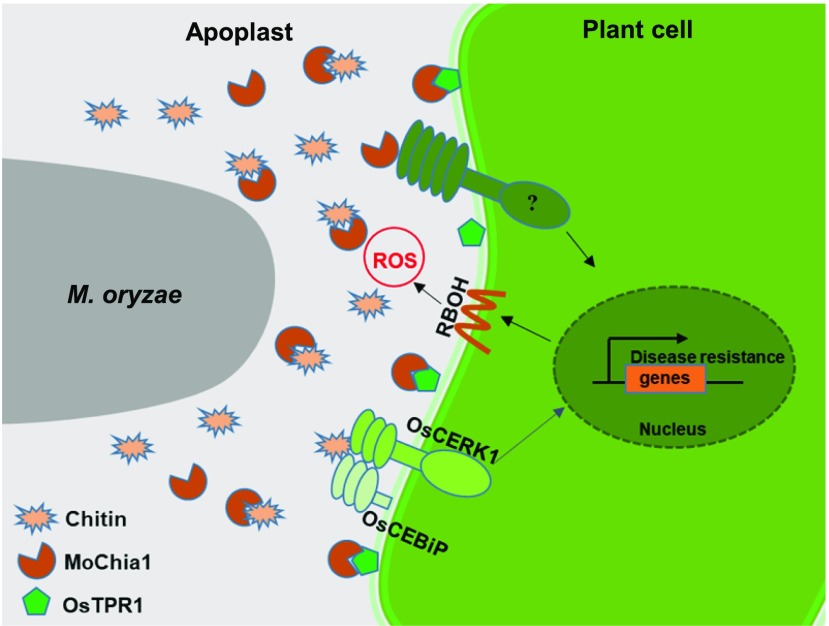
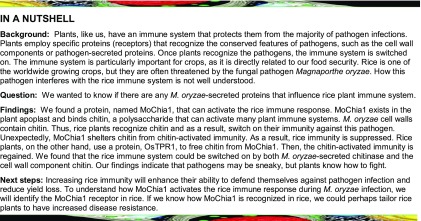
To defend against pathogens, plants have developed complex immune systems, including plasma membrane receptors that recognize pathogen-associated molecular patterns, such as chitin from fungal cell walls, and mount a defense response. Here, we identify a chitinase, MoChia1 (Magnaporthe oryzae chitinase 1), secreted by M. oryzae, a fungal pathogen of rice (Oryza sativa). MoChia1 can trigger plant defense responses, and expression of MoChia1 under an inducible promoter in rice enhances its resistance to M. oryzae MoChia1 is a functional chitinase required for M. oryzae growth and development; knocking out MoChia1 significantly reduced the virulence of the fungus, and we found that MoChia1 binds chitin to suppress the chitin-triggered plant immune response. However, the rice tetratricopeptide repeat protein OsTPR1 interacts with MoChia1 in the rice apoplast. OsTPR1 competitively binds MoChia1, thereby allowing the accumulation of free chitin and re-establishing the immune response. Overexpressing OsTPR1 in rice plants resulted in elevated levels of reactive oxygen species during M. oryzae infection. Our data demonstrate that rice plants not only recognize MoChia1, but also use OsTPR to counteract the function of this fungal chitinase and regain immunity.
© 2019 American Society of Plant Biologists. All rights reserved.
Figures
References
-
- Boutrot F., Zipfel C. (2017). Function, discovery, and exploitation of plant pattern recognition receptors for broad-spectrum disease resistance. Annu. Rev. Phytopathol. 55: 257–286. - PubMed
-
- Cao J., Yang C., Li L., Jiang L., Wu Y., Wu C., Bu Q., Xia G., Liu X., Luo Y., Liu J. (2016). Rice Plasma membrane proteomics reveals Magnaporthe oryzae promotes susceptibility by sequential activation of host hormone signaling pathways. Mol. Plant Microbe Interact. 29: 902–913. - PubMed
-
- Cao J., Yu Y., Huang J., Liu R., Chen Y., Li S., Liu J. (2017). Genome re-sequencing analysis uncovers pathogenecity-related genes undergoing positive selection in Magnaporthe oryzae. Sci. China Life Sci. 60: 880–890. - PubMed
Publication types
MeSH terms
Substances
LinkOut - more resources
Full Text Sources
