Radiomic signature of 18F fluorodeoxyglucose PET/CT for prediction of gastric cancer survival and chemotherapeutic benefits
- PMID: 30613271
- PMCID: PMC6299427
- DOI: 10.7150/thno.28018
Radiomic signature of 18F fluorodeoxyglucose PET/CT for prediction of gastric cancer survival and chemotherapeutic benefits
Abstract
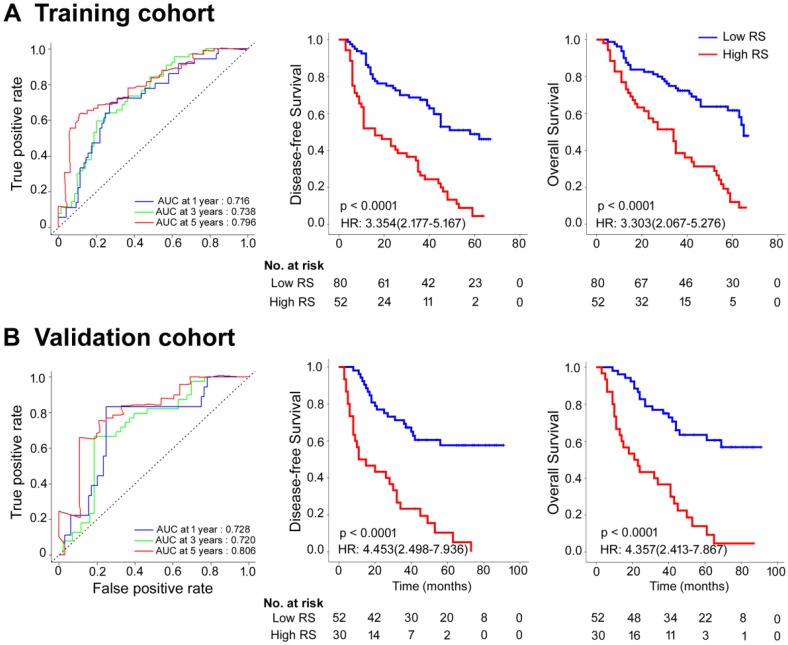
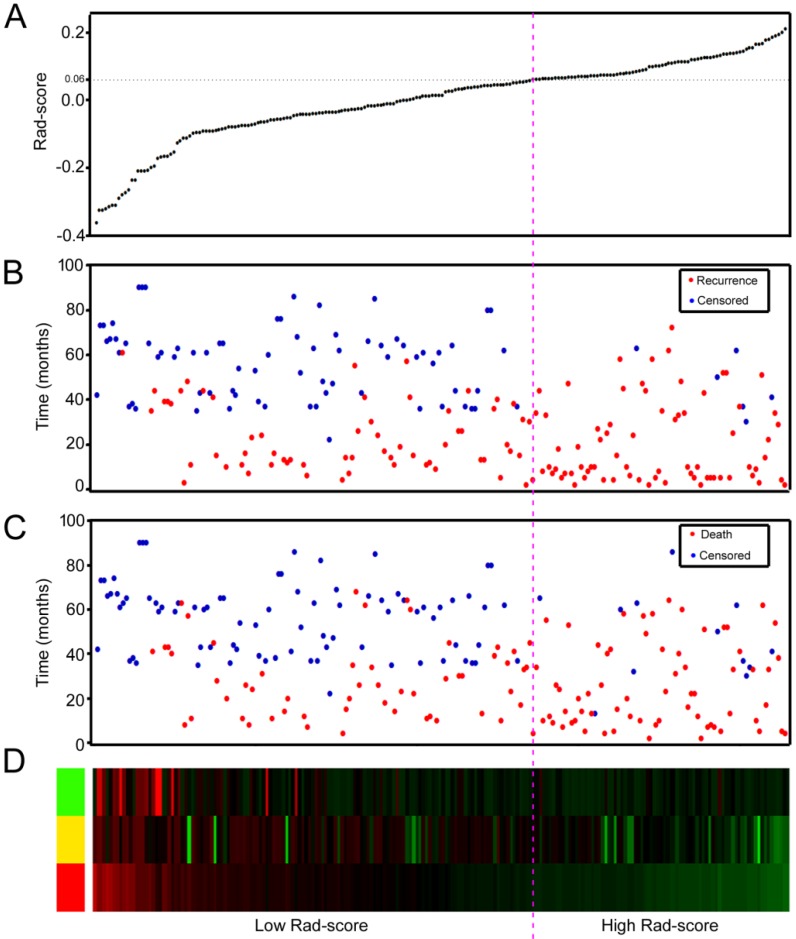
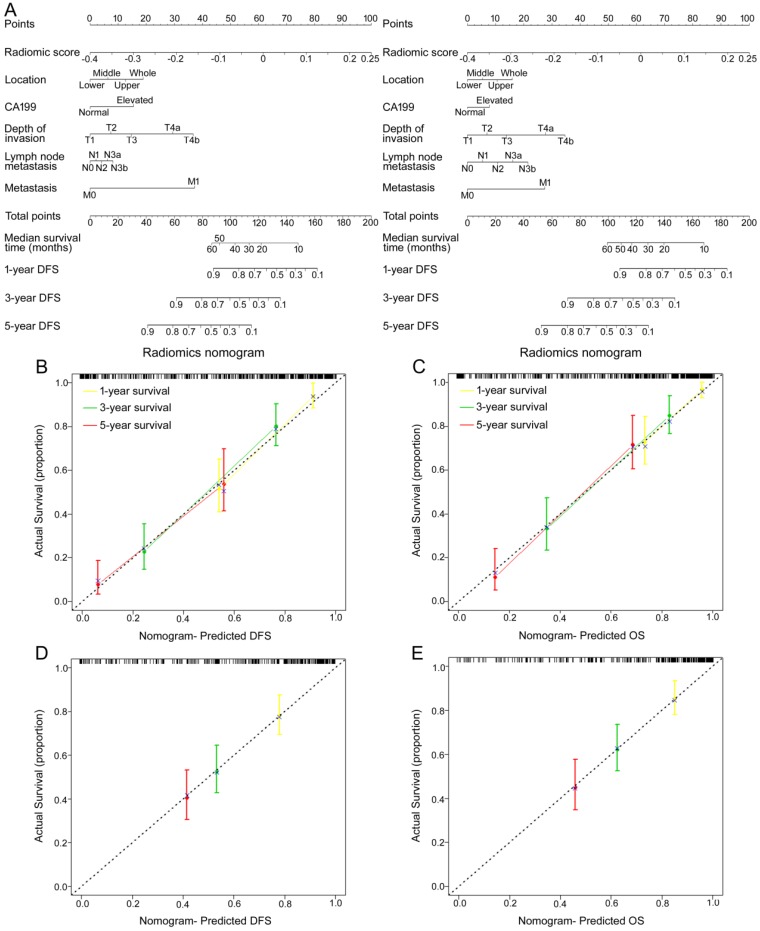
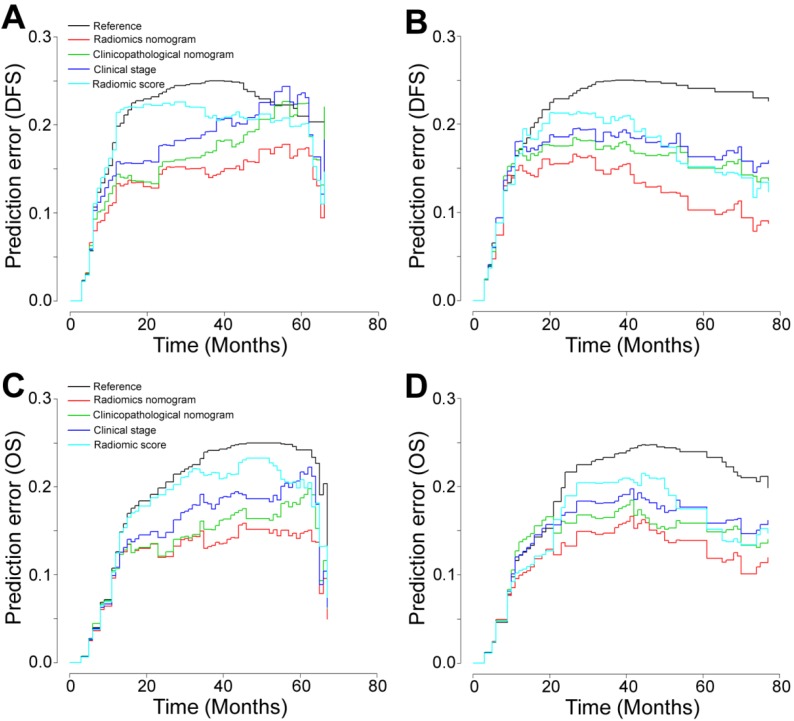
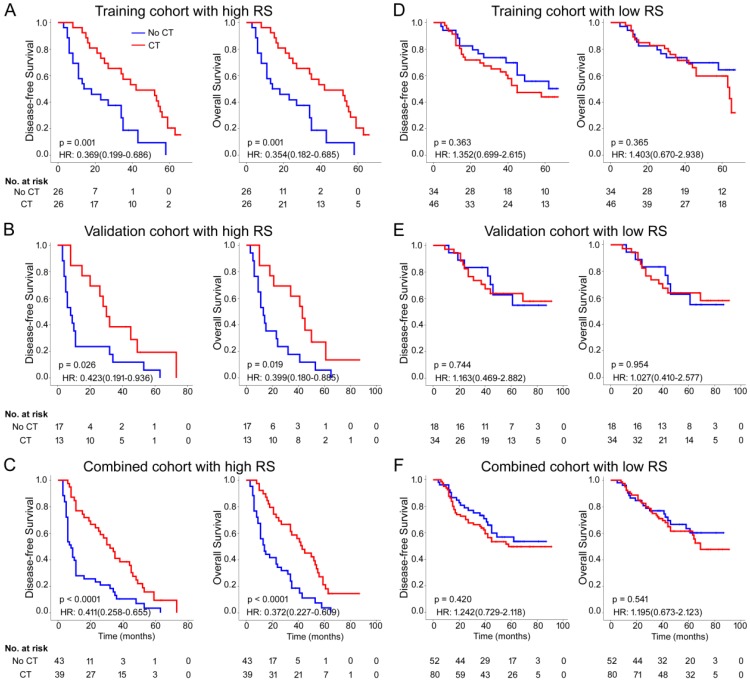
We aimed to evaluate whether radiomic feature-based fluorine 18 (18F) fluorodeoxyglucose (FDG) positron emission tomography (PET) imaging signatures allow prediction of gastric cancer (GC) survival and chemotherapy benefits. Methods: A total of 214 GC patients (training (n = 132) or validation (n = 82) cohort) were subjected to radiomic feature extraction (80 features). Radiomic features of patients in the training cohort were subjected to a LASSO cox analysis to predict disease-free survival (DFS) and overall survival (OS) and were validated in the validation cohort. A radiomics nomogram with the radiomic signature incorporated was constructed to demonstrate the incremental value of the radiomic signature to the TNM staging system for individualized survival estimation, which was then assessed with respect to calibration, discrimination, and clinical usefulness. The performance was assessed with concordance index (C-index) and integrated Brier scores. Results: Significant differences were found between the high- and low-radiomic score (Rad-score) patients in 5-year DFS and OS in training and validation cohorts. Multivariate analysis revealed that the Rad-score was an independent prognostic factor. Incorporating the Rad-score into the radiomics-based nomogram resulted in better performance (C-index: DFS, 0.800; OS, 0.786; in the training cohort) than TNM staging system and clinicopathologic nomogram. Further analysis revealed that patients with higher Rad-scores were prone to benefit from chemotherapy. Conclusion: The newly developed radiomic signature was a powerful predictor of OS and DFS. Moreover, the radiomic signature could predict which patients could benefit from chemotherapy.
Keywords: PET/CT; chemotherapy; gastric cancer; predictive signature; prognosis.
Conflict of interest statement
Competing Interests: The authors have declared that no competing interest exists.
Figures
References
-
- Torre LA, Bray F, Siegel RL, Ferlay J, Lortet-Tieulent J, Jemal A. Global cancer statistics, 2012. CA Cancer J Clin. 2015;65:87–108. - PubMed
-
- Noh SH, Park SR, Yang HK, Chung HC, Chung IJ, Kim SW. et al. Adjuvant capecitabine plus oxaliplatin for gastric cancer after D2 gastrectomy (CLASSIC): 5-year follow-up of an open-label, randomised phase 3 trial. Lancet Oncol. 2014;15:1389–1396. - PubMed
-
- Jiang Y, Zhang Q, Hu Y, Li T, Yu J, Zhao L. et al. ImmunoScore signature: A prognostic and predictive tool in gastric cancer. Ann Surg. 2018;267:504–513. - PubMed
-
- Group G, Paoletti X, Oba K, Burzykowski T, Michiels S, Ohashi Y. et al. Benefit of adjuvant chemotherapy for resectable gastric cancer: a meta-analysis. JAMA. 2010;303:1729–1737. - PubMed
Publication types
MeSH terms
Substances
LinkOut - more resources
Full Text Sources
Medical
Miscellaneous