


Medication Treatment For Opioid Use Disorders In Substance Use Treatment Facilities
- PMID: 30615514
- PMCID: PMC6816341
- DOI: 10.1377/hlthaff.2018.05162
Medication Treatment For Opioid Use Disorders In Substance Use Treatment Facilities
Abstract
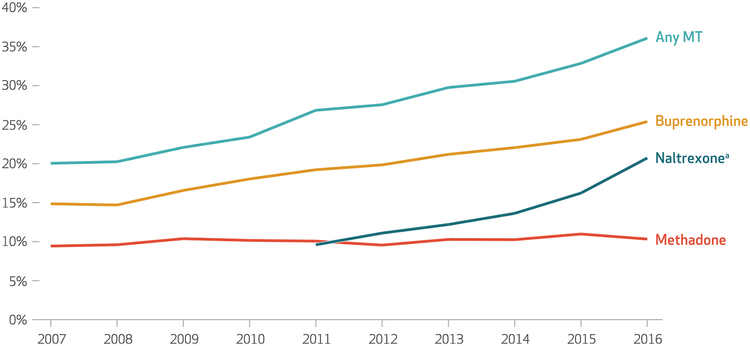
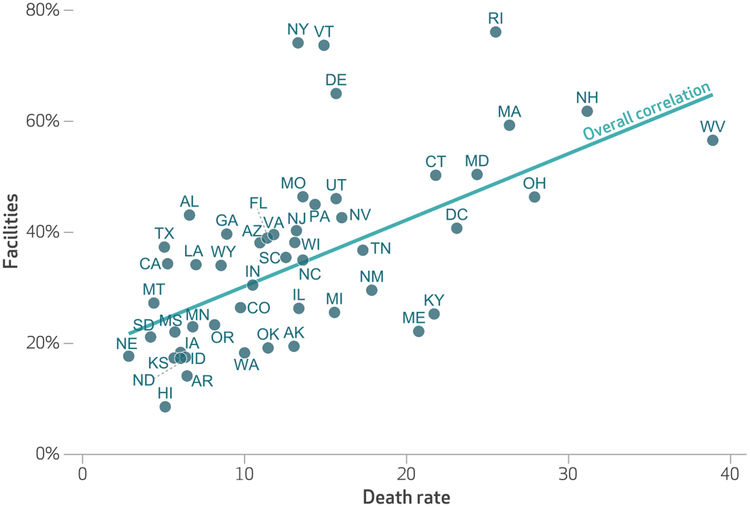
Medication treatment (MT) is one of the few evidence-based strategies proposed to combat the current opioid epidemic. We examined national trends and correlates of offering MT in substance use treatment facilities in the United States. According to data from national surveys, the proportion of these facilities that offered any MT increased from 20.0 percent in 2007 to 36.1 percent in 2016-mainly the result of increases in offering buprenorphine and extended-release naltrexone. Only 6.1 percent of facilities offered all three MT medications in 2016. Facilities in states with higher opioid overdose death rates, facilities that accepted health insurance overall (and, more specifically, those that accepted Medicaid in states that opted to expand eligibility for Medicaid), and facilities in states with more comprehensive coverage of MT under their Medicaid plans had higher odds of offering MT. The findings highlight the persistent unmet need for MT nationally and the role of expansion of health insurance in the dissemination of these treatments.
Figures
References
-
- Gostin LO, Hodge JG Jr, Noe SA. Reframing the opioid epidemic as a national emergency. JAMA. 2017; 318(16):1539–40. - PubMed
-
- McCarthy M US declares opioid epidemic a “national emergency.” BMJ. 2017;358:j3881. - PubMed
-
- Bonnie RJ, Kesselheim AS, Clark DJ. Both urgency and balance needed in addressing opioid epidemic: a report from the National Academies of Sciences, Engineering, and Medicine. JAMA. 2017;318(5):423–4. - PubMed
-
- Jones CM. Trends and key correlates of prescription opioid injection misuse in the United States. Addict Behav. 2018;78:145–52. - PubMed
Publication types
MeSH terms
Substances
Grants and funding
LinkOut - more resources
Full Text Sources
Medical
