


Measuring patient-centred system performance: a scoping review of patient-centred care quality indicators
- PMID: 30617101
- PMCID: PMC6326310
- DOI: 10.1136/bmjopen-2018-023596
Measuring patient-centred system performance: a scoping review of patient-centred care quality indicators
Abstract
Objectives: The shift to the patient-centred care (PCC) model as a healthcare delivery paradigm calls for systematic measurement and evaluation. In an attempt to develop patient-centred quality indicators (PC-QIs), this study aimed to identify quality indicators that can be used to measure PCC.
Methods: Design: scoping review.
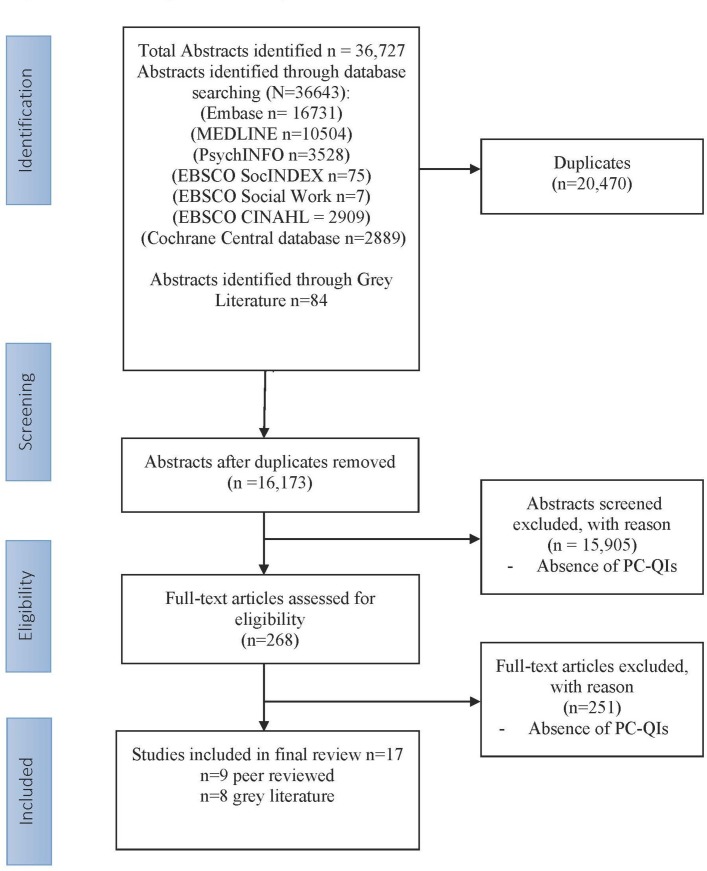
Data sources: studies were identified through searching seven electronic databases and the grey literature. Search terms included quality improvement, quality indicators, healthcare quality and PCC. Eligibility Criteria: articles were included if they mentioned development and/or implementation of PC-QIs.
Data extraction and synthesis: extracted data included study characteristics (country, year of publication and type of study/article), patients' inclusion in the development of indicators and type of patient populations and point of care if applicable (eg, in-patient, out-patient and primary care).
Results: A total 184 full-text peer-reviewed articles were assessed for eligibility for inclusion; of these, 9 articles were included in this review. From the non-peer-reviewed literature, eight documents met the criteria for inclusion in this study. This review revealed the heterogeneity describing and defining the nature of PC-QIs. Most PC-QIs were presented as PCC measures and identified as guidelines, surveys or recommendations, and therefore cannot be classified as actual PC-QIs. Out of 502 ways to measure PCC, only 25 were considered to be actual PC-QIs. None of the identified articles implemented the quality indicators in care settings.
Conclusion: The identification of PC-QIs is a key first step in laying the groundwork to develop evidence-based PC-QIs. Research is needed to continue the development and implementation of PC-QIs for healthcare quality improvement.
Keywords: healthcare quality; patient-centred care; quality improvement; quality indicators.
© Author(s) (or their employer(s)) 2019. Re-use permitted under CC BY-NC. No commercial re-use. See rights and permissions. Published by BMJ.
Conflict of interest statement
Competing interests: None declared.
Figures
References
Publication types
MeSH terms
LinkOut - more resources
Full Text Sources
Miscellaneous
