


Response and Toxicity of Repeated Isolated Limb Perfusion (re-ILP) for Patients With In-Transit Metastases of Malignant Melanoma
- PMID: 30617871
- PMCID: PMC6399180
- DOI: 10.1245/s10434-018-07143-4
Response and Toxicity of Repeated Isolated Limb Perfusion (re-ILP) for Patients With In-Transit Metastases of Malignant Melanoma
Abstract
Background: Isolated limb perfusion (ILP) is a safe and well-established treatment for in-transit metastases of melanoma. In case of relapse or disease progression, ILP can be repeated (re-ILP). This study aimed retrospectively to analyze a large consecutive series of re-ILP and compare clinical outcomes with first-time ILP.
Method: Between 2001 and 2015, 290 consecutive patients underwent 380 ILPs. Of these, 90 were re-ILPs including 68 second ILPs, 16 third ILPs, 4 fourth ILPs, and two fifth ILPs. The study evaluated response (using World Health Organization [WHO] criteria), local toxicity (using the Wieberdink scale), and complications (using Clavien-Dindo).
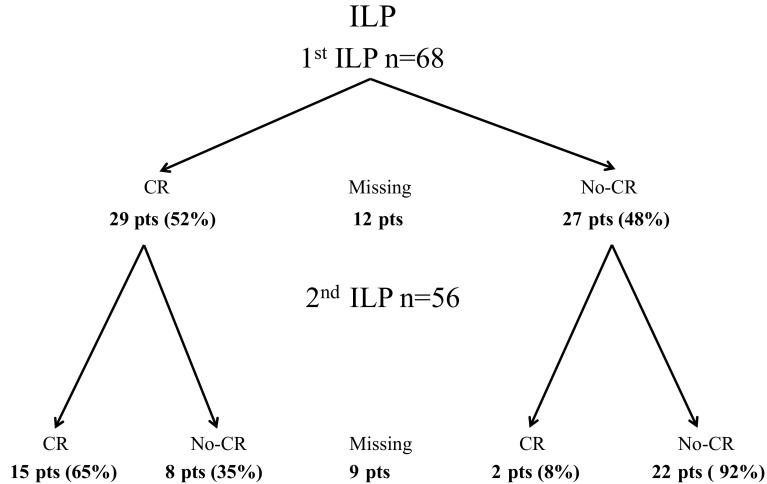
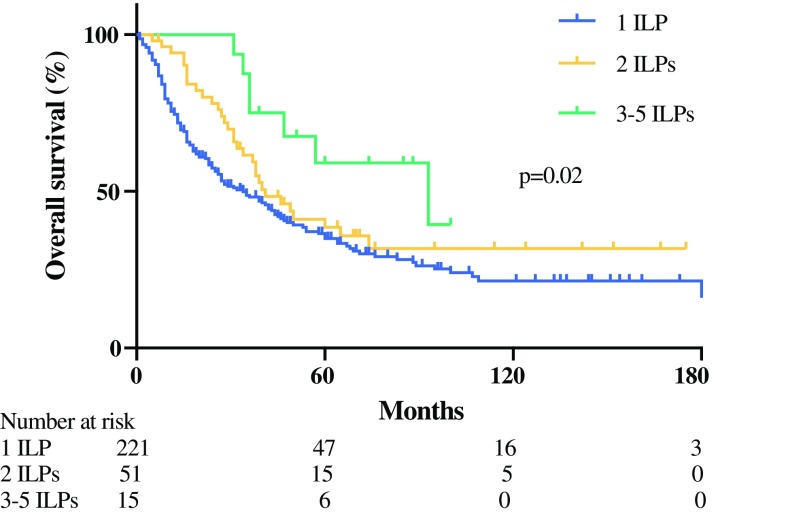
Results: The results were compared between the first ILP, the second ILP, and the third to fifth ILP. The overall response rate was respectively 83%, 80% and 68%, with a complete response (CR) rate of 60%, 41%, and 59%. In the re-ILP group, the patients with a CR after the first ILP had a 65% CR rate after the second ILP compared with 8% for the patients without a CR (p = 0.001). The risk for local toxicity or complications was not increased after re-ILP. The median overall survival periods were respectively 34, 41, and 93 months (p = 0.02).
Conclusion: As a therapeutic option, ILP can be repeated safely for in-transit metastases of melanoma, achieving similar high response rates without increasing complications or toxicity. Re-ILP is mainly indicated for patients who already had a CR after the first ILP, whereas other treatment options should be considered for primary non-responders.
Figures
References
MeSH terms
Substances
LinkOut - more resources
Full Text Sources
Medical
Research Materials
