


Current Understanding of How Extracorporeal Membrane Oxygenators Activate Haemostasis and Other Blood Components
- PMID: 30619862
- PMCID: PMC6299009
- DOI: 10.3389/fmed.2018.00352
Current Understanding of How Extracorporeal Membrane Oxygenators Activate Haemostasis and Other Blood Components
Abstract
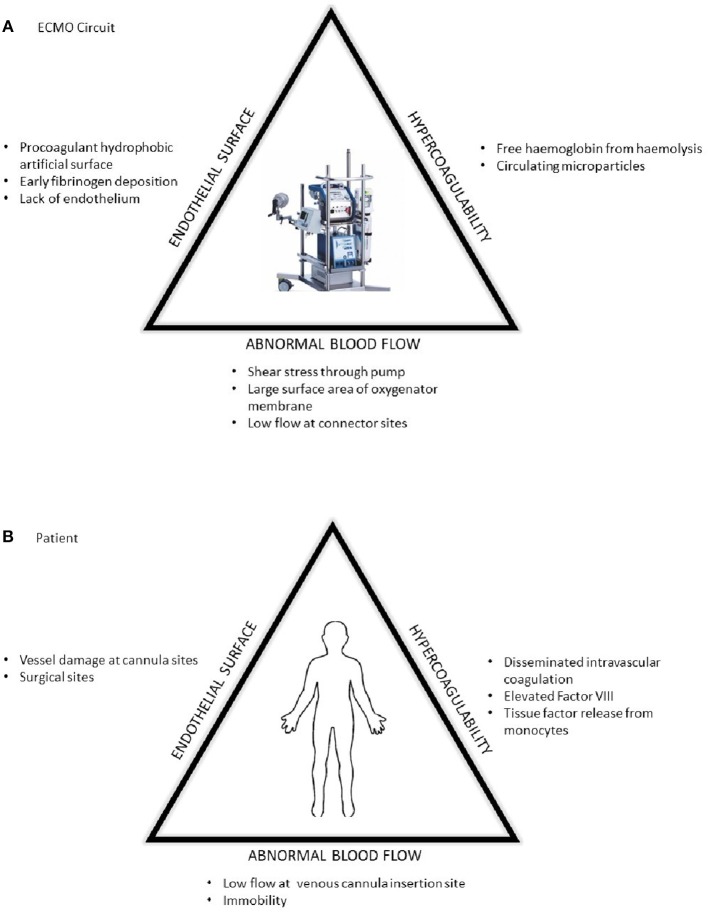
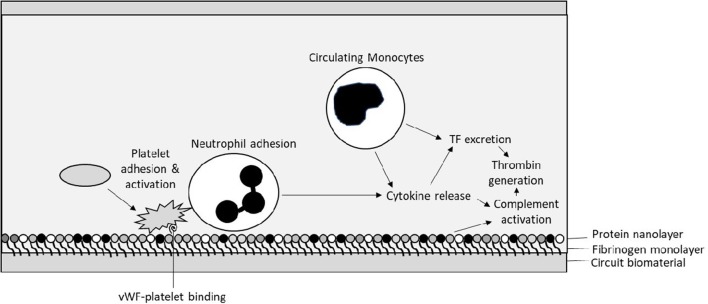
Extracorporeal membrane oxygenators are used in critical care for the management of severe respiratory and cardiac failure. Activation of the coagulation system is initiated by the exposure of blood to synthetic surfaces and the shear stresses of the circuit, especially from device pumps. Initial fibrinogen deposition and subsequent activation of coagulation factors and complement allow platelets and leucocytes to adhere to oxygenator surfaces and enhance thrombin generation. These changes and others contribute to higher rates of thrombosis seen in these patients. In addition, bleeding rates are also high. Primary haemostasis is impaired by platelet dysfunction and loss of their key adhesive molecules and shear stress causes an acquired von Willebrand defect. In addition, there is also altered fibrinolysis and lastly, administration of systemic anticoagulation is required to maintain circuit patency. Further research is required to fulyl establish the complexities of the haemostatic changes with these devices, and to elucidate the mechanistic changes that are mainly responsible so that plans can be made to reduce their complications and improve management.
Keywords: ECMO; Haemostasis; cardiopulmonary bypass; hemorrhage; thrombosis; ventricular assist device.
Figures
References
-
- Lubnow M, Philipp A, Foltan M, Bull Enger T, Lunz D, Bein T. No titletechnical complications during venovenous extracorporeal membrane oxygenation and their relevance predicting a system-exchange – retrospective analysis of 265 cases. PLoS ONE (2014) 9:1–22. 10.1371/journal.pone.0112316 - DOI - PMC - PubMed
Publication types
LinkOut - more resources
Full Text Sources
Medical
