


Intraduodenal Administration of L-Valine Has No Effect on Antropyloroduodenal Pressures, Plasma Cholecystokinin Concentrations or Energy Intake in Healthy, Lean Men
- PMID: 30621276
- PMCID: PMC6356499
- DOI: 10.3390/nu11010099
Intraduodenal Administration of L-Valine Has No Effect on Antropyloroduodenal Pressures, Plasma Cholecystokinin Concentrations or Energy Intake in Healthy, Lean Men
Abstract
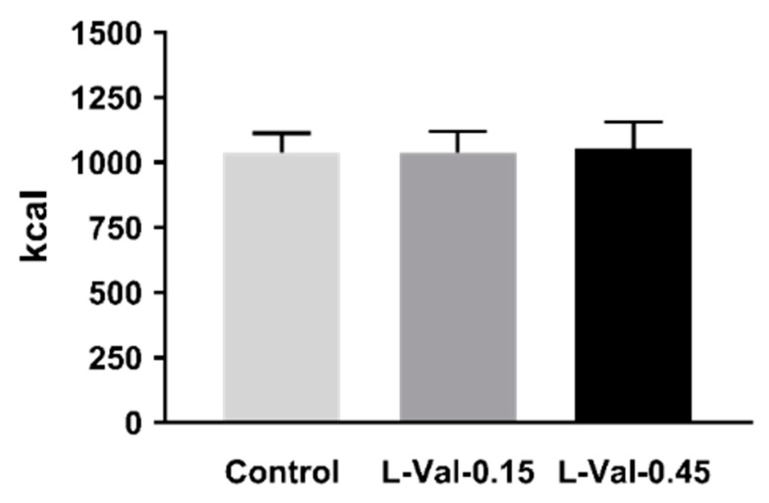
Whey protein is rich in the branched-chain amino acids, L-leucine, L-isoleucine and L-valine. Thus, branched-chain amino acids may, at least in part, mediate the effects of whey to reduce energy intake and/or blood glucose. Notably, 10 g of either L-leucine or L-isoleucine, administered intragastrically before a mixed-nutrient drink, lowered postprandial blood glucose, and intraduodenal infusion of L-leucine (at a rate of 0.45 kcal/min, total: 9.9 g) lowered fasting blood glucose and reduced energy intake from a subsequent meal. Whether L-valine affects energy intake, and the gastrointestinal functions involved in the regulation of energy intake, as well as blood glucose, in humans, is currently unknown. We investigated the effects of intraduodenally administered L-valine on antropyloroduodenal pressures, plasma cholecystokinin, blood glucose and energy intake. Twelve healthy lean men (age: 29 ± 2 years, BMI: 22.5 ± 0.7 kg/m²) were studied on 3 separate occasions in randomised, double-blind order. Antropyloroduodenal pressures, plasma cholecystokinin, blood glucose, appetite perceptions and gastrointestinal symptoms were measured during 90-min intraduodenal infusions of L-valine at 0.15 kcal/min (total: 3.3 g) or 0.45 kcal/min (total: 9.9 g), or 0.9% saline (control). Energy intake from a buffet-meal immediately after the infusions was quantified. L-valine did not affect antral, pyloric (mean number; control: 14 ± 5; L-Val-0.15: 21 ± 9; L-Val-0.45: 11 ± 4), or duodenal pressures, plasma cholecystokinin (mean concentration, pmol/L; control: 3.1 ± 0.3; L-Val-0.15: 3.2 ± 0.3; L-Val-0.45: 3.0 ± 0.3), blood glucose, appetite perceptions, symptoms or energy intake (kcal; control: 1040 ± 73; L-Val-0.15: 1040 ± 81; L-Val-0.45: 1056 ± 100), at either load (p > 0.05 for all). In conclusion, intraduodenal infusion of L-valine, at loads that are moderately (3.3 g) or substantially (9.9 g) above World Health Organization valine requirement recommendations, does not appear to have energy intake- or blood glucose-lowering effects.
Keywords: appetite regulation; branched-chain amino acids; glycaemia; gut hormones; gut motility; human.
Conflict of interest statement
The authors declare no conflict of interest. The sponsors had no role in the design of the study, the collection, analyses, or interpretation of data, writing of the manuscript, and in the decision to publish the results.
Figures


References
-
- Farnsworth E., Luscombe N.D., Noakes M., Wittert G., Argyiou E., Clifton P.M. Effect of a high-protein, energy-restricted diet on body composition, glycemic control, and lipid concentrations in overweight and obese hyperinsulinemic men and women. Am. J. Clin. Nutr. 2003;78:31–39. doi: 10.1093/ajcn/78.1.31. - DOI - PubMed
-
- Aller E.E., Larsen T.M., Claus H., Lindroos A.K., Kafatos A., Pfeiffer A., Martinez J.A., Handjieva-Darlenska T., Kunesova M., Stender S., et al. Weight loss maintenance in overweight subjects on ad libitum diets with high or low protein content and glycemic index: The DIOGENES trial 12-month results. Int. J. Obes. (Lond.) 2014;38:1511–1517. doi: 10.1038/ijo.2014.52. - DOI - PubMed
Publication types
MeSH terms
Substances
Grants and funding
LinkOut - more resources
Full Text Sources
