


Systematic studies on the Zygophyllaceae of Saudi Arabia: Two new subspecies combination in Tetraena Maxim
- PMID: 30622407
- PMCID: PMC6318813
- DOI: 10.1016/j.sjbs.2016.12.022
Systematic studies on the Zygophyllaceae of Saudi Arabia: Two new subspecies combination in Tetraena Maxim
Abstract
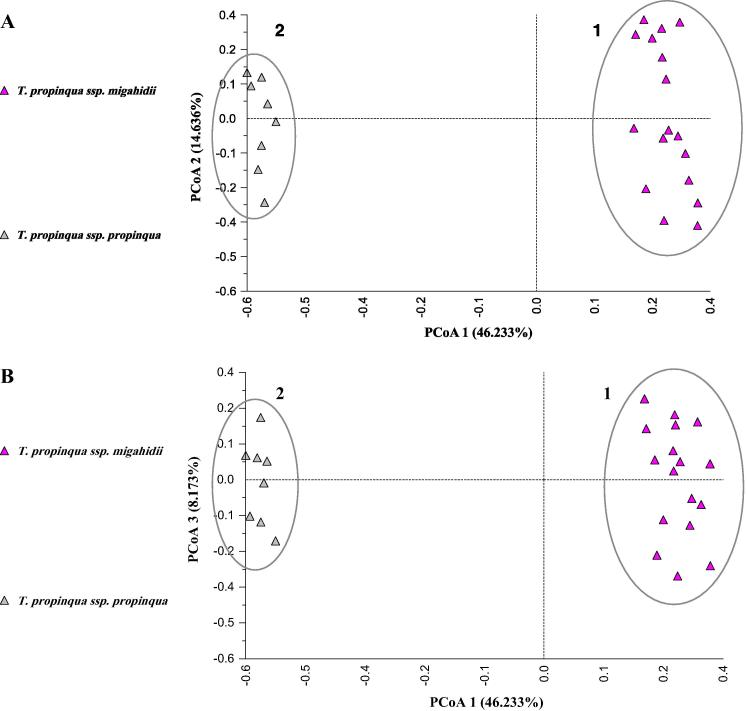
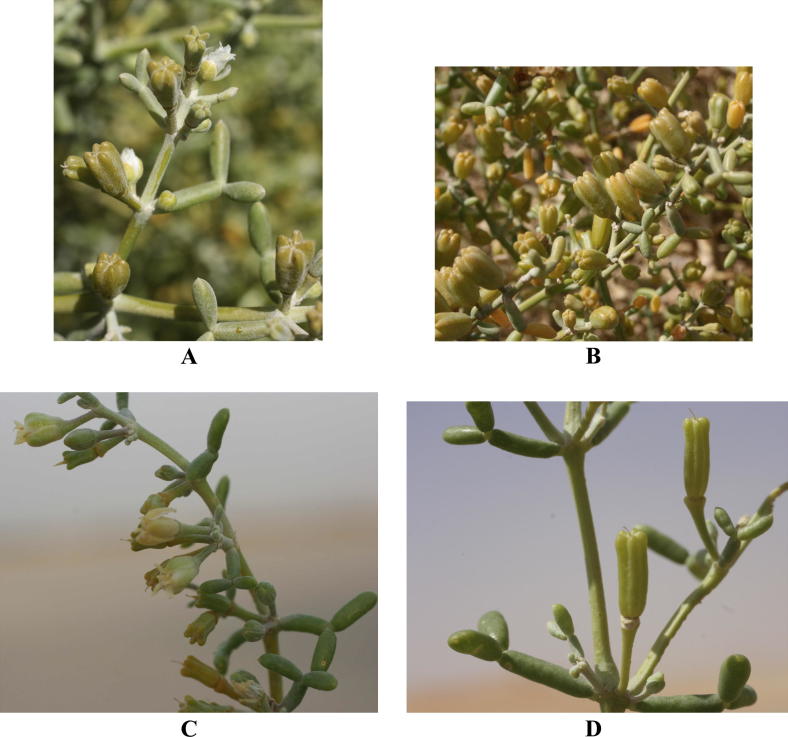
Tetraena propinqua (Decne.) Ghazanfar and Osborne ssp. propinqua Alzahrani, and Tetraena propinqua (Decne.) Ghazanfar and Osborne ssp. migahidii (Hadidi ex Beier & Thulin) Alzahrani, are described and illustrated as new subspecies combination nova from Saudi Arabia. The diagnostic characters, description, detailed illustrations, geographical distribution, key to subspecies and taxonomic discussion are provided. The similarities and significant differences between the two subspecies are confirmed by PCoA and UPGMA analyses. The World Conservation Union (IUCN) threatened category and observations on the population are noted.
Keywords: PCoA; Saudi Arabia; Taxonomy; Tetraena; Tetraena propinqua; UPGMA; Zygophyllaceae.
Figures
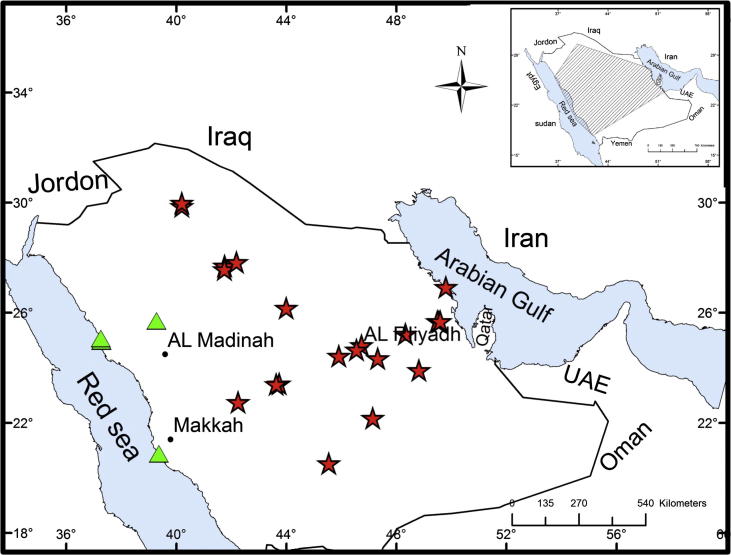
 , T. propinqua ssp. migahidii
 .
.
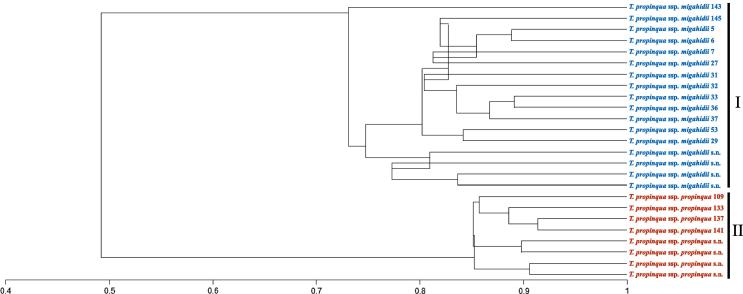
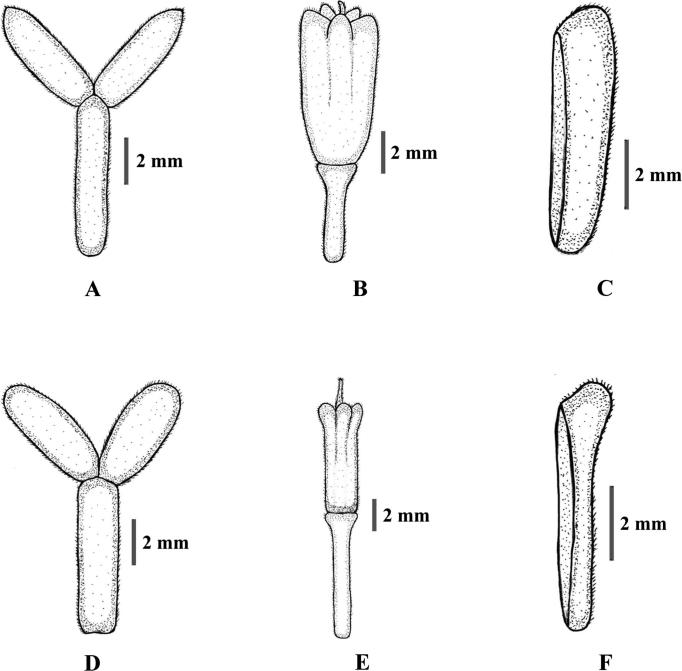
References
-
- Al-Arjany K.M. King Saud University; Saudi Arabia: 2011. Molecular taxonomic perspective and eco-physiological variations of some species of Tribulus, Zygophyllum and Fagonia genera of family Zygophyllacea in Saudi Arabia.
-
- Alzahrani D.A., Albokhari E.J. Systematic studies on the Zygophyllaceae of Saudi Arabia: new combinations in Tetraena Maxim. Turk. J. Bot. 2016
-
- Azevedo L.B. Radboud University Nijmegen; the Netherlands: 2014. Developmed and Application of Stressor–Response Relationships of Nutrients. (Ph.D. thesis)
-
- Beier B.A., Chase M.W., Thulin M. Phylogenetic relationships and taxonomy of subfamily Zygophylloideae (Zygophyllaceae) based on molecular and morphological data. Plant Syst. Evol. 2003;240:11–39.
LinkOut - more resources
Full Text Sources
