Improving analgesia prescription for trauma inpatients
- PMID: 30623112
- PMCID: PMC6307579
- DOI: 10.1136/bmjoq-2018-000397
Improving analgesia prescription for trauma inpatients
Abstract
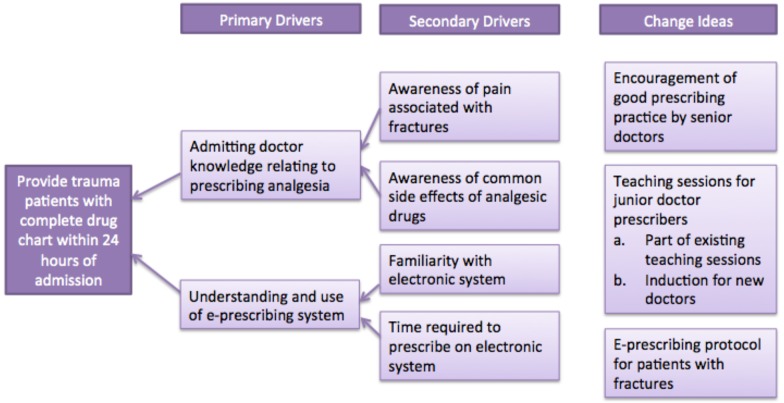
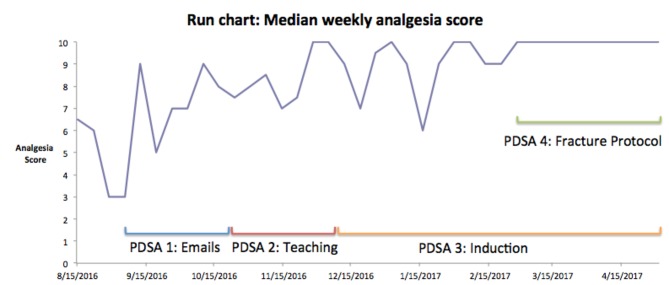
Patients value effective pain relief. Complications of inadequate pain control include increased risk of infection, decreased patient comfort and progression to chronic pain, all of which have significant socioeconomic consequence. Accessibility to analgesia is vital to effective administration. This improvement project aimed to improve the consistency and adequacy of analgesia prescribing for trauma inpatients over a 12-month period. Four PDSA ('plan, do, study, act') cycles resulted in sustained and significant improvements in analgesia prescription. The interventions included senior encouragement, teaching sessions, targeted inductions and implementation of a novel e-prescribing protocol. Prospective data and real-time discussion from stakeholder medical and management teams enabled iterative change to practice. Drug charts were reviewed for all trauma inpatients (n=276) over a 10-month period, recording all analgesia prescribed within 24 hours of admission. Each prescription was scored (maximum of 10 points) according to parameters agreed by the acute pain specialty leaders. An improving trend was observed in the analgesia score over the study period. Each intervention was associated with improved practice. Based on observed improvements, a novel electronic prescribing protocol was developed in conjunction with the information technology department, resulting in maximum scores for prescribing which were sustained over the final 3 months of the study. This was subsequently adopted as standard practice within the department. One year following completion of the project, a further 3 weeks of data were collected to assess long-term sustainability-scores remained 10 out of 10. Addressing the prescribing habits of junior doctors improved accessibility to analgesia for trauma patients. The electronic prescribing tool made prescribing straightforward and faster, and was the most successful intervention. Doctor satisfaction using this time-saving tool was high. Identifying a stakeholder within the information technology department proved pivotal to transferring the project aims into clinical practice.
Keywords: continuous quality improvement; decision support, computerised; hospital medicine; pain; pdsa.
Conflict of interest statement
Competing interests: None declared.
Figures
References
-
- Doran GT. There’s a S.M.A.R.T. way to write managements’ goals and objectives. Management Review 1981;70:35–6.
-
- American college of emergency physicians. Patient Satisfaction 2011. https://www.acep.org/patientsatisfaction/#sm.0001eiagv1aahfcfqup1lv4kyfqbn (accessed 4 Apr 2018).
LinkOut - more resources
Full Text Sources