


Differential Pathogen-Specific Immune Reconstitution in Antiretroviral Therapy-Treated Human Immunodeficiency Virus-Infected Children
- PMID: 30624717
- PMCID: PMC6467189
- DOI: 10.1093/infdis/jiy668
Differential Pathogen-Specific Immune Reconstitution in Antiretroviral Therapy-Treated Human Immunodeficiency Virus-Infected Children
Abstract
Background: Susceptibility to coinfections in human immunodeficiency virus (HIV)-infected patients remains increased despite antiretroviral therapy (ART). To elucidate mechanisms involved in immune reconstitution, we studied immune activation, immune exhaustion, and HIV- and copathogen-specific T-cell responses in children before and after ART.
Methods: We prospectively enrolled 25 HIV-infected children to study HIV-, cytomegalovirus (CMV)-, and tuberculosis (TB)-specific T-cell responses before and 1 year after initiation of ART using intracellular cytokine (interleukin-2, interferon-γ, tumor necrosis factor-α) staining assays after in vitro stimulation. We further measured expression of activation, immune exhaustion, and memory phenotype markers and studied proliferative responses after antigen stimulation.
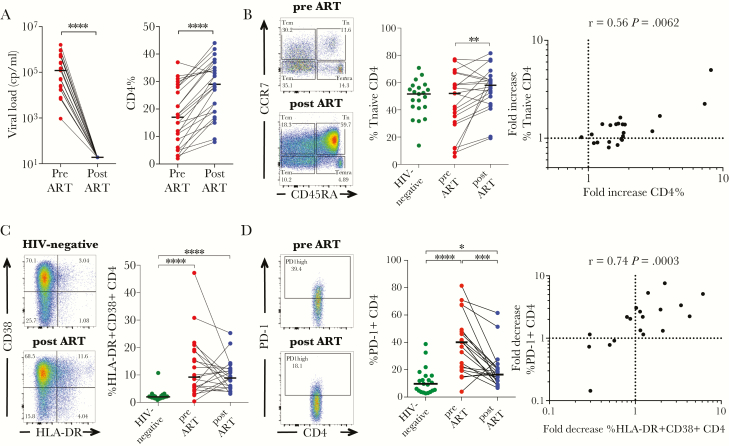
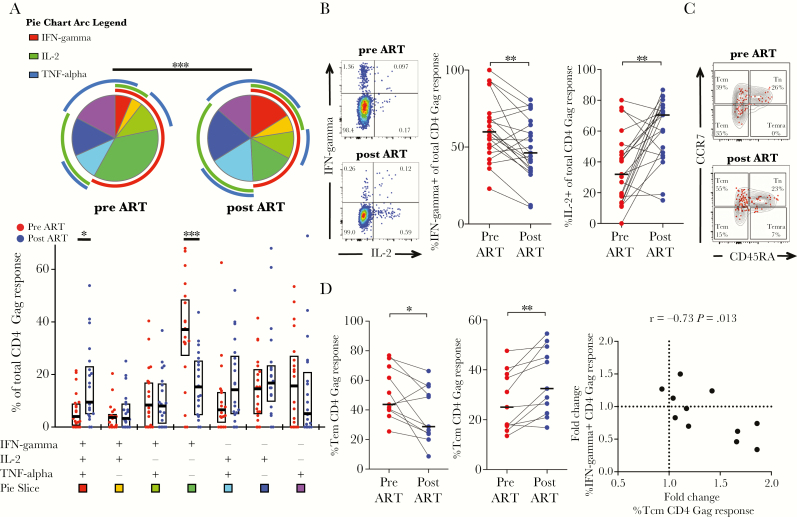
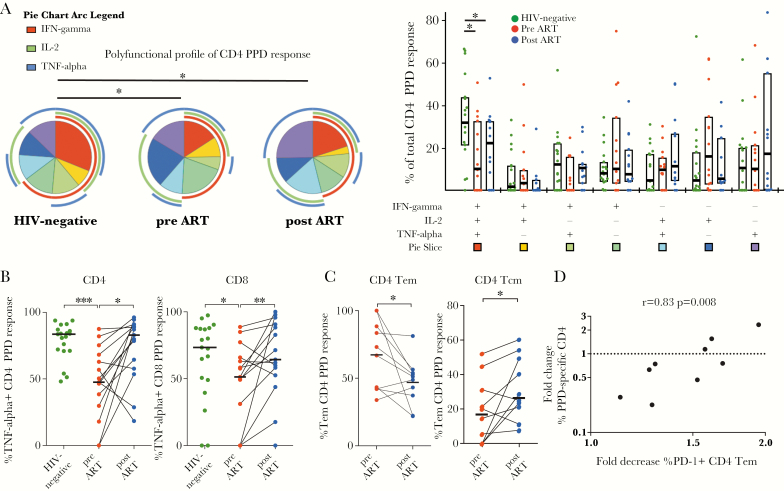
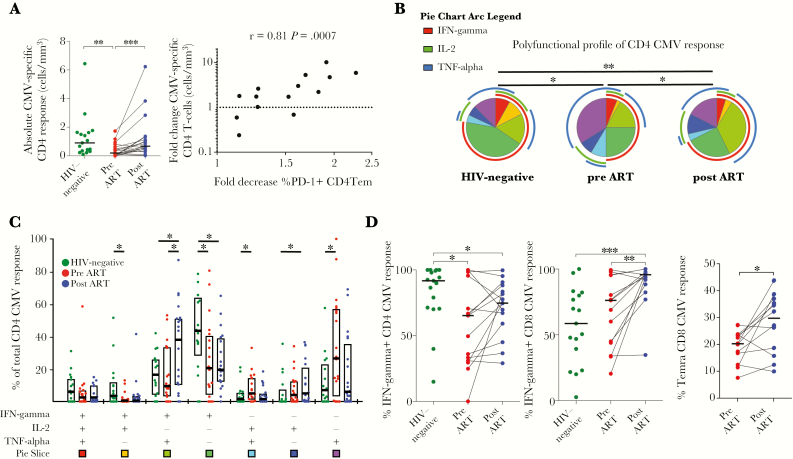
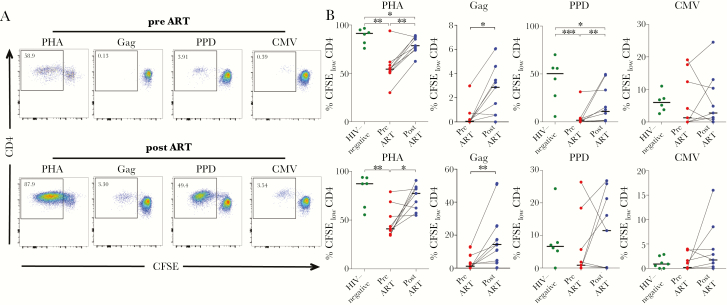
Results: We observed differential, pathogen-specific changes after 1 year of ART in cytokine profiles of CD4 T-cell responses that were associated with shifts in memory phenotype and decreased programmed cell death 1 (PD-1) expression. The proliferative capacity of HIV- and PPD-specific responses increased after 1 year of ART. Of note, the recovery of CMV- and TB-specific responses was correlated with a decrease in PD-1 expression (r = 0.83, P = .008 and r = 0.81, P = .0007, respectively).
Conclusions: Reconstitution of immune responses on ART is associated with alterations in T-cell phenotype, function, and PD-1 expression that are distinct for HIV, TB, and CMV. The PD-1 pathway represents a potential target for immunotherapy in HIV-infected patients on ART with insufficient immune reconstitution.
Keywords: HIV; antiretroviral therapy; cytomegalovirus; tuberculosis.
© The Author(s) 2019. Published by Oxford University Press for the Infectious Diseases Society of America.
Figures
Comment in
-
The Immune Checkpoint Protein Programmed Death 1 During HIV Infection in Children: Clinical Relevance and Beyond.J Infect Dis. 2019 Apr 16;219(9):1353-1355. doi: 10.1093/infdis/jiy669. J Infect Dis. 2019. PMID: 30624700 No abstract available.
References
-
- Day CL, Kaufmann DE, Kiepiela P, et al. PD-1 expression on HIV-specific T cells is associated with T-cell exhaustion and disease progression. Nature 2006; 443:350–4. - PubMed
-
- Kaufmann DE, Kavanagh DG, Pereyra F, et al. Upregulation of CTLA-4 by HIV-specific CD4+ T cells correlates with disease progression and defines a reversible immune dysfunction. Nat Immunol 2007; 8:1246–54. - PubMed
Publication types
MeSH terms
Substances
Grants and funding
LinkOut - more resources
Full Text Sources
Medical
Research Materials
