


Effect of Glyceryl Trinitrate on Hemodynamics in Acute Stroke
- PMID: 30626285
- PMCID: PMC6358219
- DOI: 10.1161/STROKEAHA.118.023190
Effect of Glyceryl Trinitrate on Hemodynamics in Acute Stroke
Abstract
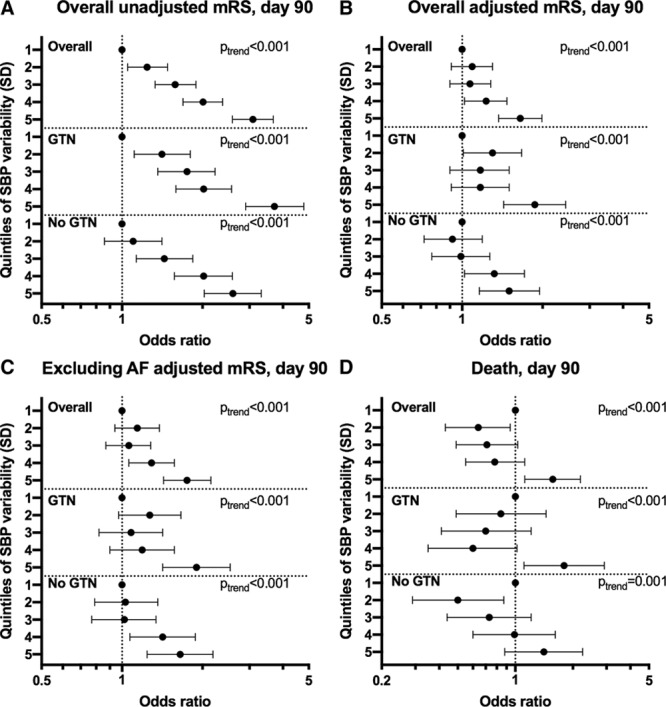
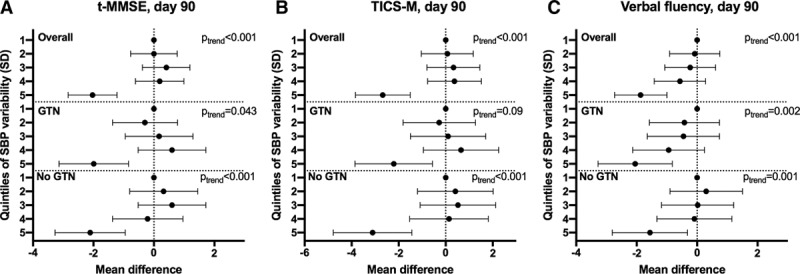
Background and Purpose- Increased blood pressure (BP), heart rate, and their derivatives (variability, pulse pressure, rate-pressure product) are associated with poor clinical outcome in acute stroke. We assessed the effects of glyceryl trinitrate (GTN) on hemodynamic parameters and these on outcome in participants in the ENOS trial (Efficacy of Nitric Oxide in Stroke). Methods- Four thousand and eleven patients with acute stroke and raised BP were randomized within 48 hours of onset to transdermal GTN or no GTN for 7 days. Peripheral hemodynamics were measured at baseline (3 measures) and daily (2 measures) during treatment. Between-visit BP variability over days 1 to 7 (as SD) was assessed in quintiles. Functional outcome was assessed as modified Rankin Scale and cognition as telephone mini-mental state examination at day 90. Analyses were adjusted for baseline prognostic variables. Data are mean difference or odds ratios with 95% CI. Results- Increased baseline BP (diastolic, variability), heart rate, and rate-pressure product were each associated with unfavorable functional outcome at day 90. Increased between-visit systolic BP variability was associated with an unfavourable shift in modified Rankin Scale (highest quintile adjusted odds ratio, 1.65; 95% CI, 1.37-1.99), worse cognitive scores (telephone mini-mental state examination: highest quintile adjusted mean difference, -2.03; 95% CI, -2.84 to -1.22), and increased odds of death at day 90 (highest quintile adjusted odds ratio, 1.57; 95% CI, 1.12-2.19). GTN lowered BP and rate-pressure product and increased heart rate at day 1 and reduced between-visit systolic BP variability. Conclusions- Increased between-visit BP variability was associated with poor functional and cognitive outcomes and increased death 90 days after acute stroke. In addition to lowering BP and rate-pressure product, GTN reduced between-visit systolic BP variability. Agents that lower BP variability in acute stroke require further study.
Keywords: blood pressure; glyceryl trinitrate; heart rate; hemodynamics; hemorrhage.
Figures
References
-
- Oppenheimer S, Hachinski V. Complications of acute stroke. Lancet. 1992;339:721–724. - PubMed
-
- Leonardi-Bee J, Bath PM, Phillips SJ, Sandercock PA IST Collaborative Group. Blood pressure and clinical outcomes in the International Stroke Trial. Stroke. 2002;33:1315–1320. - PubMed
-
- Vemmos KN, Tsivgoulis G, Spengos K, Zakopoulos N, Synetos A, Manios E, et al. U-shaped relationship between mortality and admission blood pressure in patients with acute stroke. J Intern Med. 2004;255:257–265. - PubMed
-
- Sprigg N, Gray LJ, Bath PM, Boysen G, De Deyn PP, Friis P, et al. TAIST Investigators. Relationship between outcome and baseline blood pressure and other haemodynamic measures in acute ischaemic stroke: data from the TAIST trial. J Hypertens. 2006;24:1413–1417. doi: 10.1097/01.hjh.0000234123.55895.12. - PubMed
-
- Willmot M, Leonardi-Bee J, Bath PM. High blood pressure in acute stroke and subsequent outcome: a systematic review. Hypertension. 2004;43:18–24. doi: 10.1161/01.HYP.0000105052.65787.35. - PubMed
Publication types
MeSH terms
Substances
Grants and funding
LinkOut - more resources
Full Text Sources
Medical
