Review
. 2019 Jan 10;4(1):e123947.
doi: 10.1172/jci.insight.123947.

Cutaneous immune responses mediated by dendritic cells and mast cells

Affiliations
Review

Cutaneous immune responses mediated by dendritic cells and mast cells

Tina L Sumpter et al. JCI Insight. .

Abstract

In the skin, complex cellular networks maintain barrier function and immune homeostasis. Tightly regulated multicellular cascades are required to initiate innate and adaptive immune responses. Innate immune cells, particularly DCs and mast cells, are central to these networks. Early studies evaluated the function of these cells in isolation, but recent studies clearly demonstrate that cutaneous DCs (dermal DCs and Langerhans cells) physically interact with neighboring cells and are receptive to activation signals from surrounding cells, such as mast cells. These interactions amplify immune activation. In this review, we discuss the known functions of cutaneous DC populations and mast cells and recent studies highlighting their roles within cellular networks that determine cutaneous immune responses.


Conflict of interest statement

Conflict of interest: The authors have declared that no conflict of interest exists.

Figures

Figure 1
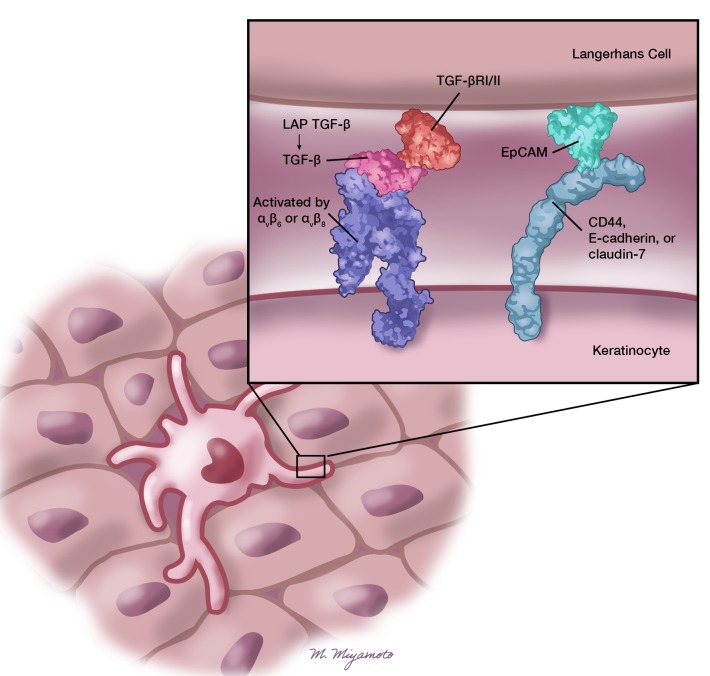
Figure 1. Langerhans cells interact with keratinocytes in the epidermis through multiple junctions.
In the steady state, the retention of Langerhans cells in the epidermis requires the conversion of TGF-β bound to the latency-associated peptide (LAP) to active TGF-β by integrins αvβ6 or αvβ8 expressed on the keratinocyte surface. Interactions between the epithelial cell adhesion molecule (EpCAM) on Langerhans cells and claudin-7, a variant of CD44, or epithelial cadherin (E-cadherin) expressed on keratinocytes may regulate Langerhans cell migration. DLN: draining lymph node. Illustrated by Mao Miyamoto.
Figure 2
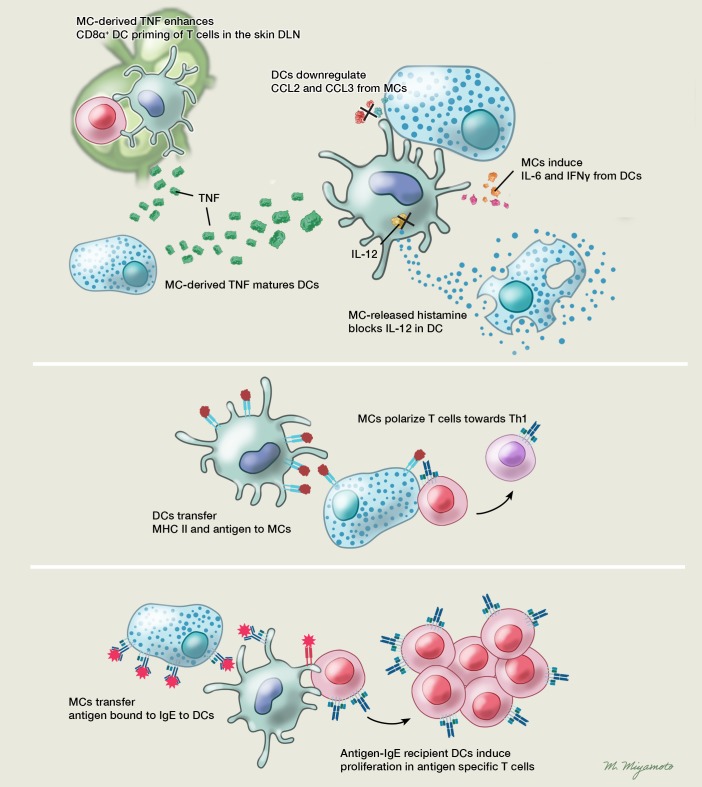
Figure 2. Dendritic cell–mast cell communication facilitates induction of adaptive immune responses.
Contact-dependent and -independent mechanisms between DCs and mast cells (MCs) promote T cell responses. Illustrated by Mao Miyamoto.

References

    1. Hari A, Flach TL, Shi Y, Mydlarski PR. Toll-like receptors: role in dermatological disease. Mediators Inflamm. 2010;2010:437246. - PMC - PubMed
    1. Moqrich A, et al. Impaired thermosensation in mice lacking TRPV3, a heat and camphor sensor in the skin. Science. 2005;307(5714):1468–1472. doi: 10.1126/science.1108609. - DOI - PubMed
    1. Müller M, et al. Specific TRPC6 channel activation, a novel approach to stimulate keratinocyte differentiation. J Biol Chem. 2008;283(49):33942–33954. doi: 10.1074/jbc.M801844200. - DOI - PMC - PubMed
    1. Yang D, Biragyn A, Kwak LW, Oppenheim JJ. Mammalian defensins in immunity: more than just microbicidal. Trends Immunol. 2002;23(6):291–296. doi: 10.1016/S1471-4906(02)02246-9. - DOI - PubMed
    1. Gröne A. Keratinocytes and cytokines. Vet Immunol Immunopathol. 2002;88(1–2):1–12. - PubMed