


Effects of Vitamin D Supplementation on Glucose and Insulin Homeostasis and Incident Diabetes among Nondiabetic Adults: A Meta-Analysis of Randomized Controlled Trials
- PMID: 30627160
- PMCID: PMC6304827
- DOI: 10.1155/2018/7908764
Effects of Vitamin D Supplementation on Glucose and Insulin Homeostasis and Incident Diabetes among Nondiabetic Adults: A Meta-Analysis of Randomized Controlled Trials
Abstract
Aims: Emerging evidence has suggested a mechanistic link from vitamin D metabolism to glucose and insulin homeostasis. This study is aimed at specifically quantifying the direct effects of vitamin D supplementation on indexes of glucose and insulin homeostasis as well as incidence of type 2 diabetes (T2D) among nondiabetic adults.
Methods: We systematically searched randomized controlled trials (RCTs) of vitamin D supplementation in nondiabetic adults in PubMed, EMBASE, and CENTRAL. Random-effects meta-analysis was conducted to pool the estimates.
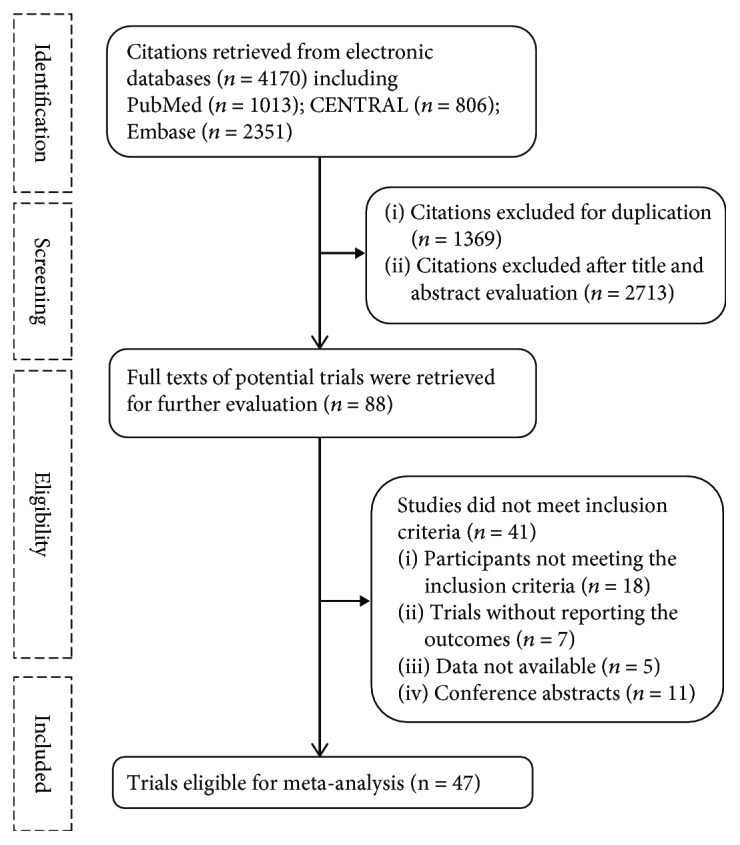
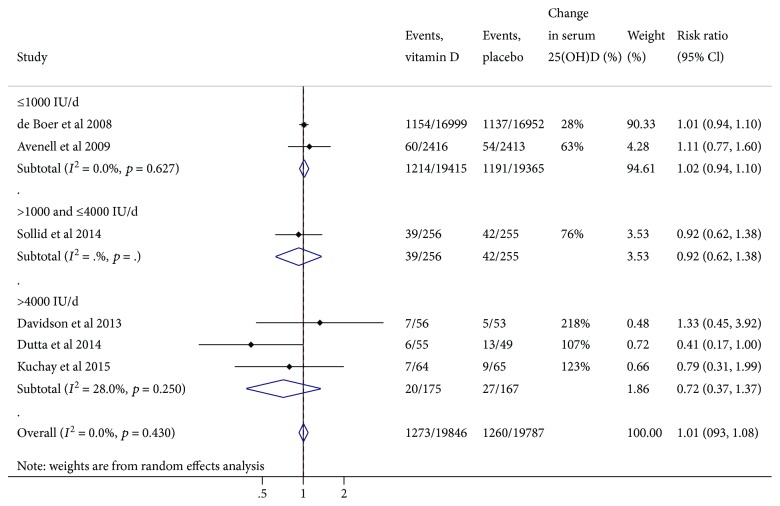
Results: Our meta-analysis included 47 RCTs involving 44,161 nondiabetic individuals with a median trial duration of 4 months and a median dose of 4000 IU/d. Vitamin D supplementation significantly reduced fasting glucose by 0.11 mmol/L, fasting insulin by 1.47 mIU/L, and HOMA-IR by 0.32 while increasing total 25 (OH) D levels by 40.14 nmol/L. We found no significant effects of vitamin D supplementation on insulin secretion or beta cell function indexes. Based on the data from six trials involving 39,633 participants and 2533 incident T2D cases, vitamin D supplementation was not associated with the risk of incident diabetes compared to placebo (pooled relative risk: 1.01, 95% confidence interval: 0.93 to 1.08).
Conclusions: Our meta-analysis found that vitamin D supplementation might improve glucose and insulin metabolism without affecting the risk of T2D among nondiabetic adults.
Figures
References
-
- Organization WH. Global Report on Diabetes. Working Papers; 2016.
-
- Song Y. Q., Manson J. A. E. Vitamin D, insulin resistance, and type 2 diabetes. Current Cardiovascular Risk Reports. 2010;4(1):40–47. doi: 10.1007/s12170-009-0071-2. - DOI
LinkOut - more resources
Full Text Sources
