Whole exome sequencing identifies hemizygous deletions in the UGT2B28 and USP17L2 genes in a three‑generation family with endometriosis
- PMID: 30628680
- PMCID: PMC6390005
- DOI: 10.3892/mmr.2019.9818
Whole exome sequencing identifies hemizygous deletions in the UGT2B28 and USP17L2 genes in a three‑generation family with endometriosis
Abstract
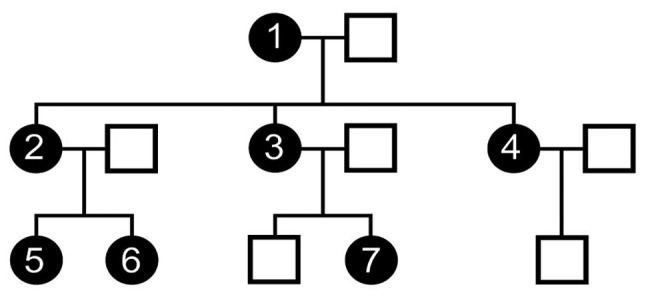
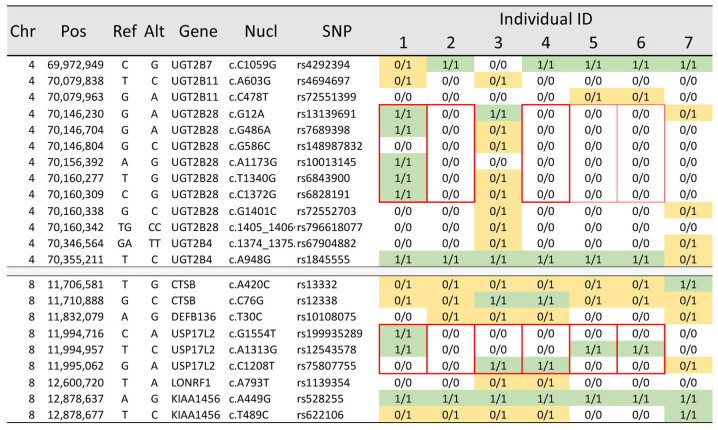
Endometriosis is an enigmatic condition with an unknown etiology and a poorly understood pathogenesis. It is considered to appear from the interplay of many genetic and environmental factors, affecting up to 10% of women and represents a major cause of pain and infertility. The familial association of endometriosis, as demonstrated through monozygotic twin and family studies suggests a genetic contribution to the disease, with further case‑control and genome‑wide association studies (GWAS) detecting various endometriosis risk factors. In a recent study, we described a unique, three‑generation family of Cretan origin (Greece) with 7 females with surgically confirmed endometriosis (grandmother, 3 daughters and 3 granddaughters). All the affected members of this family displayed a variety of clinical manifestations and complications. In the present study, to further analyze the genetic variants conferring the risk of developing endometriosis, whole exome sequencing (WES) was performed, using the AmpliSeq technology on the Ion Proton platform. An initial analysis of 64 variants that were detected across the 14 genes previously confirmed to be associated with endometriosis, did not identify any deleterious exonic variants in these genes. However, further analysis revealed 2 hemizygous deletions in the grandmother that segregate in several of her affected offspring. The first deletion was found in the UGT2B28 locus, spanning 7 informative sequence variants across at least 14 kb. The second deletion, located in USP17L2, spans 3 informative variants across at least 2 kb. On the whole, the findings of the presents study implicate 2 additional genes in the pathogenesis of endometriosis, apart from those already identified by GWAS.
Figures
References
MeSH terms
Substances
LinkOut - more resources
Full Text Sources
Other Literature Sources
Medical
Molecular Biology Databases