


Major depressive disorder in women and risk for future generations: population-based three-generation study
- PMID: 30632472
- PMCID: PMC6343114
- DOI: 10.1192/bjo.2018.83
Major depressive disorder in women and risk for future generations: population-based three-generation study
Abstract
Background: The well-known adverse consequences of maternal depression prompts consideration of the importance of learning more about intergenerational transmission in order to identify individuals at risk of developing depressive disorders.AimsTo follow two generations of women with major depressive disorder (MDD) and to examine the risk of MDD in the third-generation children.
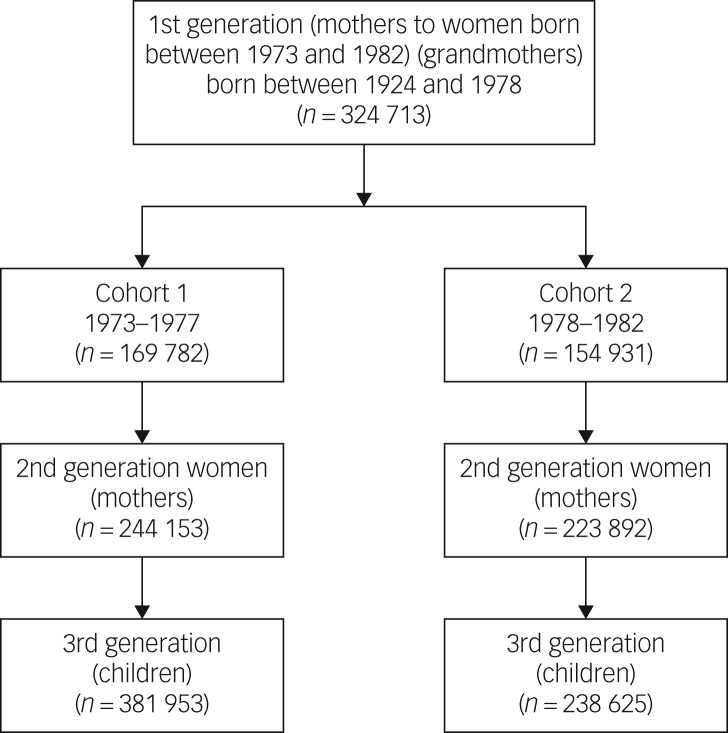
Method: A register-based, retrospective cohort study of all women born in Sweden between 1973 and 1982 who had given birth during the study period, their mothers and their children. All generations were followed until 2013. Data was stratified into two cohorts: women born between 1973 and 1977 and those born between 1978 and 1982.
Results: Second-generation women were twice as likely to be diagnosed with MDD if their mothers had been diagnosed with MDD. If both previous generations had been diagnosed with depression the likelihood of the third-generation child being diagnosed with MDD was markedly increased (odds ratio (OR) = 5.07, 95% CI 4.06-6.34 and OR = 7.20, 95% CI 4.41-11.77 in cohort 1 and cohort 2, respectively).
Conclusions: There is a strong intergenerational impact in the transmission of MDD. The risk of MDD is especially high in individuals with MDD in both previous maternal generations.Declaration of interestNone.
Keywords: Major depressive disorder; intergenerational; offspring; women.
Figures
References
-
- Ebmeier KP, Donaghey C, Steele JD. Recent developments and current controversies in depression. Lancet 2006; 367: 153–67. - PubMed
-
- Kessler RC, Merikangas KR, Wang PS. Prevalence, comorbidity, and service utilization for mood disorders in the United States at the beginning of the twenty-first century. Annu Rev Clin Psychol 2007; 3: 137–58. - PubMed
-
- Fernandez-Pujals AM, Adams MJ, Thomson P, McKechanie AG, Blackwood DH, Smith BH, et al. Epidemiology and heritability of major depressive disorder, stratified by age of onset, sex, and illness course in Generation Scotland: Scottish Family Health Study (GS:SFHS). PLoS One 2015; 10: e0142197. - PMC - PubMed
