


Clinical and socioeconomic factors associated with delayed orchidopexy in cryptorchid boys in China: a retrospective study of 2423 cases
- PMID: 30632485
- PMCID: PMC6498732
- DOI: 10.4103/aja.aja_106_18
Clinical and socioeconomic factors associated with delayed orchidopexy in cryptorchid boys in China: a retrospective study of 2423 cases
Abstract
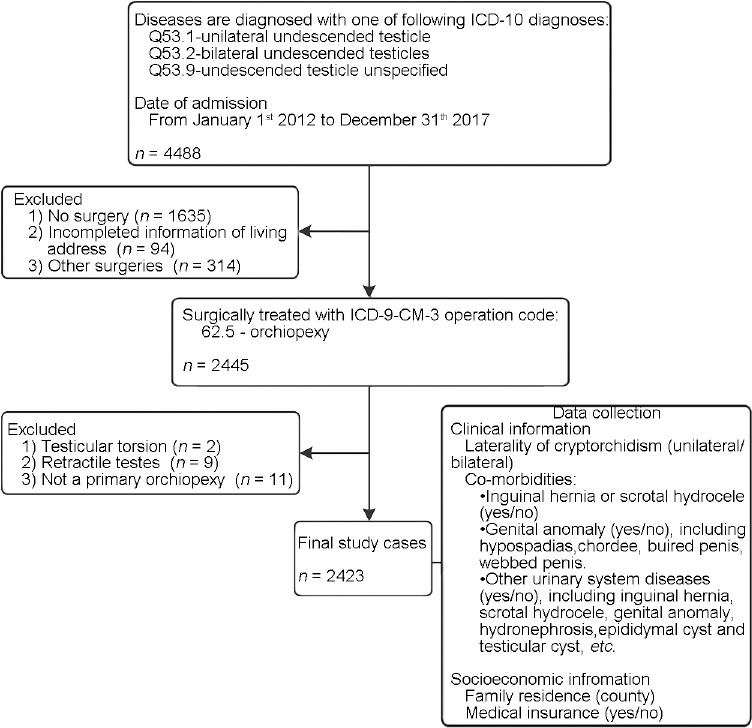
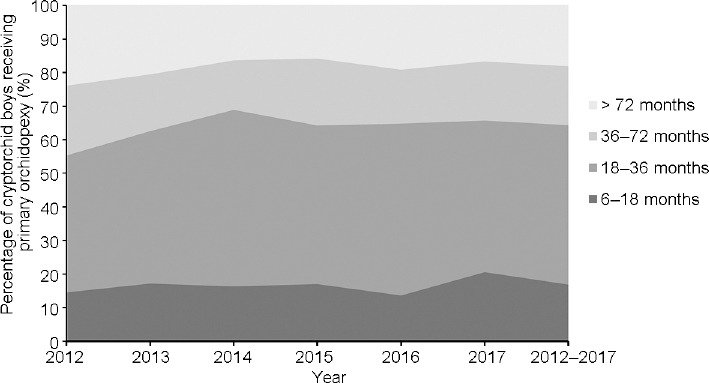
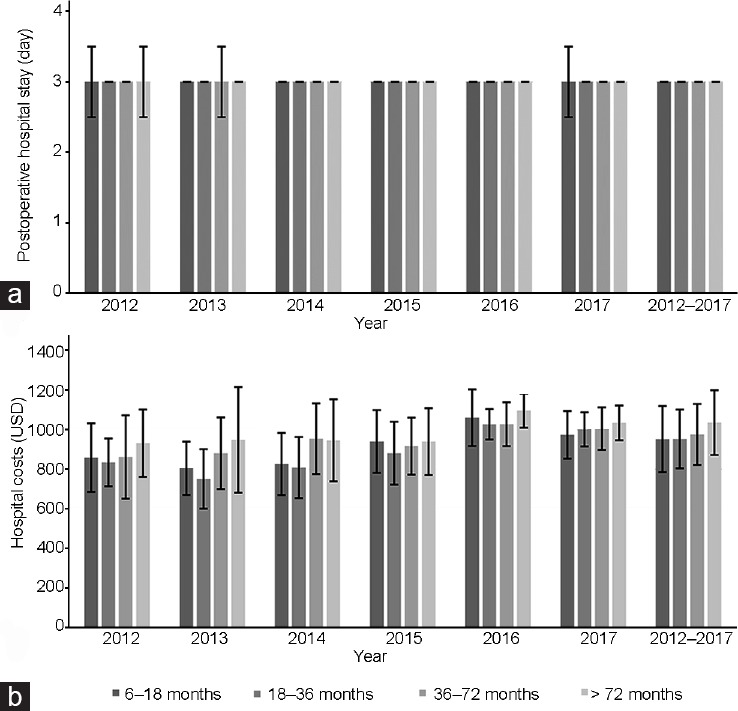
We investigated the associations of clinical and socioeconomic factors with delayed orchidopexy for cryptorchidism in China. A retrospective study was conducted on cryptorchid boys who underwent orchidopexy at Children's Hospital at Chongqing Medical University in China from January 2012 to December 2017. Of 2423 patients, 410 (16.9%) received timely repair by 18 months of age, beyond which surgery was considered delayed. Univariate analysis suggested that the laterality of cryptorchidism (P = 0.001), comorbidities including inguinal hernia/scrotal hydrocele (P < 0.001) or urinary tract disease (P = 0.016), and whether patients lived in a poverty county (P < 0.001) could influence whether orchidopexy was timely or delayed. Logistic regression analysis suggested that the following factors were associated with delayed repair: unilateral rather than bilateral cryptorchidism (odds ratio [OR] = 1.752, P < 0.001), absence of inguinal hernia or hydrocele (OR = 2.027, P = 0.019), absence of urinary tract disease (OR = 3.712, P < 0.001), and living in a poverty county (OR = 2.005, P < 0.001). The duration of postoperative hospital stay and hospital costs increased with the patient's age at the time of surgery.
Keywords: birth defect; children; congenital disorder; cryptorchidism; orchidopexy; poverty.
Figures
References
-
- Kollin C, Karpe B, Hesser U, Granholm T, Ritzén EM. Surgical treatment of unilaterally undescended testes: testicular growth after randomization to orchiopexy at age 9 months or 3 years. J Urol. 2007;178:1589–93. - PubMed
-
- Acerini CL, Miles HL, Dunger DB, Ong KK, Hughes IA. The descriptive epidemiology of congenital and acquired cryptorchidism in a UK infant cohort. Arch Dis Child. 2009;94:868–72. - PubMed
-
- Wagnermahler K, Kurzenne JY, Delattre I, Bérard E, Mas JC, et al. Prospective study on the prevalence and associated risk factors of cryptorchidism in 6246 newborn boys from Nice area, France. Int J Androl. 2011;34:e499–510. - PubMed
-
- Wohlfahrt-Veje C, Boisen KA, Boas M, Damgaard IN, Kai CM, et al. Acquired cryptorchidism is frequent in infancy and childhood. Int J Androl. 2009;32:423–8. - PubMed
-
- Bergbrant S, Omling E, Björk J, Hagander L. Cryptorchidism in Sweden: a nationwide study of prevalence, operative management, and complications. J Pediatr. 2018;194:197–203.e6. - PubMed
Publication types
MeSH terms
LinkOut - more resources
Full Text Sources
