


Early onset oral tongue squamous cell carcinoma: Associated factors and patient outcomes
- PMID: 30633435
- PMCID: PMC7010313
- DOI: 10.1002/hed.25650
Early onset oral tongue squamous cell carcinoma: Associated factors and patient outcomes
Abstract
Background: Incidence of oral tongue squamous cell carcinoma (OTC) is rising among those under age 50 years. The etiology is unknown.
Methods: A total of 395 cases of OTC diagnosed and/or treated at Vanderbilt University Medical Center between 2000 and 2017 were identified. Of those, 113 (28.6%) were early onset (age < 50 years). Logistic regression was used to identify factors associated with early onset OTC. Cox proportional hazards models evaluated survival and recurrence.
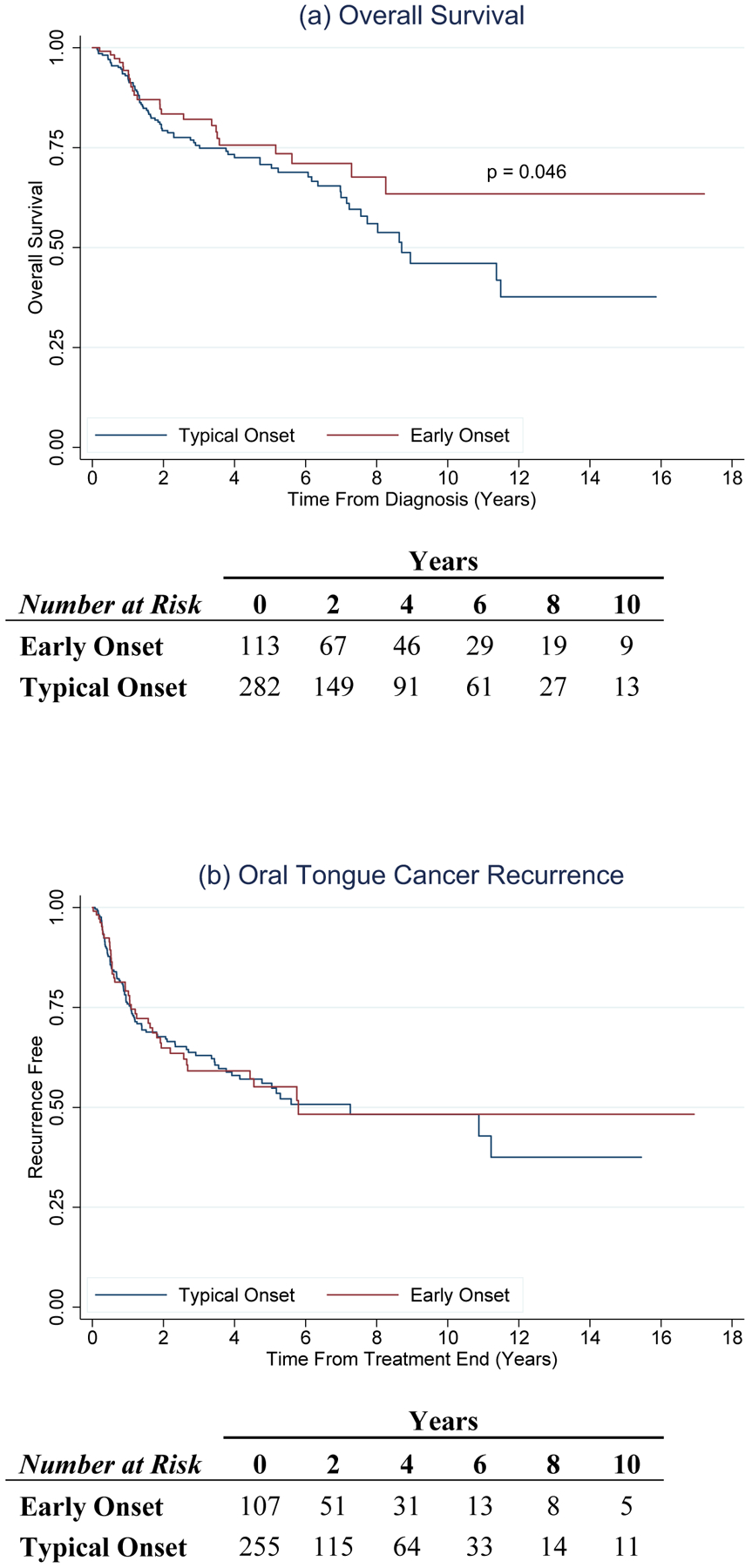
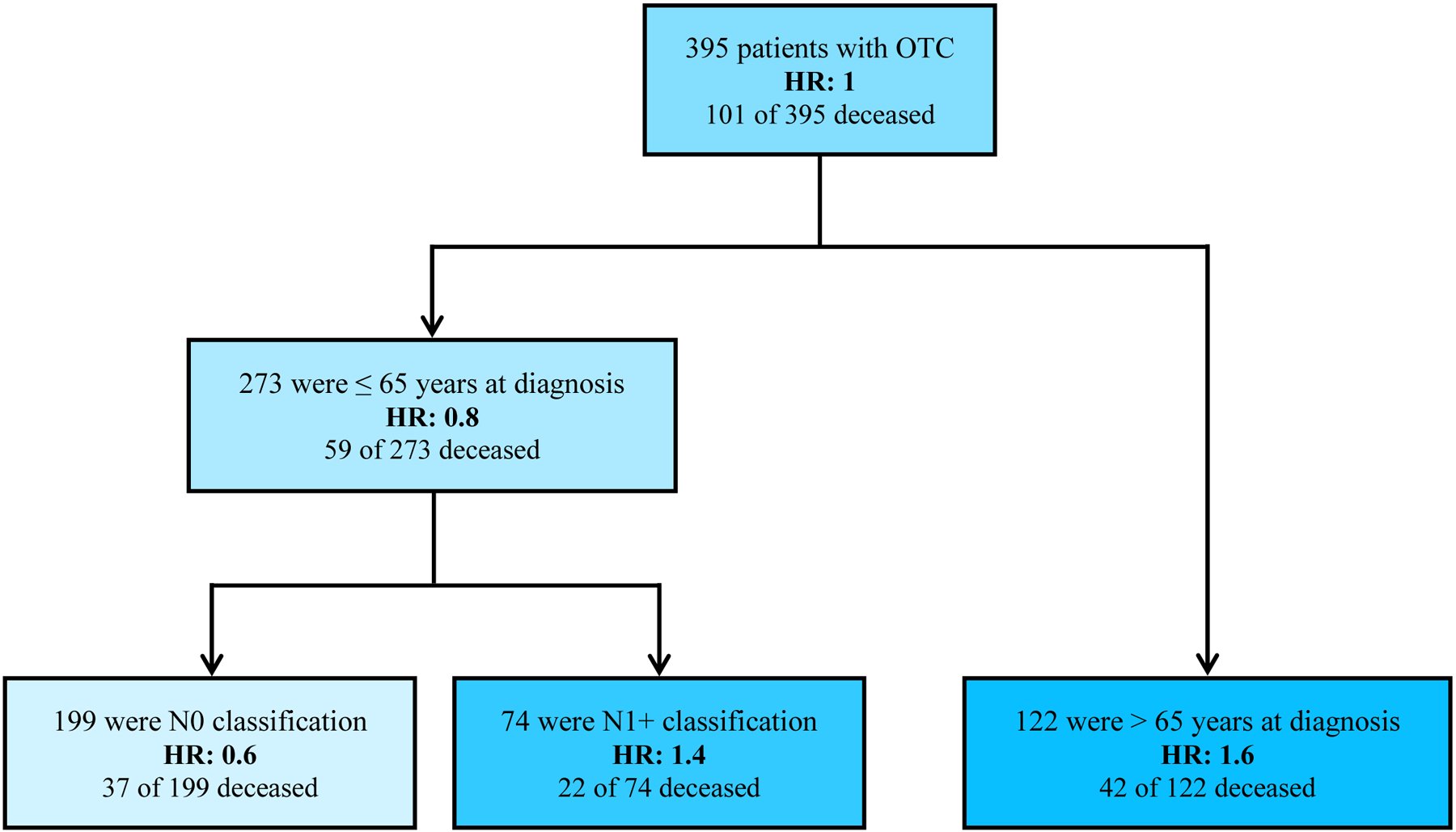
Results: Compared to typical onset patients, patients with early onset OTC were more likely to receive multimodality treatment (surgery and radiation; adjusted odds ratio [aOR], 2.7; 95% confidence interval [CI], 1.2-6.3) and report a history of snuff use (aOR, 5.4; 95% CI, 1.8-15.8) and were less likely to report a history of cigarette use (aOR, 0.5; 95% CI, 0.2-0.9). Early onset patients had better overall survival (adjusted hazard ratio, 0.6).
Conclusions: This is the largest study to evaluate factors associated with early onset OTC and the first to report an association with snuff.
Keywords: oral tongue; snuff; squamous cell carcinoma; tobacco; young.
© 2019 Wiley Periodicals, Inc.
Figures
References
-
- Chaturvedi AK, Engels EA, Anderson WF, Gillison ML. Incidence trends for human papillomavirus-related and -unrelated oral squamous cell carcinomas in the United States. J Clin Oncol. 2008;26(4):612–619. - PubMed
-
- Jamal AKB, Neff LJ, Whitmill J, Babb SD, Graffunder CM. Current Cigarette Smoking Among Adults — United States, 2005–2015. MMWR Morb Mortal Wkly Rep. 2016;65:1205–1211. - PubMed
-
- Tota JE, Anderson WF, Coffey C, et al. Rising incidence of oral tongue cancer among white men and women in the United States, 1973–2012. Oral Oncol. 2017;67:146–152. - PubMed
-
- Schantz SP, Byers RM, Goepfert H, Shallenberger RC, Beddingfield N. The implication of tobacco use in the young adult with head and neck cancer. Cancer. 1988;62(7):1374–1380. - PubMed
Publication types
MeSH terms
Grants and funding
- UL1 TR000445/TR/NCATS NIH HHS/United States
- Vanderbilt University Medical Center institutional funding/International
- Vanderbilt University Medical Center/International
- K07 CA218247/CA/NCI NIH HHS/United States
- UL1 TR000445 from NCATS/NIH/Vanderbilt Institute for Clinical and Translational Research/International
LinkOut - more resources
Full Text Sources
