


A cross-sectional screening by next-generation sequencing reveals Rickettsia, Coxiella, Francisella, Borrelia, Babesia, Theileria and Hemolivia species in ticks from Anatolia
- PMID: 30635006
- PMCID: PMC6329055
- DOI: 10.1186/s13071-018-3277-7
A cross-sectional screening by next-generation sequencing reveals Rickettsia, Coxiella, Francisella, Borrelia, Babesia, Theileria and Hemolivia species in ticks from Anatolia
Abstract
Background: Ticks participate as arthropod vectors in the transmission of pathogenic microorganisms to humans. Several tick-borne infections have reemerged, along with newly described agents of unexplored pathogenicity. In an attempt to expand current information on tick-associated bacteria and protozoans, we performed a cross-sectional screening of ticks, using next-generation sequencing. Ticks seeking hosts and infesting domestic animals were collected in four provinces across the Aegean, Mediterranean and Central Anatolia regions of Turkey and analyzed by commonly used procedures and platforms.
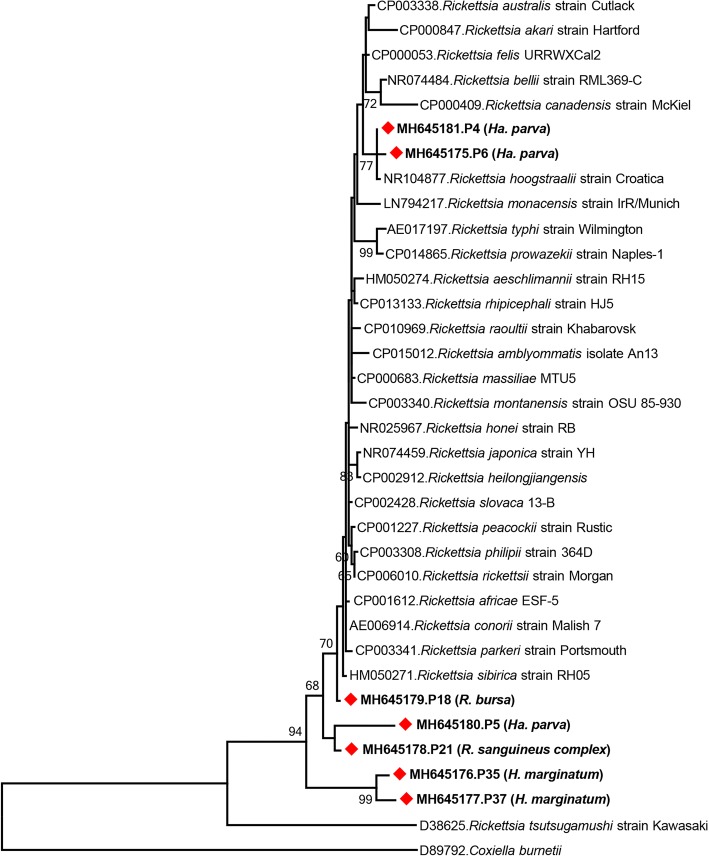
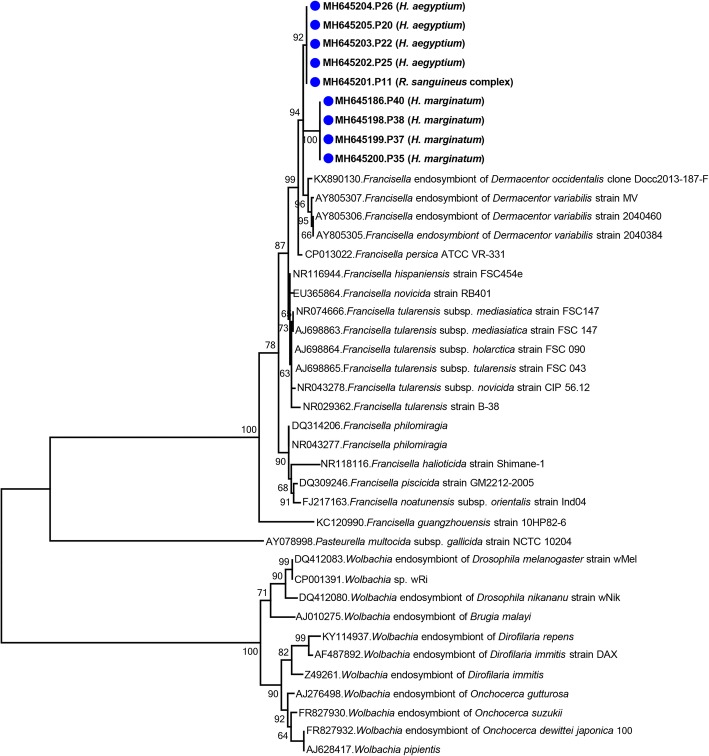
Results: Two hundred and eighty ticks comprising 10 species were evaluated in 40 pools. Contigs from tick-associated microorganisms were detected in 22 (55%) questing and 4 feeding (10%) tick pools, with multiple microorganisms identified in 12 pools. Rickettsia 16S ribosomal RNA gene, gltA, sca1 and ompA sequences were present in 7 pools (17.5%), comprising feeding Haemaphysalis parva and questing/hunting Rhipicephalus bursa, Rhipicephalus sanguineus (sensu lato) and Hyalomma marginatum specimens. A near-complete genome and conjugative plasmid of a Rickettsia hoogstraalii strain could be characterized in questing Ha. parva. Coxiella-like endosymbionts were identified in pools of questing (12/40) as well as feeding (4/40) ticks of the genera Rhipicephalus, Haemaphysalis and Hyalomma. Francisella-like endosymbionts were also detected in 22.5% (9/40) of the pools that comprise hunting Hyalomma ticks in 8 pools. Coxiella-like and Francisella-like endosymbionts formed phylogenetically distinct clusters associated with their tick hosts. Borrelia turcica was characterized in 5% (2/40) of the pools, comprising hunting Hyalomma aegyptium ticks. Co-infection of Coxiella-like endosymbiont and Babesia was noted in a questing R. sanguineus (s.l.) specimen. Furthermore, protozoan 18S rRNA gene sequences were detected in 4 pools of questing/hunting ticks (10%) and identified as Babesia ovis, Hemolivia mauritanica, Babesia and Theileria spp.
Conclusions: Our metagenomic approach enabled identification of diverse pathogenic and non-pathogenic microorganisms in questing and feeding ticks in Anatolia.
Keywords: Babesia; Borrelia; Coxiella; Francisella; Hemolivia; Next generation sequencing; Rickettsia; Theilera; Tick; Turkey.
Conflict of interest statement
Ethics approval and consent to participate
The study involved testing of ticks, collected in the field during questing or from domesticated animals and no institutional or regional ethics committee approval was required. Removal of ticks from infested domestic animals was carried out with the informed consent and cooperation of the caretakers and/or owners.
Consent for publication
Not applicable.
Competing interests
The authors declare that they have no competing interests.
Publisher’s Note
Springer Nature remains neutral with regard to jurisdictional claims in published maps and institutional affiliations.
Figures



References
-
- de la Fuente J, Estrada-Pena A, Venzal JM, Kocan KM, Sonenshine DE. Overview: ticks as vectors of pathogens that cause disease in humans and animals. Front Biosci. 2008;13:6938–46. - PubMed
MeSH terms
Grants and funding
LinkOut - more resources
Full Text Sources
Molecular Biology Databases
Miscellaneous
