


Wing length and host location in tsetse (Glossina spp.): implications for control using stationary baits
- PMID: 30635017
- PMCID: PMC6329045
- DOI: 10.1186/s13071-018-3274-x
Wing length and host location in tsetse (Glossina spp.): implications for control using stationary baits
Abstract
Background: It has been suggested that attempts to eradicate populations of tsetse (Glossina spp.) using stationary targets might fail because smaller, less mobile individuals are unlikely to be killed by the targets. If true, tsetse caught in stationary traps should be larger than those from mobile baits, which require less mobility on the part of the flies.
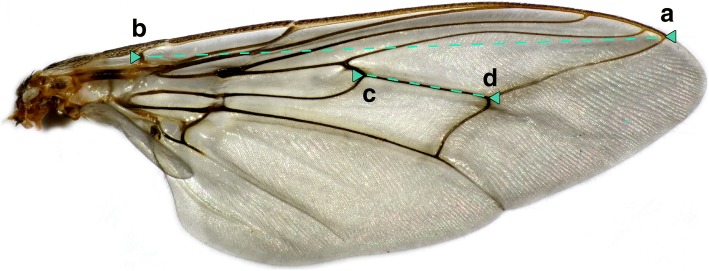
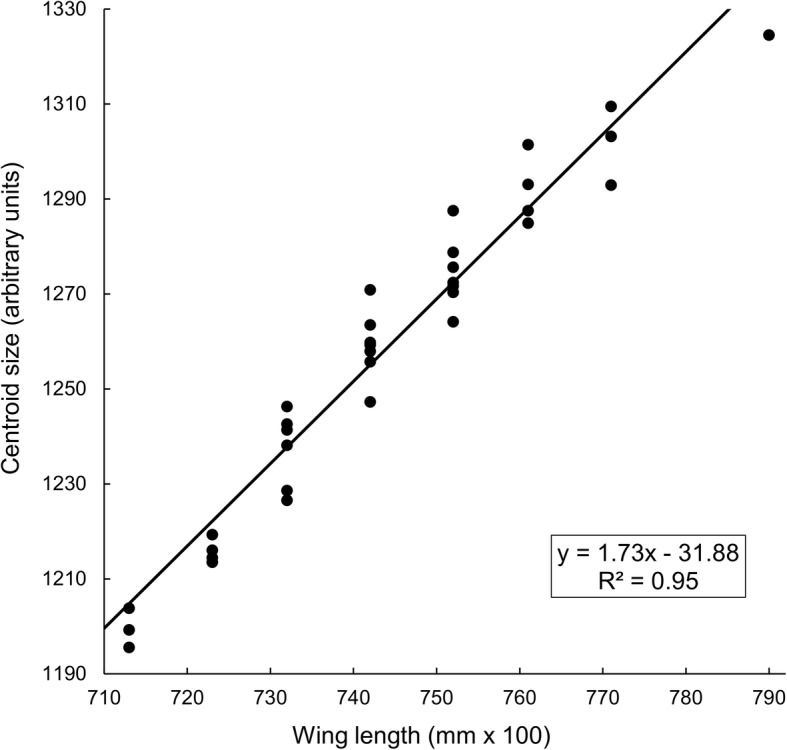
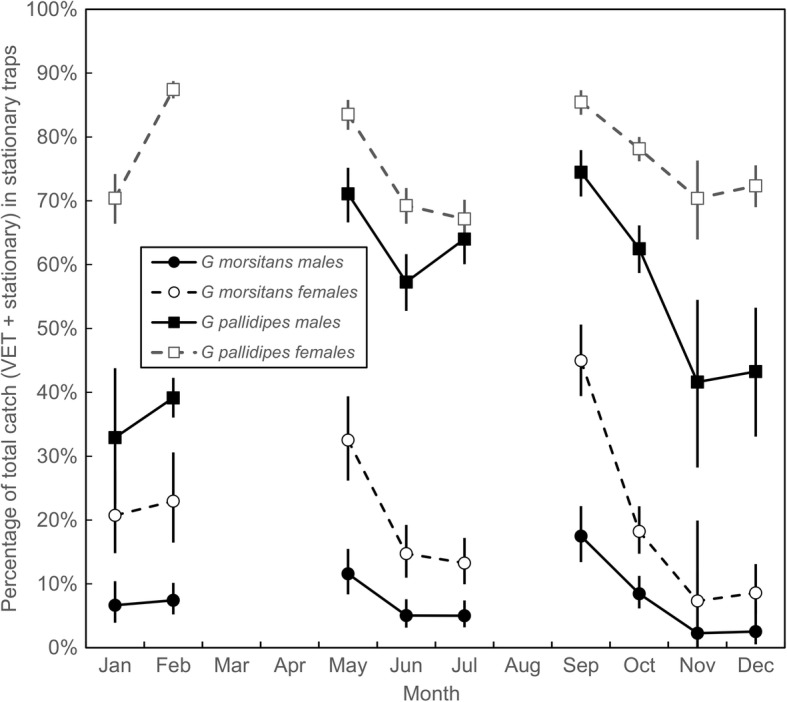
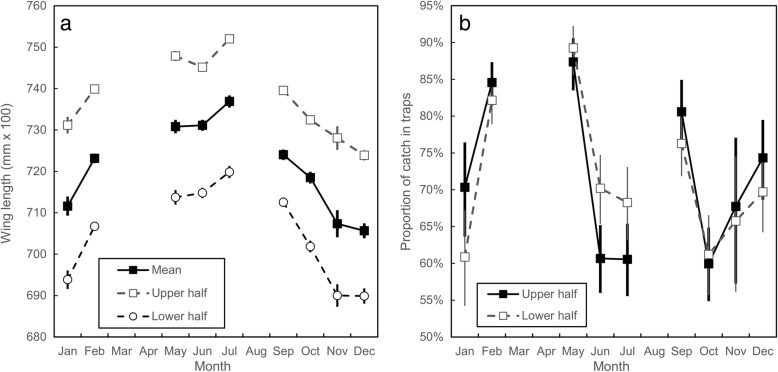
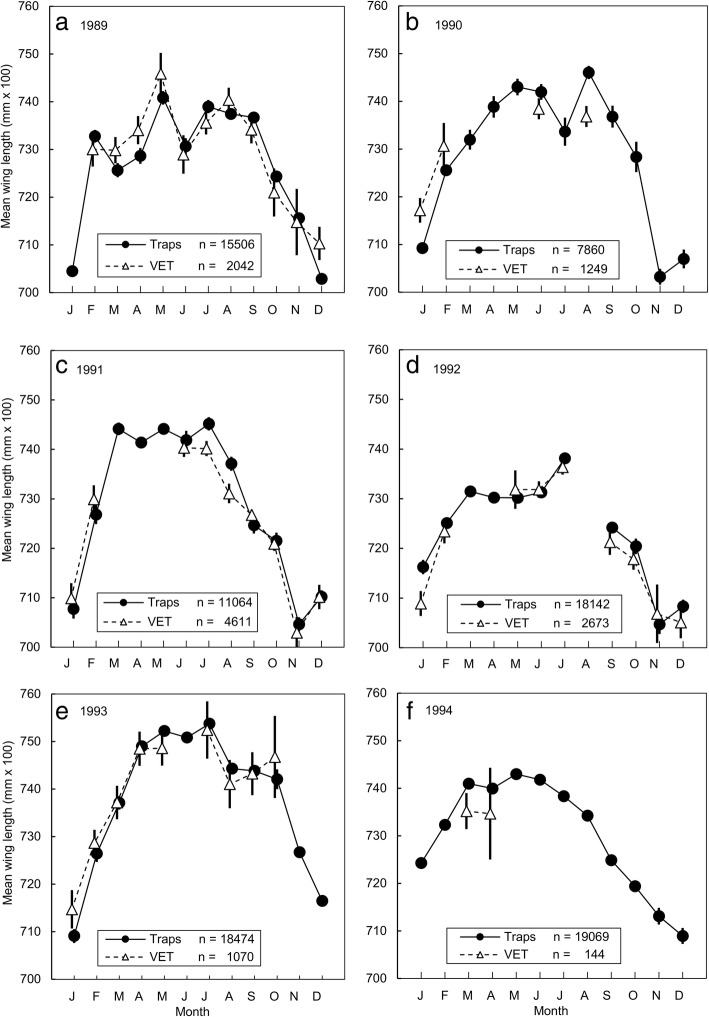
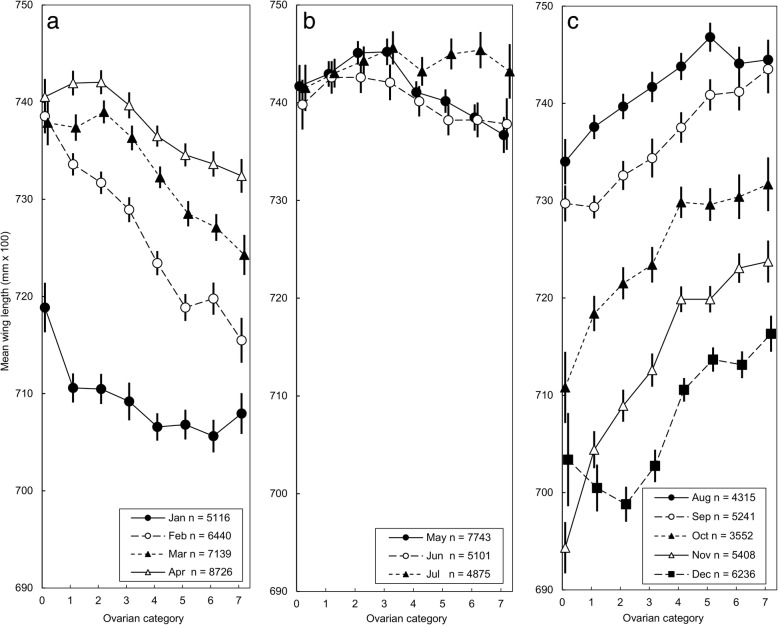
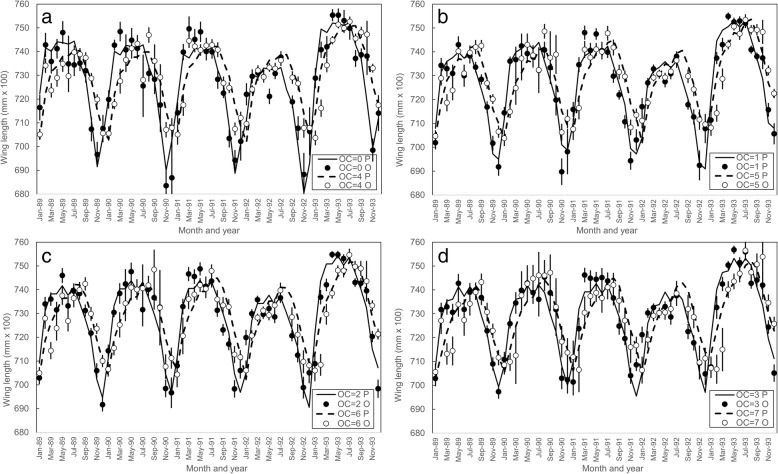
Results: Sampling tsetse in the Zambezi Valley of Zimbabwe, we found that the number of tsetse caught from stationary traps, as a percent of total numbers from traps plus a mobile vehicle, was ~5% for male G. morsitans morsitans (mean wing length 5.830 mm; 95% CI: 5.800-5.859 mm) and ~10% for females (6.334 mm; 95% CI: 6.329-6.338 mm); for G. pallidipes the figures were ~50% for males (6.830 mm; 95% CI: 6.821-6.838 mm) and ~75% for females (7.303 mm, 95% CI: 7.302-7.305 mm). As expected, flies of the smaller species (and the smaller sex) were less likely to be captured using stationary, rather than mobile sampling devices. For flies of a given sex and species the situation was more complex. Multivariable analysis showed that, for females of both species, wing lengths changed with ovarian age and the month, year and method of capture. For G. pallidipes, there were statistically significant interactions between ovarian age and capture month, year and method. For G. m. morsitans, there was only a significant interaction between ovarian age and capture month. The effect of capture method was, however, small in absolute terms: for G. pallidipes and G. m. morsitans flies caught on the mobile vehicle had wings only 0.24 and 0.48% shorter, respectively, than flies caught in stationary traps. In summary, wing length in field samples of tsetse varies with ovarian age, capture month and year and, weakly, with capture method. Suggestions that a target-based operation against G. f. fuscipes in Kenya caused a shift towards a smaller, less mobile population of tsetse, unavailable to the targets, failed to account for factors other than capture method.
Conclusions: The results are consistent with the successful use of targets to eradicate populations of tsetse in Zimbabwe. Until further, more nuanced, studies are conducted, it is premature to conclude that targets alone could not, similarly, be used to eradicate G. f. fuscipes populations in Kenya.
Keywords: Age season annual effects; Eradication using targets; Stationary and mobile baits; Tsetse Glossina; Wing length.
Conflict of interest statement
Ethics approval and consent to participate
Not applicable.
Consent for publication
Not applicable.
Competing interests
The authors declare that they have no competing interests.
Publisher’s Note
Springer Nature remains neutral with regard to jurisdictional claims in published maps and institutional affiliations.
Figures
References
-
- Leak S. Tsetse Biology and Ecology. Wallingford, UK: CABI Publishing; 1998.
-
- Maudlin I, Holmes P, Miles P. The Trypanosomiases. Wallingford, UK: CABI Publishing; 2004.
-
- Vale GA, Hargrove JW, Solano P, Courtin F, Rayaisse J-B, Lehane MJ, et al. Explaining the host-finding behavior of blood-sucking insects: computerized simulation of the effects of habitat geometry on tsetse fly movement. PLoS Negl Trop Dis. 2014;8:e2901. doi: 10.1371/journal.pntd.0002901. - DOI - PMC - PubMed
MeSH terms
Grants and funding
LinkOut - more resources
Full Text Sources
Research Materials
Miscellaneous
