


Core competencies in genetics for healthcare professionals: results from a literature review and a Delphi method
- PMID: 30635068
- PMCID: PMC6329113
- DOI: 10.1186/s12909-019-1456-7
Core competencies in genetics for healthcare professionals: results from a literature review and a Delphi method
Abstract
Background: Advances in genetics and genomics require that healthcare professionals manage and incorporate new technologies into the appropriate clinical practice. The aim of this study was to identify core competencies in genetics for non-geneticists, both physicians and non-physicians.
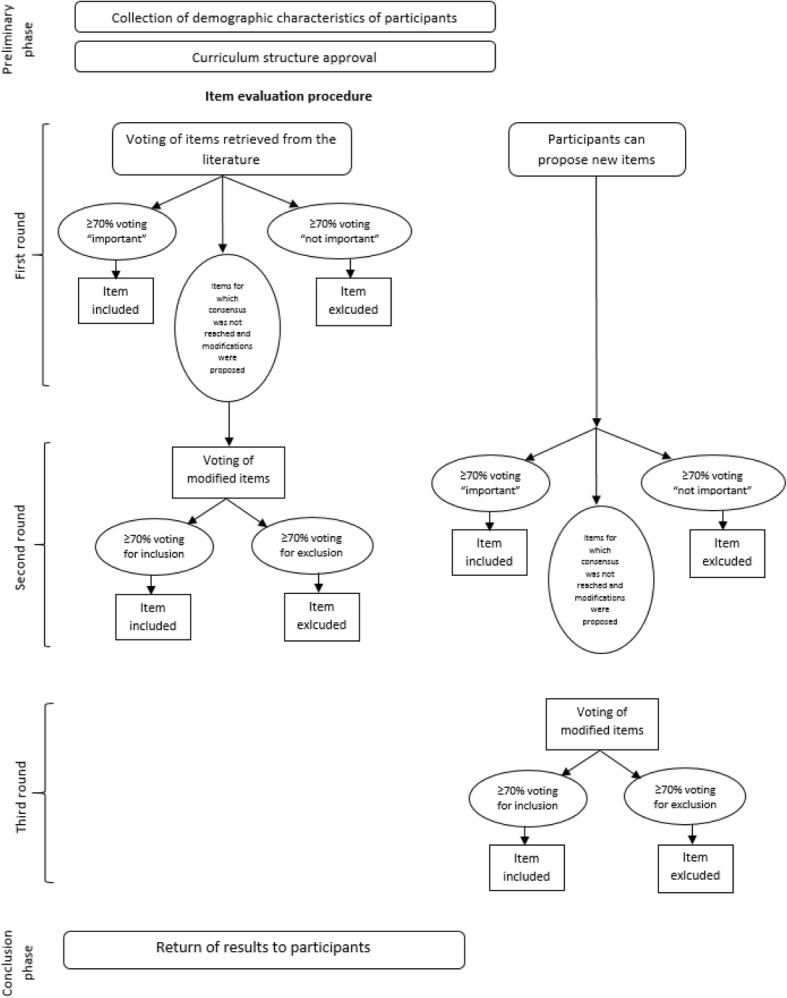
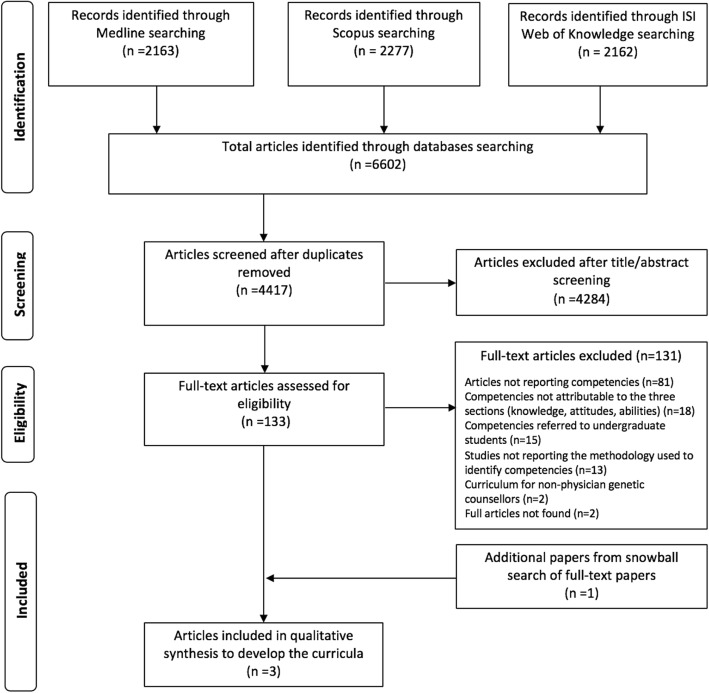
Methods: We performed a literature review by searching MEDLINE, SCOPUS, and ISI Web of Science databases to identify studies reporting competencies in genetics in terms of knowledge, attitudes and abilities for non-genetic healthcare professionals. Furthermore, we conducted a survey according to a modified Delphi method, involving genetics experts to evaluate the competencies to be included as items of the curricula.
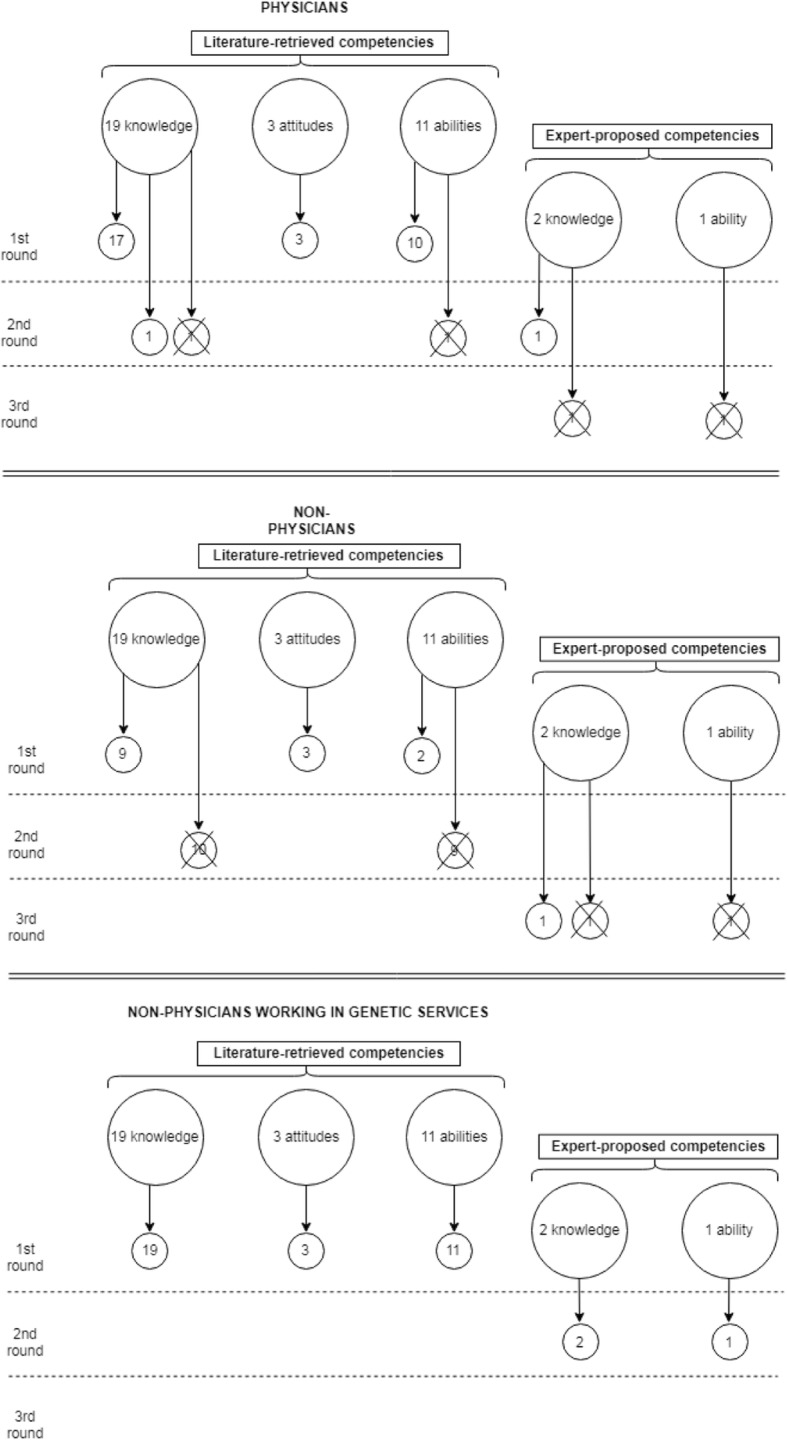
Results: Three eligible documents were identified and 3 Delphi rounds were carried out to reach a consensus on the competencies to be incorporated in the curricula. With reference to the curriculum for physicians, 19 items were included in the knowledge domain, 3 in the attitudes and 10 in the abilities domain. We developed two different curricula for non-physicians: one specific for those working in genetic services (20 items in the knowledge domain, 3 in the attitudes and 12 in the abilities) and one for those not working in genetic services (10 items in the knowledge domain, 3 in the attitudes and 2 in the abilities).
Conclusions: We developed 3 curricula in genetics addressed to non-genetic healthcare professionals. They differ in the "knowledge" and "abilities", while the "attitudes" are the same for all the healthcare professionals. Although some concerns about the generalizability of the findings could arise due to the Italian perspective, we envisage the curricula can be used for genetics educational programs in several contexts.
Keywords: Curriculum; Delphi survey; Genetics; Genetics competencies for health care professionals; Health education; Medical education; Public health genomics.
Conflict of interest statement
Ethics approval and consent to participate
Not applicable.
Consent for publication
Not applicable.
Competing interests
The authors declare that they have no competing interests.
Publisher’s Note
Springer Nature remains neutral with regard to jurisdictional claims in published maps and institutional affiliations.
Figures
References
-
- Wetterstrand KA. DNA sequencing costs: data. National Human Genome Research Institute (NHGRI) 2017. http://www.genome.gov/sequencingcostsdata. Accessed 22 Jan 2018.
-
- GeneTests online Database Genetestsorg. 2017. http://www.genetests.org. Accessed 22 Jan 2018.
Publication types
MeSH terms
Grants and funding
LinkOut - more resources
Full Text Sources
