A Contemporary Overview of PPARα/γ Dual Agonists for the Management of Diabetic Dyslipidemia
- PMID: 30636619
- PMCID: PMC6875865
- DOI: 10.2174/1874467212666190111165015
A Contemporary Overview of PPARα/γ Dual Agonists for the Management of Diabetic Dyslipidemia
Abstract
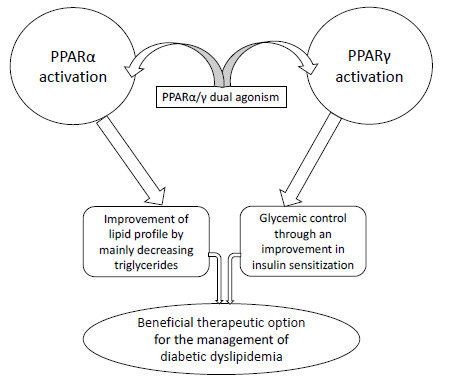
Background: Diabetes mellitus and concomitant dyslipidemia, being referred to as 'diabetic dyslipidemia', are the foremost detrimental factors documented to play a pivotal role in cardiovascular illness. Diabetic dyslipidemia is associated with insulin resistance, high plasma triglyceride levels, low HDL-cholesterol concentration and elevated small dense LDL-cholesterol particles. Maintaining an optimal glucose and lipid levels in patients afflicted with diabetic dyslipidemia could be a major task that might require a well-planned diet-management system and regular physical activity, or otherwise an intake of combined antidiabetic and antihyperlipidemic medications. Synchronized treatment which efficiently controls insulin resistance-associated diabetes mellitus and co-existing dyslipidemia could indeed be a fascinating therapeutic option in the management of diabetic dyslipidemia. Peroxisome proliferator-activated receptors α/γ (PPARα/γ) dual agonists are such kind of drugs which possess therapeutic potentials to treat diabetic dyslipidemia. Nevertheless, PPARα/γ dual agonists like muraglitazar, naveglitazar, tesaglitazar, ragaglitazar and aleglitazar have been reported to have undesirable adverse effects, and their developments have been halted at various stages. On the other hand, a recently introduced PPARα/γ dual agonist, saroglitazar is an emerging therapeutic agent of glitazar class approved in India for the management of diabetic dyslipidemia, and its treatment has been reported to be generally safe and well tolerated.
Conclusion: Some additional and new compounds, at initial and preclinical stages, have been recently reported to possess PPARα/γ dual agonistic potentials with considerable therapeutic efficacy and reduced adverse profile. This review sheds light on the current status of various PPARα/γ dual agonists for the management of diabetic dyslipidemia.
Keywords: PPARα/γ dual agonists; adverse effects; cardiovascular events; diabetic dyslipidemia; insulin resistance; oedema..
Copyright© Bentham Science Publishers; For any queries, please email at epub@benthamscience.net.
Figures
References
-
- Chehade J.M., Gladysz M., Mooradian A.D. Dyslipidemia in type 2 diabetes: prevalence, pathophysiology, and management. Drugs. 2013;73:327–339. - PubMed
-
- Chigurupati S., Dhanaraj S.A., Balakumar P. A step ahead of PPARγ full agonists to PPARγ partial agonists: therapeutic perspectives in the management of diabetic insulin resistance. Eur. J. Pharmacol. 2015;755:50–57. - PubMed
-
- Ferré P. The biology of peroxisome proliferator-activated receptors: relationship with lipid metabolism and insulin sensitivity. Diabetes. 2004;53:S43–S50. - PubMed
-
- Balakumar P., Jagadeesh G. PPAR ligands and cardiovascular disorders: Friend or foe. Curr. Mol. Pharmacol. 2012;5:219–223. - PubMed
-
- Balakumar P., Rose M., Ganti S.S., Krishan P., Singh M. PPAR dual agonists: Are they opening Pandora’s Box? Pharmacol. Res. 2007;56:91–98. - PubMed
Publication types
MeSH terms
Substances
LinkOut - more resources
Full Text Sources
Medical