


Strategies for incorporating patient-reported outcomes in the care of people with chronic kidney disease (PRO kidney): a protocol for a realist synthesis
- PMID: 30636637
- PMCID: PMC6330465
- DOI: 10.1186/s13643-018-0911-6
Strategies for incorporating patient-reported outcomes in the care of people with chronic kidney disease (PRO kidney): a protocol for a realist synthesis
Abstract
Background: Patient-reported outcomes and experience measures (jointly referred to here as PROs) are internationally recognized as a means for patients to provide information about their quality of life, symptoms, and experiences with care. Although increasingly recognized as key to improving the quality of healthcare at individual (e.g., patients, caregivers, and providers) and aggregate (e.g., government, policy/system-wide decision-making) levels, there are important knowledge gaps in our understanding of how PROs are, and can be, used across different settings, particularly in nephrology to enhance person-centered care. This knowledge is needed for developing strategies to guide optimal use of PROs in nephrology care. Currently, no strategies exist. The purpose of this review is to address this knowledge gap by answering the following realist question: How can PROs be used to enhance person-centered nephrology care, both at individual and aggregate levels?
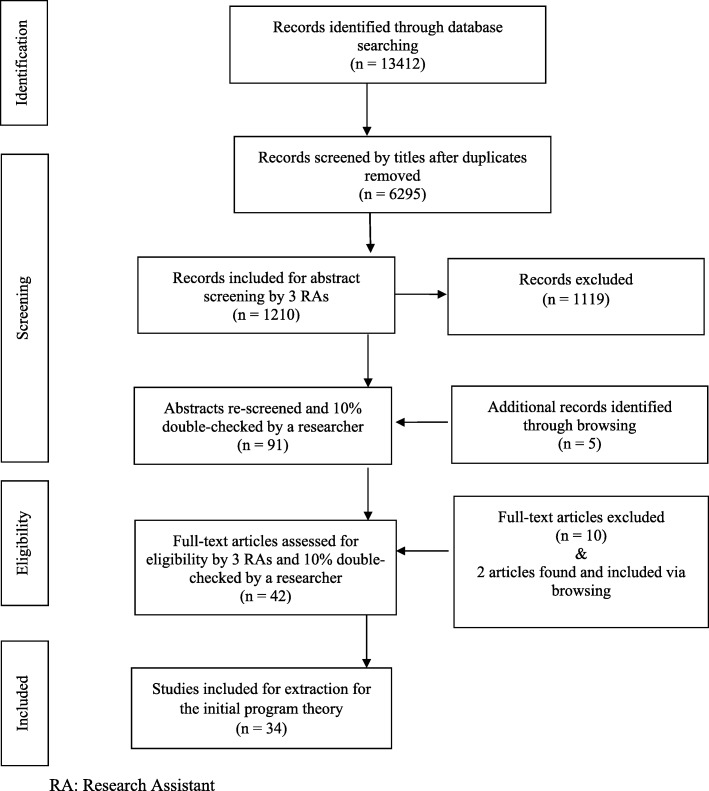
Methodology: Realist synthesis is an explanatory approach to data synthesis that aims to explain how context and mechanisms influence the outcome of an intervention. An initial program theory will be developed through the systematic search of the published literature in bibliographic databases (Ovid MEDLINE, Ovid Embase, EBSCOhost CINAHL, Web of Science, and Scopus) on existing theories explaining how PROs are used in healthcare settings. This initial program theory will then be tested and refined through the process of realist synthesis, using context-mechanism-outcome configurations. A kidney-specific program theory will then be created to address the utilization of PROs in nephrology across individual and aggregate levels to augment person-centered care. Searching will be iterative and refined as data is extracted and analyzed using a pilot-tested context + mechanism = outcome heuristic. Throughout, we will consult methodological experts, research team practitioners, and the Patient Advisory Committee to help refine the theories. Last, we will develop and disseminate knowledge translation products widely to knowledge user groups.
Discussion: The utilization of PROs remains a challenge in nephrology. The findings from this synthesis will provide a framework to guide both policy makers and practitioners on how to enhance person-centered care through successful utilization of PROs across individual and aggregate levels in nephrology.
Systematic review registration: PROSPERO CRD42017056063.
Keywords: Clinical kidney practice; Knowledge translation; Patient-reported experience measures (PREMs); Patient-reported outcome measures (PROMs); Patient-reported outcomes (PROs); Person-centered care; Quality of care; Quality of life; Realist synthesis/review.
Conflict of interest statement
Authors’ information
KSM, PhD, MN, BScN, is an assistant professor in the Faculty of Nursing, University of Alberta. She is also a New Investigator funded by Can-SOLVE CKD - KRESCENT (Canadians Seeking Solutions & Innovations to Overcome Chronic Kidney Disease; Kidney Research Scientist Core Education & National Training Program).
OT, PhD, MN, BNS, was a research assistant working on the project, Patient-reported outcomes in clinical kidney practice (PRO Kidney): A realist synthesis. Since completing her PhD, she is now a Collaborator on the project.
ST, MD, PhD, FRCPC, is a nephrologist supported by the Division of Nephrology at the University of Alberta.
RF, PhD, MScN, BScN, held an Alberta Innovates Clinician Scientist Fellowship. This award supported her doctoral research “a realist investigation on Lean sustainability in pediatric healthcare.”
MKD, PhD, MSc, BSc, is a MITACS postdoctoral fellow at the University of Ottawa.
SK, MD, MSc, FRCPC, is supported by the Kidney Health Research Chair and the Division of Nephrology at the University of Alberta, and is chair of the Canadian Organ Replacement Registry and Patient Reported Outcomes Renal Working group.
RS, PhD, MN, BSN. This analysis was undertaken, in part, thanks to funding from the Canada Research Chairs (CRC) program supporting Dr. Sawatzky’s CRC in Person-Centered Outcomes.
JG, PhD, MPH, BA, is an Associate Professor in Sociology and Social Policy, and Deputy Director of the Centre for Health, Technologies and Social Practice, University of Leeds. She is the realist synthesis consultant and expert on our project, Patient-reported outcomes in clinical kidney practice (PRO Kidney): A realist synthesis.
Ethics approval and consent to participate
This review will not require ethical approval or consent to participate.
Consent for publication
Not applicable
Competing interests
The authors declare that they have no competing interests.
Publisher’s Note
Springer Nature remains neutral with regard to jurisdictional claims in published maps and institutional affiliations.
Figures
References
-
- Mapes DL, Lopes AA, Satayathum S, McCullough KP, Goodkin DA, Locatelli F, et al. Health-related quality of life as a predictor of mortality and hospitalization: the Dialysis Outcomes and Practice Patterns Study (DOPPS) Kidney Int. 2003;64:339–349. doi: 10.1046/j.1523-1755.2003.00072.x. - DOI - PubMed
-
- Fayers PM, Machin D. Quality of life: the assessment, analysis and reporting of patient-reported outcomes. 3. Oxford: Wiley; 2016.
Publication types
MeSH terms
LinkOut - more resources
Full Text Sources
Medical
Miscellaneous
