


Vaginal pH measured in vivo: lactobacilli determine pH and lactic acid concentration
- PMID: 30642259
- PMCID: PMC6332693
- DOI: 10.1186/s12866-019-1388-8
Vaginal pH measured in vivo: lactobacilli determine pH and lactic acid concentration
Abstract
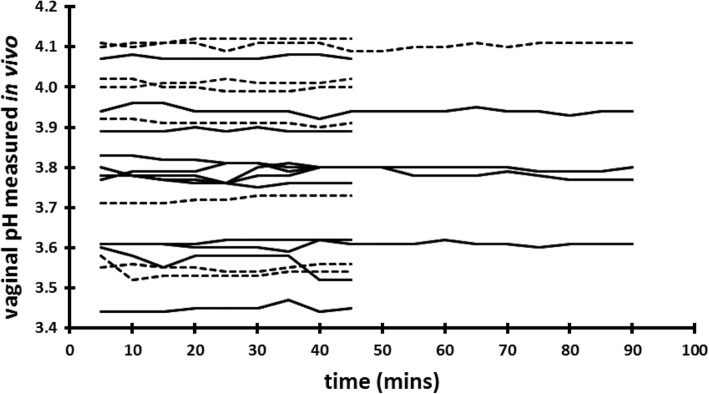
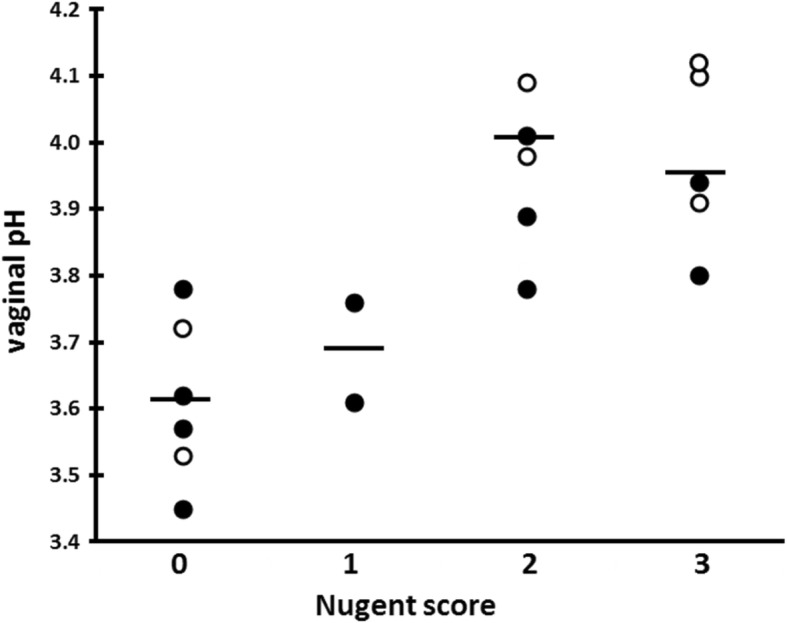
Background: Lactic acid (protonated lactate) has broad antimicrobial activity. Vaginal lactobacilli produce lactic acid, and are known to confer protection against reproductive tract infections when they are predominant in the vaginal microbiota. Using novel ex vivo methods, we showed that cervicovaginal fluid (CVF) from women with a predominantly lactobacilli-morphotype microbiota contains significantly more lactic acid than previously thought, sufficient to inactivate reproductive tract pathogens. Here, we measured vaginal pH in vivo in 20 women with a predominantly lactobacilli-morphotype (low Nugent score) microbiota. We also investigated the in vitro production of protons (as hydrogen ions) and lactate by vaginal lactobacilli.
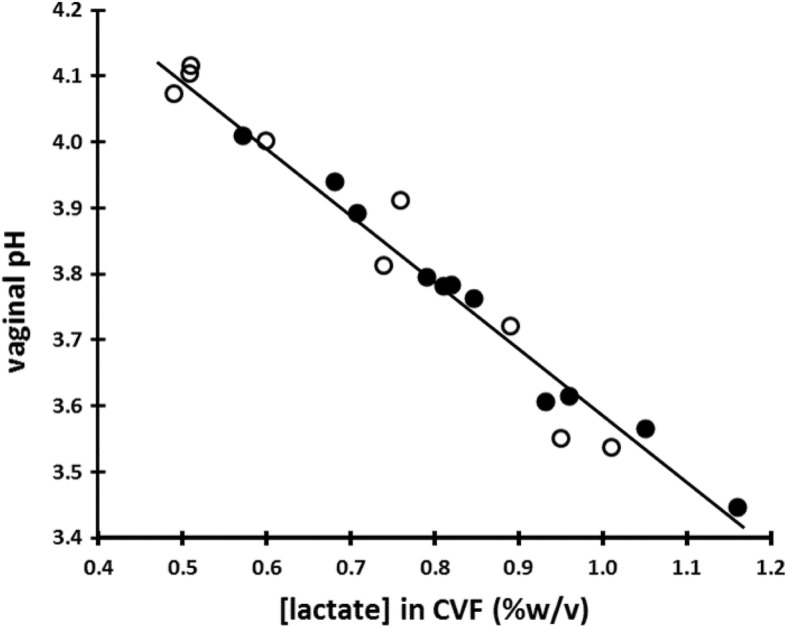
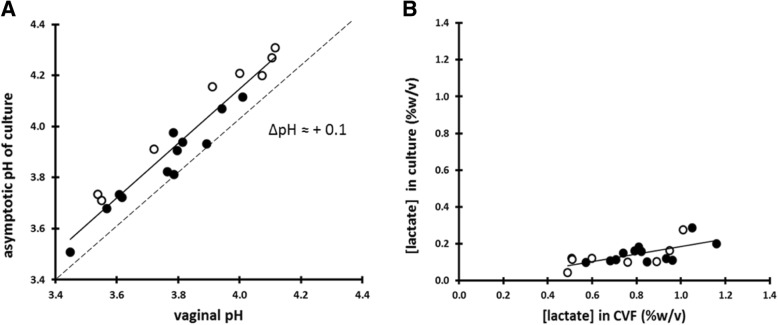
Results: The average vaginal pH in these women was 3.80 ± 0.20, and the average lactate concentration was 0.79% ± 0.22% w/v, with pH and lactate concentration tightly correlated for each sample. In vitro, lactobacilli cultured from these CVF samples reached an average pH of 3.92 ± 0.22, but the average lactate concentration was only 0.14% ± 0.06% w/v, approximately five-fold less than in the corresponding CVF samples. When the pH of the cultures was raised, lactate and hydrogen ion production resumed, indicating that production of lactate and hydrogen ions by vaginal lactobacilli is limited primarily by their sensitivity to hydrogen ion concentration (low pH) not lactate concentration.
Conclusions: Some vaginal lactobacilli cultures have a lower limiting pH than others, and limiting pHs in vitro showed good correlation with pHs measured in vivo. The limiting pH of the lactobacilli predominant in a woman's vaginal microbiota seems critical in determining the concentration of antimicrobial lactic acid protecting her.
Keywords: Bacteria; Bacterial vaginosis; Lactic acid; Lactobacilli; Microbiota; Vaginal; pH.
Conflict of interest statement
Ethics approval and consent to participate
Each study participant gave written informed consent under protocol NA_00083620, approved by the Johns Hopkins Medicine Institutional Review Board on Human Subject Research.
Consent for publication
Not applicable.
Competing interests
DOH, RAC, and TRM have applied for the following patents: Compositions and Methods for Inactivation of Pathogens at Genital Tract Surfaces (U.S. Patent Application number 20120070476), and Reusable Intravaginal Delivery Device, System, and Method (U.S. Patent Application number 20120296315), with patent assignment to ReProtect Inc., Baltimore MD., and Johns Hopkins University, Baltimore MD. RAC and TRM are employed by ReProtect Inc. (Chair of Board, and President/Chief Operating Officer respectively) and hold equity in the company. This does not alter our adherence to BMC Microbiology policies on sharing data and materials.
Publisher’s Note
Springer Nature remains neutral with regard to jurisdictional claims in published maps and institutional affiliations.
Figures
References
-
- Guédou FA, Van Damme L, Mirembe F, Solomon S, Becker M, Deese J, et al. Intermediate vaginal flora is associated with HIV prevalence as strongly as bacterial vaginosis in a cross-sectional study of participants screened for a randomized controlled trial. Sex Transm Infect. 2012;88:545–551. doi: 10.1136/sextrans-2011-050319. - DOI - PubMed
-
- Gallo MF, Macaluso M, Warner L, Fleenor ME, Hook EW, 3rd, Brill I, et al. Bacterial vaginosis, gonorrhea, and chlamydial infection among women attending a sexually transmitted disease clinic: a longitudinal analysis of possible causal links. Ann Epidemiol. 2012;22:213–220. doi: 10.1016/j.annepidem.2011.11.005. - DOI - PubMed
-
- Brotman RM, Klebanoff MA, Nansel TR, Yu KF, Andrews WW, Zhang J, et al. Bacterial vaginosis assessed by gram stain and diminished colonization resistance to incident gonococcal, chlamydial, and trichomonal genital infection. J Infect Dis. 2010;202:1907–1915. doi: 10.1086/657320. - DOI - PMC - PubMed
Publication types
MeSH terms
Substances
Grants and funding
LinkOut - more resources
Full Text Sources
Other Literature Sources
