


Health-related quality of life in men with prostate cancer undergoing active surveillance versus radical prostatectomy, external-beam radiotherapy, prostate brachytherapy and reference population: a cross-sectional study
- PMID: 30642340
- PMCID: PMC6332524
- DOI: 10.1186/s12955-019-1082-4
Health-related quality of life in men with prostate cancer undergoing active surveillance versus radical prostatectomy, external-beam radiotherapy, prostate brachytherapy and reference population: a cross-sectional study
Abstract
Background: The purpose of this study is to describe Health-Related Quality of Life (HRQoL) of localized prostate cancer patients in an Active Surveillance (AS) program, and to compare them with those undergoing radical prostatectomy (RP), external-beam radiotherapy (XRT) and brachytherapy (BT).
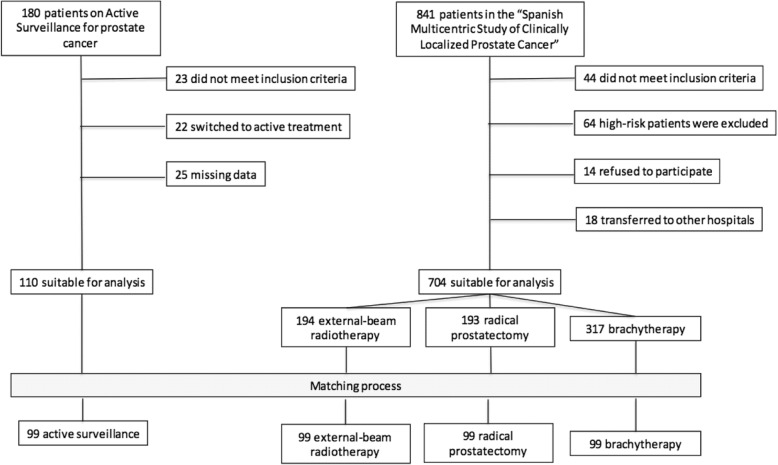
Methods: Multi-institutional pooled cross-sectional analysis on patients in an AS protocol: < 75 years old; pathologically confirmed LPC (maximum of three positive cylinders); Gleason score < 3 + 4; clinical stage T1a-T2b; and PSA < 15 ng/ml. Exclusion criteria for this study were: less than 6 months in AS, termination of AS protocol, or incomplete data. Patients in AS were matched with those treated with RP, XRT or BT from the 'Spanish Multicentric Study of Clinically Localized Prostate Cancer' cohort according to risk group, time from treatment selection to HRQoL survey, and age. Prostate-specific (EPIC) and generic (SF-36) HRQoL instruments were completed. Analysis was stratified by HRQoL survey moment (>or < 2.5 years from treatment selection), and age (>or < 70 years old).
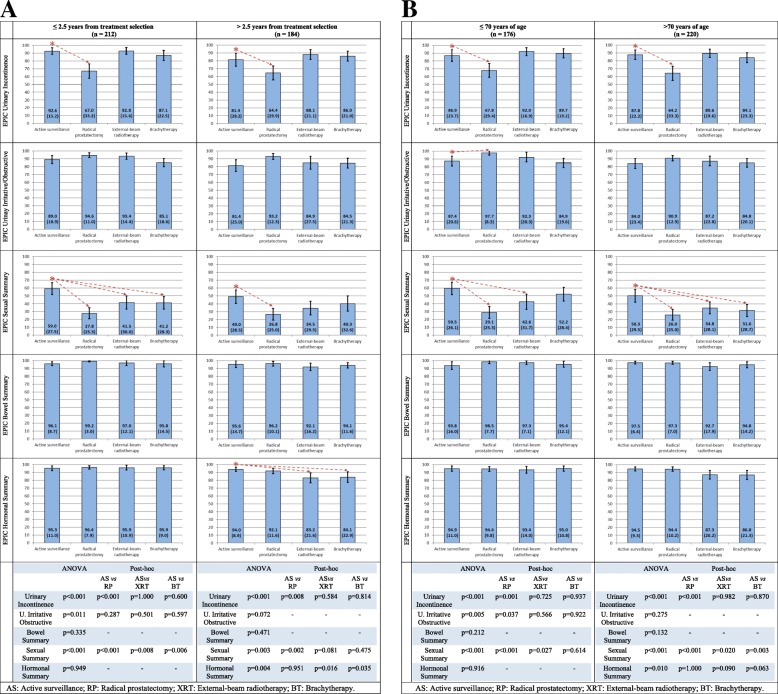
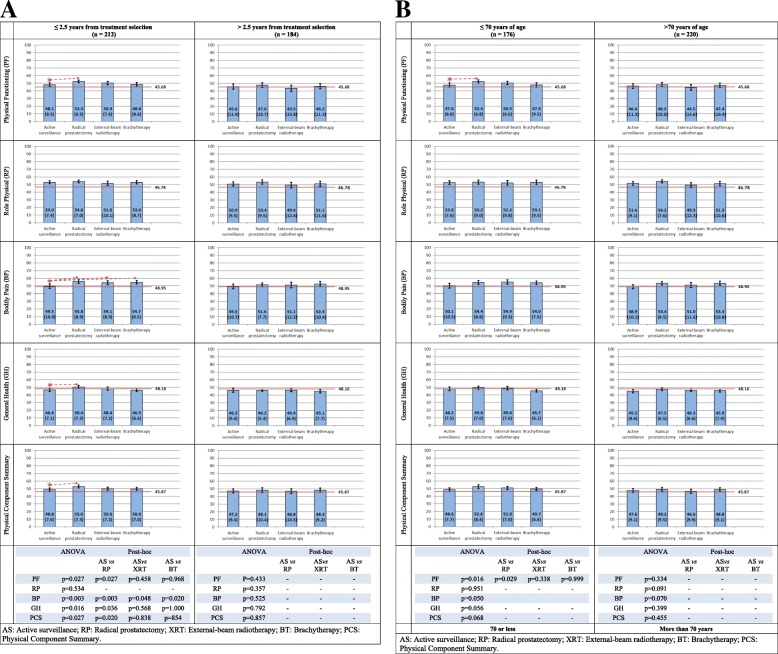
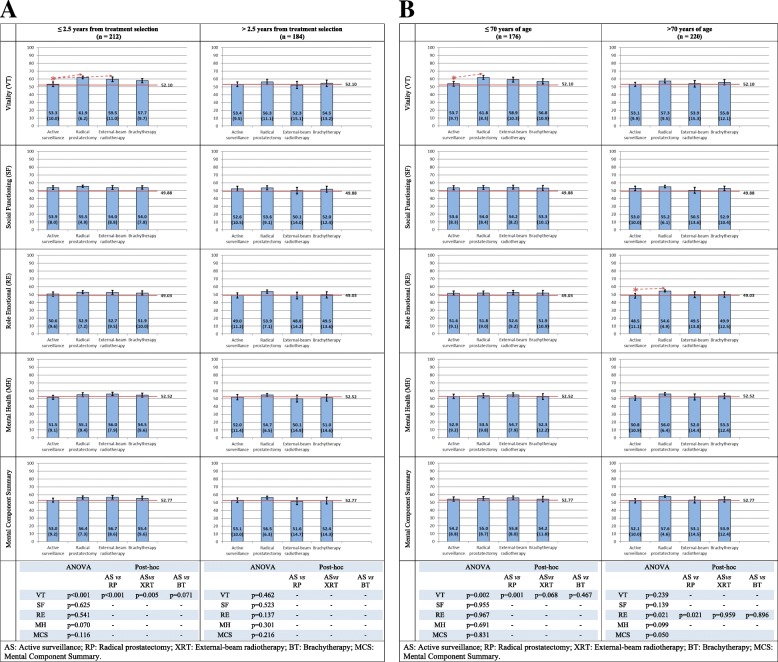
Results: Median of time from treatment selection to HRQoL survey in the total 396 patients (99 per treatment group) was 2.4 years (range 0.5-8.3). Patients in AS presented higher (better) urinary incontinence scores than RP ones in both stratus of time from treatment selection to HRQoL survey (92.6 vs 67.0 and 81.4 vs 64.4, p < 0.01). Patients in AS for < 2.5 years presented greater sexual scores than any active treatment (p < 0.01), but only statistically higher than RP for those in AS for longer than 2.5 years. The magnitude of the differences between AS and RP groups in both EPIC domains ranged from moderate (0.7 SD) to large (1.0 SD). Regardless of treatment applied, patients presented similar and slightly increased SF-36 scores than US general population reference norms. Nonetheless, patients in AS for < 2.5 years reported worse outcomes than other treatment groups on physical health domains, especially in bodily pain (0.5-0.6 SD), and vitality (0.6-0.8 SD).
Conclusions: Considering patients' well-being, AS can be a good therapeutic option due to the low impact caused on urinary continence and sexual function. However, longitudinal studies are required to take into account HRQoL evolution over time.
Keywords: Active surveillance; Brachytherapy; External-beam radiotherapy; Health-related quality of life; Radical prostatectomy.
Conflict of interest statement
Ethics approval and consent to participate
All recruitment and research protocol were approved by the ethics committee, CEIC- Parc de Salut Mar, Barcelona, Spain. Eligible patients signed an informed consent form.
Consent for publication
All authors reviewed, contributed and approved the final manuscript.
Competing interests
The authors declare that they have no competing interests.
Publisher’s Note
Springer Nature remains neutral with regard to jurisdictional claims in published maps and institutional affiliations.
Figures
References
Publication types
MeSH terms
LinkOut - more resources
Full Text Sources
Medical
Research Materials
Miscellaneous
