


No Cell Left Unturned: Intraductal Papillary Mucinous Neoplasm Heterogeneity
- PMID: 30642914
- PMCID: PMC6445728
- DOI: 10.1158/1078-0432.CCR-18-3877
No Cell Left Unturned: Intraductal Papillary Mucinous Neoplasm Heterogeneity
Abstract
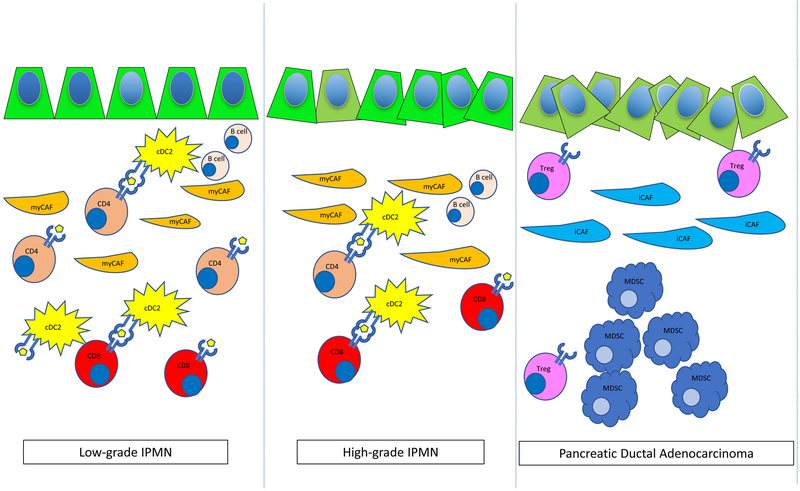
Intraductal papillary mucinous neoplasm (IPMN) is a pancreatic cancer precursor lesion with established genetic features, but the cellular ecosystem of these tumors remains to be fully characterized. This study utilizes single-cell RNA sequencing to describe the dynamic landscape of epithelial, immune, and stromal cells during IPMN progression to invasive cancer.See related article by Bernard et al., p. 2194.
©2019 American Association for Cancer Research.
Conflict of interest statement
Conflicts of Interest and Disclosures:
Y. G. H-B and N.B. have no conflicts to disclose.
D.T.T. receives sponsored research support from ACD-Biotechne. D.T.T. has performed consulting for Millipore-Sigma, Ventana-Roche, and Merrimack Pharmaceuticals. D.T.T. is a founder and has equity in PanTher Therapeutics. None of the above relationships is believed to be in conflict with this work.
Figures
Comment on
-
Single-Cell Transcriptomics of Pancreatic Cancer Precursors Demonstrates Epithelial and Microenvironmental Heterogeneity as an Early Event in Neoplastic Progression.Clin Cancer Res. 2019 Apr 1;25(7):2194-2205. doi: 10.1158/1078-0432.CCR-18-1955. Epub 2018 Nov 1. Clin Cancer Res. 2019. PMID: 30385653 Free PMC article.
References
-
- Bernard V, Semaan A, Huang J, Anthony San Lucas F, Mulu FC, Stephens BM, et al. Single Cell Transcriptomics of Pancreatic Cancer Precursors Demonstrates Epithelial and Microenvironmental Heterogeneity as an Early Event in Neoplastic Progression. Clin Cancer Res. 2018; November 1 [Epub ahead of print]. - PMC - PubMed
Publication types
MeSH terms
Grants and funding
LinkOut - more resources
Full Text Sources
Medical
