Review
. 2019 Jan 14;8(1):6.
doi: 10.1038/s41389-018-0114-y.

Transactivation of human endogenous retroviruses by tumor viruses and their functions in virus-associated malignancies

Affiliations
Review

Transactivation of human endogenous retroviruses by tumor viruses and their functions in virus-associated malignancies

Jungang Chen et al. Oncogenesis. .

Abstract

Human endogenous retroviruses (HERVs), viral-associated sequences, are normal components of the human genome and account for 8-9% of our genome. These original provirus sequences can be transactivated to produce functional products. Several reactivated HERVs have been implicated in cancers and autoimmune diseases. An emerging body of literature supports a potential role of reactivated HERVs in viral diseases, in particular viral-associated neoplasms. Demystifying studies on the mechanism(s) of HERV reactivation could provide a new framework for the development of treatment and prevention strategies targeting virus-associated tumors. Although available data suggest that co-infection by other viruses, such as Kaposi's Sarcoma-associated herpesvirus (KSHV) and Epstein-Barr virus (EBV), may be a crucial driving force to transactivate HERV boom, the mechanisms of action of viral infection-induced HERV transactivation and the contributions of HERVs to viral oncogenesis warrant further studies. Here, we review viral co-infection contributes to HERVs transactivation with focus on human viral infection associated oncogenesis and diseases, including the abilities of viral regulators involved in HERV reactivation, and physiological effects of viral infection response on HERV reactivation.


Conflict of interest statement

The authors declare that they have no conflict of interest.

Figures
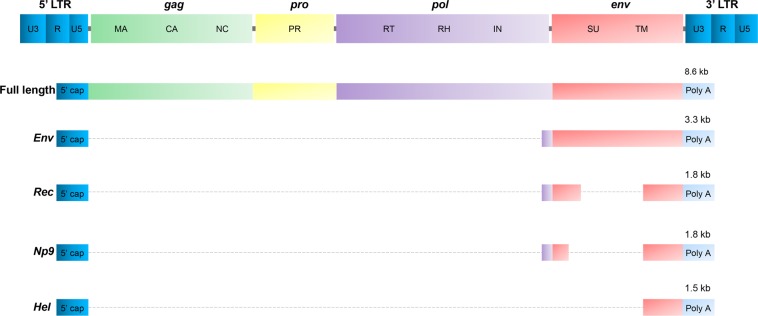
Fig. 1
Fig. 1. Diagrams of HERV-K proviruses and their transcripts.
A compete sequence of HERVs are composed of gag, pol, pro, and env regions sandwiched between two long terminal repeats (LTRs). Gag encodes the structural components of matrix (MA), capsid (CA), and nucleocapsid (NC). The products of pol gene are reverse transcriptase (RT), integrase (IN), and RNase H (RH). The pro mainly encodes the enzyme protease (PR), while env encodes Env surface (SU) and transmembrane (TM) subunits. LTRs are composed of U5 region, U3 region and repeat sequences (R). The HERV-K (HML-2) usually expresses a full-length transcript (8.6-kb) and encodes the gag, pro, and pol polyproteins. Env gene transcripts two singly spliced products, a 3.3-kb product to encode Env polyprotein, and a 1.5-kb product of unknown function known as the hel transcript, and a doubly spliced product (1.8-kb) to encode either the Rec or Np9 accessory proteins depending on the presence or absence of a 292-bp deletion at the pol/env boundary
Fig. 2
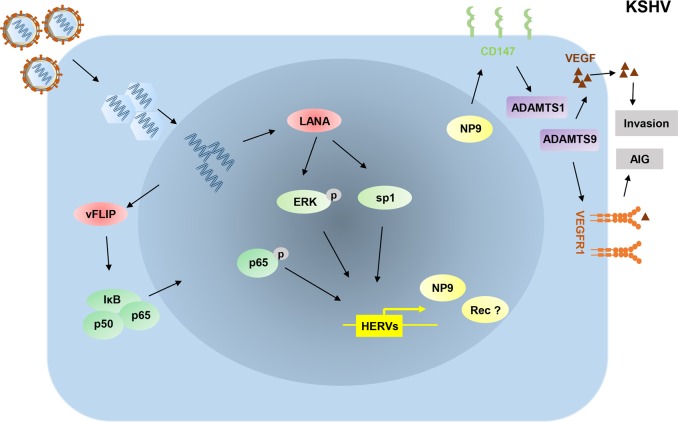
Fig. 2. Schematic diagram of potential mechanisms for KSHV promoting HERV transactivation.
During KSHV de novo infection, LANA induces env transcripts through enhancing ERK activity, and vFLIP induces env transcripts through activating NF-κB activity. Np9 expression mediated by KSHV can promote virus-induced anchorage-independent growth (AIG) and invasion through the CD147-ADAMTS1/ADAMTS9-VEGF/VEGFR1 axis. LANA: a latency-associated nuclear antigen; vFLIP: viral FADD-like interleukin-1-β-converting enzyme (FLICE)/caspase-8-inhibitory protein; ERK: extracellular-signal-regulated kinase; ADAMTS1: a disintegrin and metalloproteinase with thrombospondin motifs 1; ADAMTS9: a disintegrin and metalloproteinase with thrombospondin motifs 9; VEGF: vascular endothelial growth factor; VEGFR1: vascular endothelial growth factor receptor 1
Fig. 3
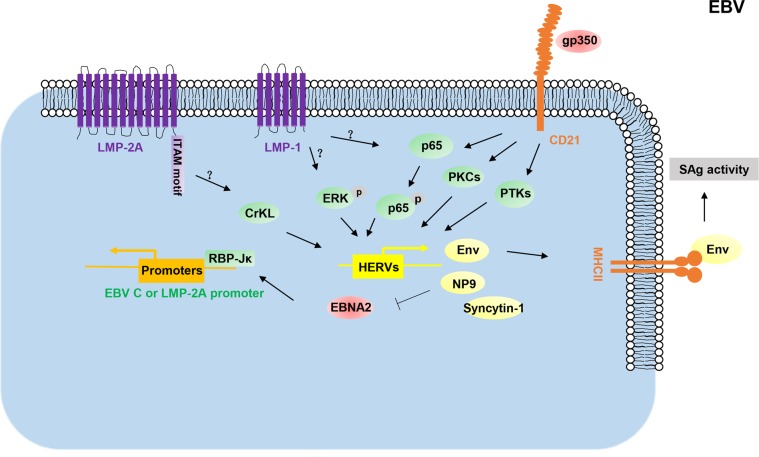
Fig. 3. Schematic diagram of potential mechanisms for EBV promoting HERV transactivation.
EBV infection can activate HERV expression through its gp350 protein interaction with its cellular receptor CD21 in the resting B-lymphocytes and PBMC. In infected B-lymphocytes, viral LAM-2A and LMP-1 activate the expression of HERV-K as superantigens (SAgs) to activate T-cell-mediated SAgs immune response. HERV-K Np9 binds to EBNA2 and negatively affects the EBNA2-mediated activation of the viral C- and LMP2A promoters. LAM-2A: Latent membrane proteins 2A; ITAM motif: an immunoreceptor tyrosine-based activation motif; LMP-2A: LMP-1 latent membrane proteins 1; EBNA2: viral nuclear antigen 2; gp350: glycoprotein 350

References

    1. Markovitz DM. “Reverse Genomics” and human endogenous retroviruses. Trans. Am. Clin. Climatol. Assoc. 2014;125:57–63. - PMC - PubMed
    1. Vincendeau M, et al. Modulation of human endogenous retrovirus (HERV) transcription during persistent and de novo HIV-1 infection. Retrovirology. 2015;12:27. doi: 10.1186/s12977-015-0156-6. - DOI - PMC - PubMed
    1. Nelson PN, et al. Demystified. Human endogenous retroviruses. Mol. Pathol. 2003;56:11–18. doi: 10.1136/mp.56.1.11. - DOI - PMC - PubMed
    1. Contreras-Galindo R, et al. Human endogenous retrovirus type K (HERV-K) particles package and transmit HERV-K-related sequences. J. Virol. 2015;89:7187–7201. doi: 10.1128/JVI.00544-15. - DOI - PMC - PubMed
    1. Antony JM, DesLauriers AM, Bhat RK, Ellestad KK, Power C. Human endogenous retroviruses and multiple sclerosis: innocent bystanders or disease determinants? Biochim. Biophys. Acta. 2011;1812:162–176. doi: 10.1016/j.bbadis.2010.07.016. - DOI - PMC - PubMed