


The effectiveness of ultrasound-guided cervical transforaminal epidural steroid injections in cervical radiculopathy: a prospective pilot study
- PMID: 30643449
- PMCID: PMC6318715
- DOI: 10.2147/JPR.S181915
The effectiveness of ultrasound-guided cervical transforaminal epidural steroid injections in cervical radiculopathy: a prospective pilot study
Abstract
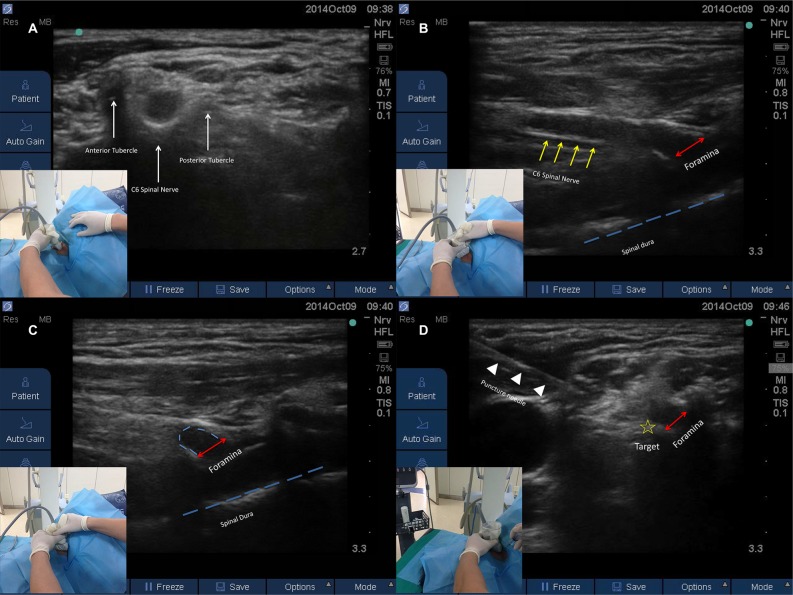
Background: Cervical transforaminal epidural steroid injection (CTFESI) is used to provide pain relief and restore function in patients with cervical radiculopathy. Traditionally, it is performed under the guidance of fluoroscopy or computed tomography. Here, we introduce a novel technique - ultrasound-guided CTFESI - with which operators can easily distinguish the close soft tissue (nerve, vessels) around the cervical foramina to avoid intravascular injection during the procedure.
Objective: To present the immediate and long-term effectiveness of ultrasound-guided CTFESI in patients with cervical radiculopathy in an academic pain-management center with prospective clinic experiments.
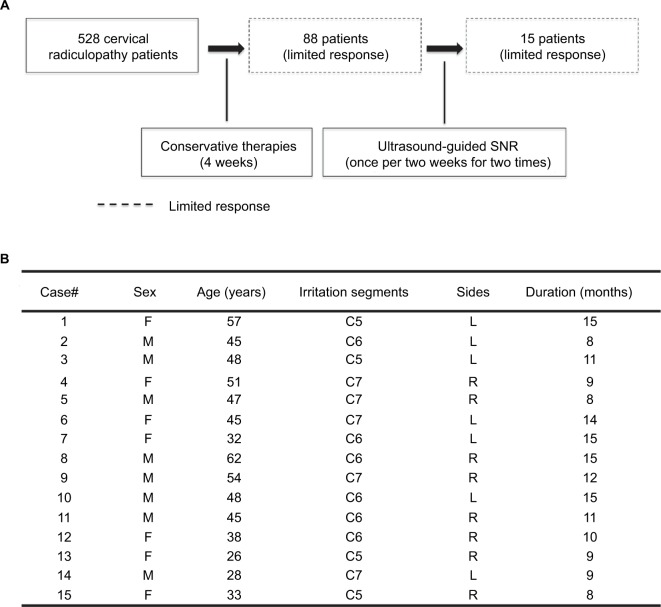
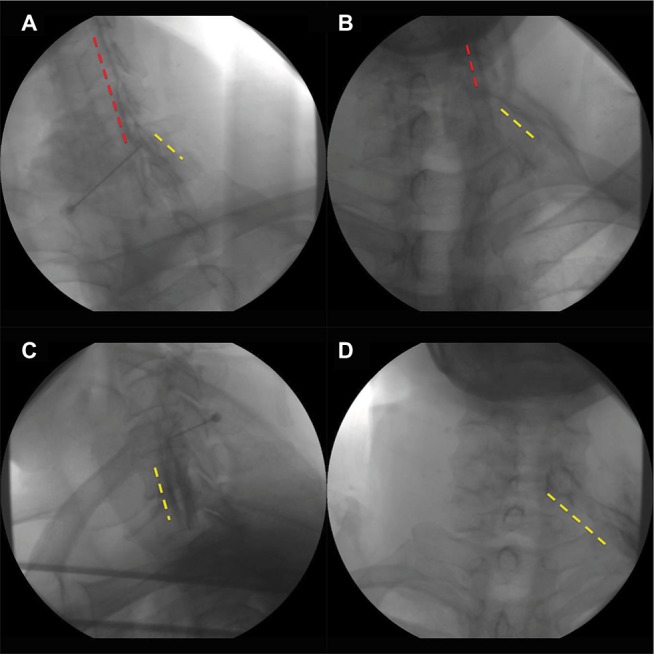
Methods: Fifteen patients with cervical radiculopathy who were resistant to conservative therapies and ultrasound-guided selective cervical spinal nerve-root injections, were treated with ultrasound-guided CTFESI. During the injection procedures, the needle tips were reconfirmed by real-time fluoroscopy. Pain numeric rating-scale and neck-disability-index scores were assessed from onset to six months after the procedures.
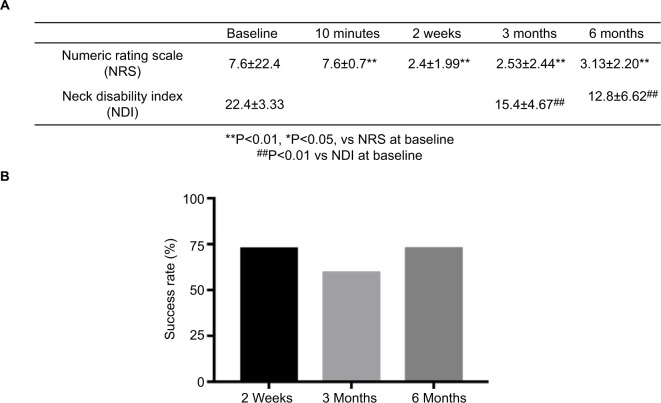
Results: During the procedures, based on real-time fluoroscopic confirmation, the injection solution outlined the spinal nerve root and spread into the epidural space in most cases (14 of 15). All patients reported pain relief within 10 minutes after the injection. The majority of patients (eleven of 15) experienced pain relief and neck-disability index-score improvement throughout the 6-month study period. No patient experienced any complication.
Conclusion: We suggest that ultrasound-guided CTFESI is an effective, safe, and simple procedure free of radiation or magnetization and provides sustained pain relief in patients with cervical radiculopathy who have failed previous conservation therapies.
Keywords: cervical radiculopathy; cervical transforaminal epidural steroid injection; steroid; ultrasound-guided.
Conflict of interest statement
Disclosure The authors report no conflicts of interest in this work.
Figures
References
-
- Radhakrishnan K, Litchy WJ, O’Fallon WM, Kurland LT. Epidemiology of cervical radiculopathy. A population-based study from Rochester, Minnesota, 1976 through 1990. Brain. 1994;117(Pt 2):325–335. - PubMed
-
- Rathmell JP, Aprill C, Bogduk N. Cervical transforaminal injection of steroids. Anesthesiology. 2004;100(6):1595–1600. - PubMed
-
- House LM, Barrette K, Mattie R, Mccormick ZL. Cervical epidural steroid injection: techniques and evidence. Phys Med Rehabil Clin N Am. 2018;29(1):1–17. - PubMed
-
- Schneider BJ, Maybin S, Sturos E. Safety and complications of cervical epidural steroid injections. Phys Med Rehabil Clin N Am. 2018;29(1):155–169. - PubMed
-
- El-Yahchouchi CA, Plastaras CT, Maus TP, et al. Adverse event rates associated with transforaminal and interlaminar epidural steroid injections: a multi-institutional study. Pain Med. 2016;17(2):239–249. - PubMed
LinkOut - more resources
Full Text Sources
