


Does Implementation of a Corporate Wellness Initiative Improve Burnout?
- PMID: 30643617
- PMCID: PMC6324712
- DOI: 10.5811/westjem.2018.10.39677
Does Implementation of a Corporate Wellness Initiative Improve Burnout?
Abstract
Introduction: Burnout affects over 50% of all physicians. Nearly 70% of emergency physicians are affected, and it has been found to be as high as 76% in resident physicians overall. Previous wellness initiatives have yielded variable results; therefore, we looked for interventions that could potentially be effective at reversing this trend. We explored effective wellness programs originating from other industries. Our objective was to implement a corporate wellness program with previous evidence of success in other healthcare provider populations. We aimed to investigate whether this program would be effective in decreasing burnout in emergency medicine (EM) residents.
Methods: This program was conducted during required EM resident conference hours from 2016-2017. The Maslach Burnout Inventory was completed before and after the series of sessions, and we collected reactions-level data following completion of the six sessions.
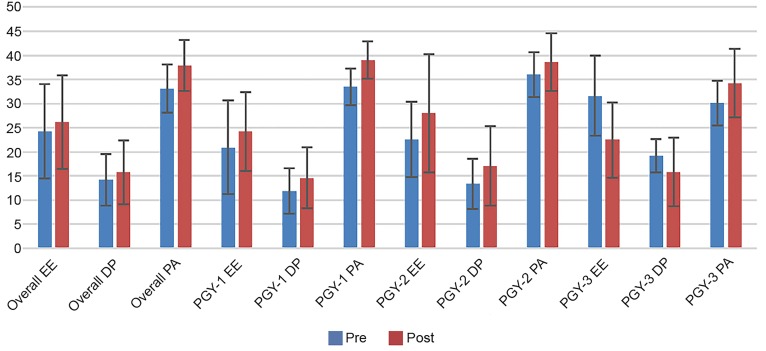
Results: Post-intervention scores revealed a small trend toward increased emotional exhaustion and depersonalization scores, and with increased personal accomplishment scores. The overall satisfaction rating for this program was low, at 1.5 on a 5-point scale. Forty-three percent of residents stated that this intervention subjectively worsened their overall burnout, with another 39% stating it did not improve their burnout at all. A similar trend was seen for effects on wellness.
Conclusion: We found that a corporate wellness intervention that had previously been shown to be successful with other types of healthcare providers did not objectively improve burnout and was subjectively perceived as paradoxically worsening burnout for many residents. This result may be related to the type of intervention chosen (individual vs. systems-focused), the design of the intervention itself, or the unique stressors faced by the resident population. [West J Emerg Med.2019;20(1)138-144.].
Conflict of interest statement
Conflicts of Interest: By the WestJEM article submission agreement, all authors are required to disclose all affiliations, funding sources and financial or management relationships that could be perceived as potential sources of bias. No author has professional or financial relationships with any companies that are relevant to this study. There are no conflicts of interest or sources of funding to declare.
Figures
References
-
- Dyrbye LN, West CP, Satele D, et al. Burnout among U.S. medical students, residents, and early career physicians relative to the general U.S. population. Acad Med. 2014;89(3):443–51. - PubMed
-
- Shanafelt TD, Bradley KA, Wipf JE, Back AL. Burnout and self-reported patient care in an internal medicine residency program. Ann Intern Med. 2002;136(5):358–67. - PubMed
-
- Shanafelt TD, Boone S, Tan L, et al. Burnout and satisfaction with work-life balance among US physicians relative to the general US population. Arch Intern Med. 2012;172(18):1377–85. - PubMed
-
- West CP, Shanafelt TD, Kolars JC. Quality of life, burnout, educational debt, and medical knowledge among internal medicine residents. JAMA. 2011;306(9):952–60. - PubMed
-
- Shanafelt TD, Sloan JA, Habermann TM. The well-being of physicians. Am J Med. 2003;114(6):513–9. - PubMed
