Review
. 2019 Jun;8(12):e1801210.
doi: 10.1002/adhm.201801210. Epub 2019 Jan 15.

Nitric Oxide Therapy for Diabetic Wound Healing

Affiliations
Review

Nitric Oxide Therapy for Diabetic Wound Healing

Maggie J Malone-Povolny et al. Adv Healthc Mater. 2019 Jun.

Abstract

Nitric oxide (NO) represents a potential wound therapeutic agent due to its ability to regulate inflammation and eradicate bacterial infections. Two broad strategies exist to utilize NO for wound healing; liberating NO from endogenous reservoirs, and supplementing NO from exogenous sources. This progress report examines the efficacy of a variety of NO-based methods to improve wound outcomes, with particular attention given to diabetes-associated chronic wounds.

Keywords: chronic wounds; diabetes; nitric oxide; wound healing.


Conflict of interest statement

Conflicts of Interest:

The authors declare the following competing financial interest(s): Mark H. Schoenfisch is a co-founder and maintains a financial interest in Novan, Inc. and Vast Therapeutics, Inc. Both companies commercialize macromolecular nitric oxide storage and release vehicles for clinical indications.

Figures
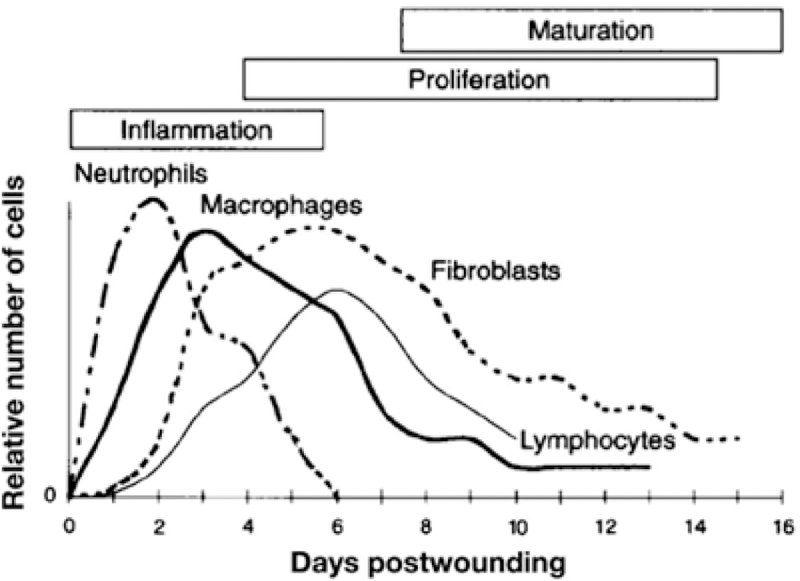
Figure 1.
Figure 1.
Time course of different cells populations in the wound during the healing process. Reproduced with permission.[50] Copyright 1997, Elsevier.
Figure 2.
Figure 2.
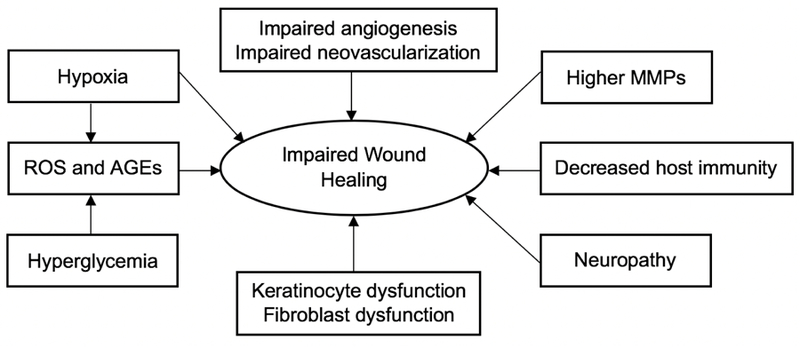
The potential effects of diabetes on wound healing. Adapted with permission.[1] Copyright 2010, SAGE Publications.
Figure 3.
Figure 3.
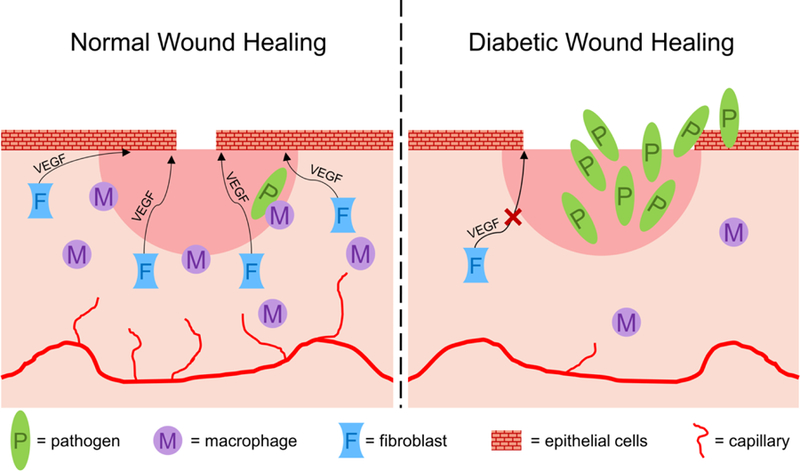
Mechanisms of normal versus diabetic wound healing. In a normal wound, macrophages combat wound bed pathogens, while fibroblasts deliver VEGF to initiate regrowth of epithelial cells and close the open wound. In diabetic wounds, insufficient angiogenesis and macrophage function result in significant pathogen invasion, while lower fibroblast presence delays re-epitheliazation and wound closure. Adapted with permission.[153] Copyright 2017, The Royal Society of Chemistry.
Figure 4.
Figure 4.
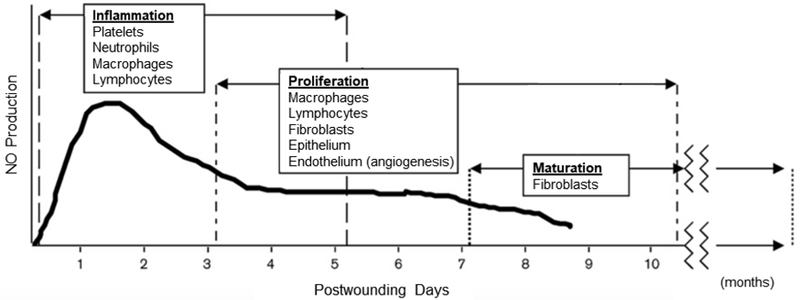
Temporal production of NO within the healing wound juxtaposed with the phases of healing and the cell populations that predominate each phase. Reproduced with permission.[32] Copyright 2000, Wolters Kluwer Health, LWW.
Figure 5.
Figure 5.
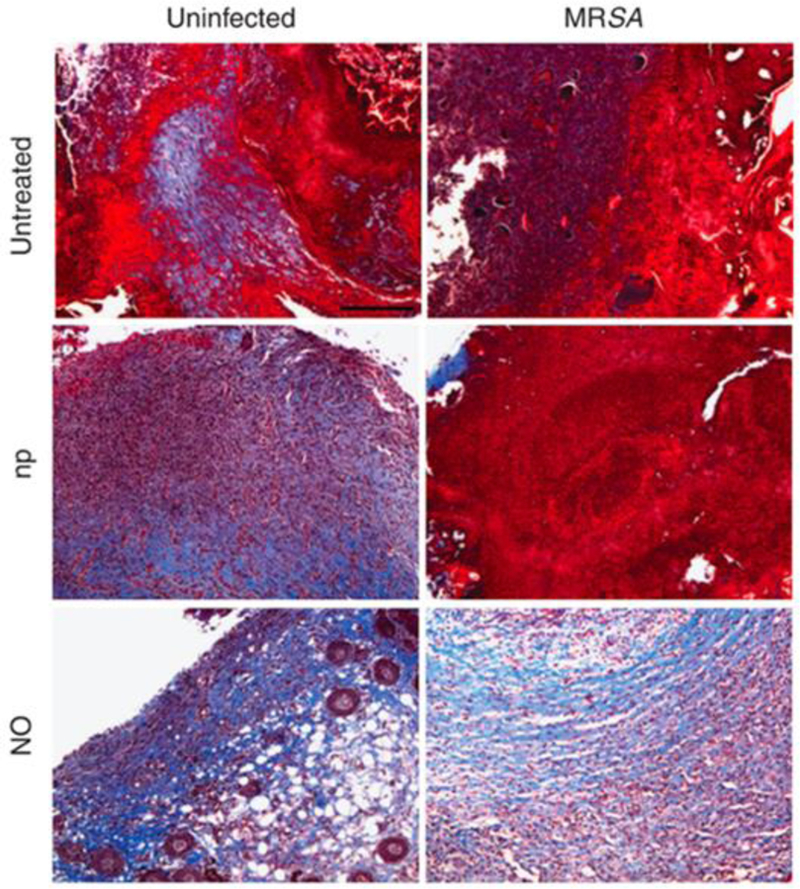
NO-nps decrease collagen degradation in skin lesions of BALB/c mice. Histological analysis of mice uninfected and untreated, uninfected treated with nanoparticles without nitric oxide (np), uninfected treated with NO-nps (NO), untreated MRSA-infected, np-treated MRSA-infected, and MRSA-infected treated with NO, after 7 d of treatment. Mice were infected with 107 bacterial cells. The blue stain indicates collagen. Reproduced with permission.[95] Copyright 2009, Elsevier.
Figure 6.
Figure 6.
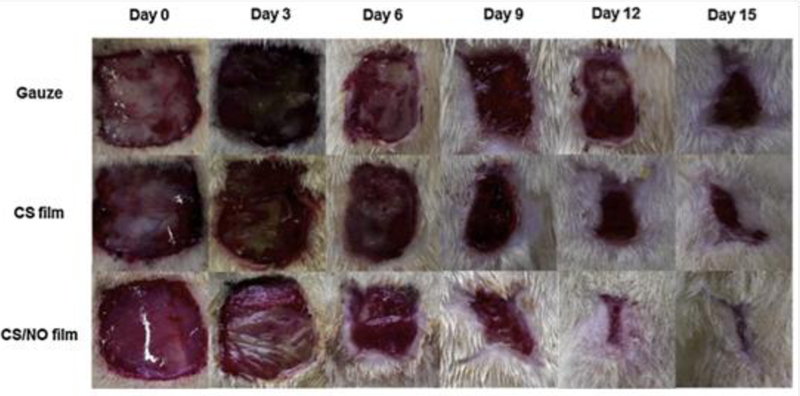
Representative photographs of Sprague-Dawley rat wounds treated with gauze controls, chitosan (CS) films, and NO-releasing chitosan (CS/NO) films for 15 d. Reproduced with permission.[116] Copyright 2015, Elsevier.
Figure 7.
Figure 7.
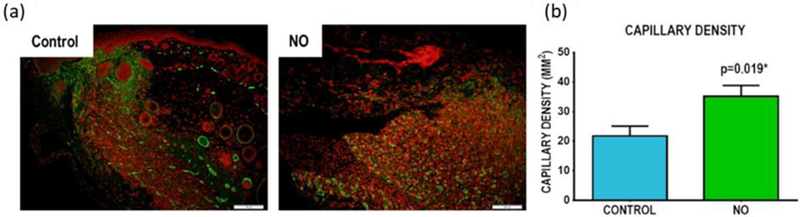
Histological analyses of SKH-1 mouse wound beds with daily administration of NO-releasing dressings. (a) Representative histology images of α-SMA IHC staining (capillaries stained red). (b) Average capillary density for control and NO-treated wounds. Reproduced with permission.[139] Copyright 2015, Elsevier.
Figure 8.
Figure 8.
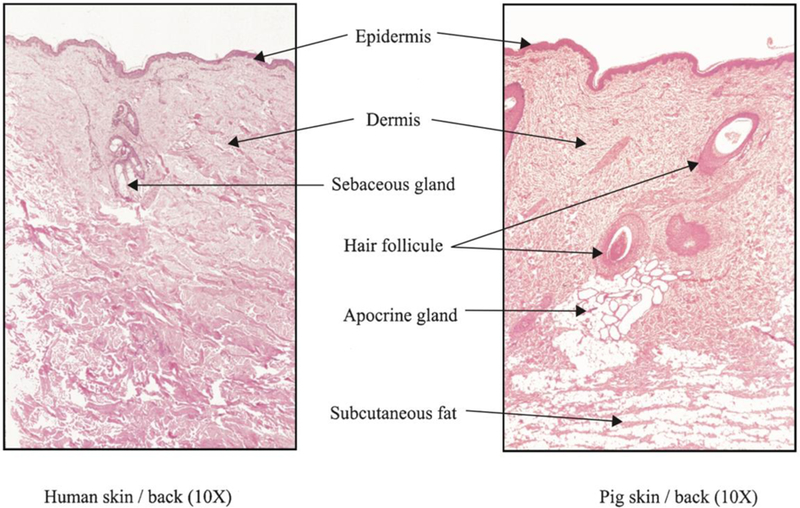
Comparison of histological features from swine and human skin. H&E stained section taken through comparable portions of the dermis in both tissues. Reproduced with permission.[148] Copyright 2001, Wiley-VCH.

References

    1. Guo S, DiPietro LA, J. Dent. Res. 2010, 89, 219. - PMC - PubMed
    1. Bjarnsholt T, Kirketerp-Møller K, Jensen PØ, Madsen KG, Phipps R, Krogfelt K, Høiby N, Givskov M, Wound Repair Regen. 2008, 16, 2. - PubMed
    1. Richmond N, Maderal A, Vivas A, Dermatol. Ther. 2013, 26, 187. - PubMed
    1. Blakytny R, Jude E, Diabet. Med. 2006, 23, 594. - PubMed
    1. Powers JG, Higham C, Broussard K, Phillips TJ, J. Am. Acad. Dermatol. 2016, 74, 607. - PubMed

Publication types