. 2018 Oct 5;1(6):e183779.
doi: 10.1001/jamanetworkopen.2018.3779.

Assessment of Validity of a Blood-Based 3-Gene Signature Score for Progression and Diagnosis of Tuberculosis, Disease Severity, and Treatment Response

Affiliations

Assessment of Validity of a Blood-Based 3-Gene Signature Score for Progression and Diagnosis of Tuberculosis, Disease Severity, and Treatment Response

Hayley C Warsinske et al. JAMA Netw Open. .

Abstract

Importance: The World Health Organization identified the need for a non-sputum-based triage test to identify those in need of further tuberculosis (TB) testing.

Objective: To determine whether the 3-gene TB score can be a diagnostic tool throughout the course of TB disease, from latency to diagnosis to treatment response, and posttreatment residual inflammation.

Design, setting, and participants: This nested case-control study analyzed the 3-gene TB score in 3 cohorts, each focusing on a different stage of TB disease: (1) the Adolescent Cohort Study profiled whole-blood samples from adolescents with latent Mycobacterium tuberculosis infection, some of which progressed to active TB (ATB), using RNA sequencing; (2) the Brazil Active Screen Study collected whole blood from an actively screened case-control cohort of adult inmates from 2 prisons in Mato Grosso do Sul, Brazil, for ATB from January 2016 to February 2016; and (3) the Catalysis Treatment Response Cohort (CTRC) identified culture-positive adults in primary health care clinics in Cape Town, South Africa, from 2005 to 2007 and collected whole blood for RNA sequencing from patients with ATB at diagnosis and weeks 1, 4, and 24. The CTRC patients also had positron emission tomography-computed tomography scans at diagnosis, week 4, and week 24. Analyses were performed from September 2017 to June 2018.

Main outcomes and measures: A 3-gene messenger RNA expression score, measured by quantitative polymerase chain reaction or RNA sequencing, was evaluated for distinguishing the following: individuals who progressed to ATB from those who did not, individuals with ATB from those without, and individuals with slower treatment response during TB therapy.

Results: Patients evaluated in this study included 144 adolescents from the Adolescent Cohort Study (aged 12-18 years; 96 female and 48 male), 81 adult prison inmates from the Brazil Active Screen Study (aged 20-72 years; 81 male), and 138 adult community members from the CTRC (aged 17-64 years; 81 female and 57 male). The 3-gene TB score identified progression from latent M tuberculosis infection to ATB 6 months prior to sputum conversion with 86% sensitivity and 84% specificity (area under the curve [AUC], 0.86; 95% CI, 0.77-0.96) and patients with ATB in the Brazil Active Screen Study cohort (AUC, 0.87; 95% CI, 0.78-0.95) and CTRC (AUC, 0.94; 95% CI, 0.88-0.99). It also identified CTRC patients with failed treatment at the end of treatment (AUC, 0.93; 95% CI, 0.83-1.00). Collectively, across all cohorts, the 3-gene TB score identified patients with ATB with 90% sensitivity, 70% specificity, and 99.3% negative predictive value at 4% prevalence.

Conclusions and relevance: Across 3 independent prospective cohorts, the 3-gene TB score approaches the World Health Organization target product profile benchmarks for non-sputum-based triage test with high negative predictive value. This gene expression diagnostic approach should be considered for further validation and future implementation.


Conflict of interest statement

Conflict of Interest Disclosures: Drs Khatri and Sweeney are cofounders of Inflammatix, Inc. Dr Khatri is a scientific advisor for Inflammatix, Inc and Dr Sweeney is an employee. Drs Khatri and Sweeney are coinventors on the 3-gene TB score pending patent owned by Stanford University, which has been licensed for commercialization. Dr Malherbe reported receiving grants from the South African Medical Research Council during the conduct of the study and grants from the European and Developing Countries Clinical Trials Partnership outside the submitted work. Dr Walzl reported receiving grants from the Bill and Melinda Gates Foundation during the conduct of the study; in addition, Dr Walzl has a patent to the United Kingdom patent office pending that is not related to the 3-gene TB signature. Dr Winter reported receiving grants from the Bill and Melinda Gates Foundation during the conduct of the study and outside the submitted work. Dr Sweeney is an employee and stockholder for Inflammatix, Inc; in addition, Dr Sweeney had a patent to methods of tuberculosis diagnosis pending and licensed. Dr Andrews reported receiving grants from the National Institutes of Health, grants from the Bill and Melinda Gates Foundation, and grants from the Stanford Center for Clinical and Translational Education during the conduct of the study. Dr Khatri reported receiving grants from the Bill and Melinda Gates Foundation, personal fees from Vir Bio and grants from the National Institute of Allergy and Infectious Diseases, National Institutes of Health during the conduct of the study; and personal fees from Vir Bio and Inflammatix, Inc outside the submitted work; in addition, Dr Khatri had a patent to methods for diagnosis of tuberculosis pending and with royalties paid. No other disclosures were reported.

Figures

Figure 1.
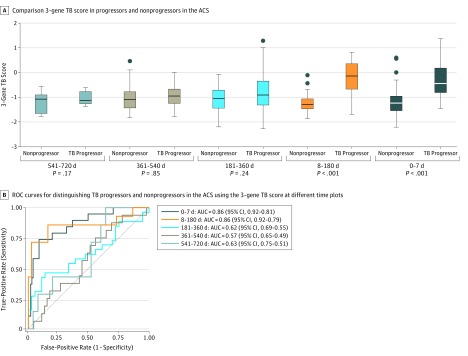
Figure 1.. Association of the 3-Gene TB Score With Progression From Latent to Active Disease 6 Months Prior to Sputum Conversion in the ACS
A, Box plots comparing the distributions of 3-gene tuberculosis (TB) scores between progressors and nonprogressors collected at 720 to 541, 540 to 361, 360 to 181, 180 to 8, and 7 to 0 days prior to sputum conversion. The horizontal line in the middle of each box indicates the median, while the bottom and top borders of the box represent the first and third quartile, respectively. The whiskers above and below represent the range of values. Circles indicate outliers. B, Receiver operating characteristics (ROC) curves for distinguishing progressors and nonprogressors prior to sputum conversion at different intervals. ACS indicates Adolescent Cohort Study; AUC, area under the curve.
Figure 2.
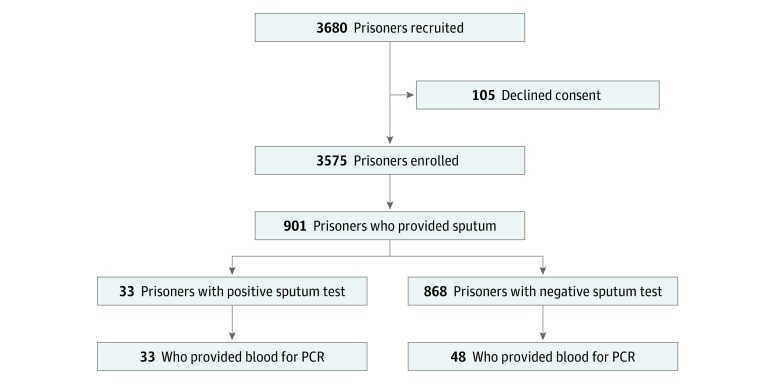
Figure 2.. Flowchart of the Screening Process in the Brazil Active Screen Study Cohort for the Detection of Active Tuberculosis
PCR indicates polymerase chain reaction.
Figure 3.
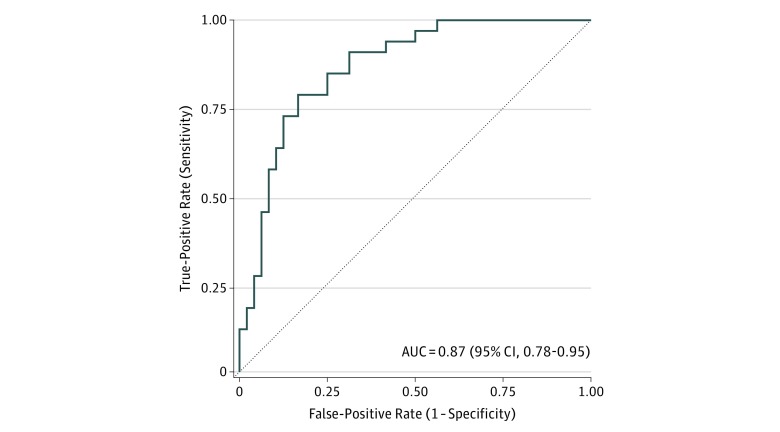
Figure 3.. Diagnosis of Patients With Active Tuberculosis With High Accuracy in Active Screening in the Brazil Active Screen Study Cohort
Solid line indicates receiver operating characteristic curve distinguishing patients with active tuberculosis from patients without tuberculosis in the Brazil Active Screen Study cohort. AUC indicates area under the curve.
Figure 4.
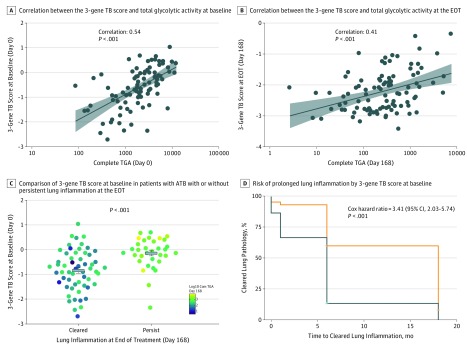
Figure 4.. Correlation of the 3-Gene TB Score at Baseline With Severity of Lung Pathology and Treatment Response in the Catalysis Treatment Response Cohort
A, The 3-gene tuberculosis (TB) score at baseline (prior to treatment initiation) in patients with active TB (ATB) correlated with total glycolytic ratio activity (TGA) at baseline. Each dot indicates a patient. Black line indicates linear regression. Shaded region indicates 95% CI. B, The 3-gene TB score at day 168 (end of treatment [EOT]) in patients with ATB correlated with day 168 TGA. Each dot indicates a patient. Black line indicates linear regression. Shaded region indicates 95% CI. C, The 3-gene TB score at baseline for patients with clear radiology by 6 months (mean, −0.84; 95% CI, −0.73 to −0.95) was significantly lower than those with persistent lung inflammation (mean, −0.16; 95% CI, −0.05 to −0.27). Each dot represents a patient. Color scale reflects log10 day 168 Total Glycolytic Activity Index score. D, Patients with ATB with 3-gene TB scores above the median had significantly higher likelihood of prolonged lung pathology as measured by positron emission tomography–computed tomography.

References

    1. World Health Organization High-Priority Target Product Profiles for New Tuberculosis Diagnostics: Report of a Consensus Meeting. Geneva, Switzerland: World Health Organization; 2014.
    1. World Health Organization Consensus Meeting Report: Development of a Target Product Profile (TPP) and a Framework for Evaluation for a Test for Predicting Progression From Tuberculosis Infection to Active Disease. Geneva, Switzerland: World Health Organization; 2017.
    1. Seshadri P, Denkinger C.. Draft target product profile: test for progression of tuberculosis infection. http://www.finddx.org/wp-content/uploads/2016/05/TPP-LTBIprogression.pdf. Accessed September 10, 2018.
    1. Kirwan DE, Gilman RH. Same-day diagnosis and treatment of tuberculosis. Lancet Infect Dis. 2013;13(2):-. doi:10.1016/S1473-3099(12)70270-0 - DOI - PubMed
    1. Davis JL, Cattamanchi A, Cuevas LE, Hopewell PC, Steingart KR. Diagnostic accuracy of same-day microscopy versus standard microscopy for pulmonary tuberculosis: a systematic review and meta-analysis. Lancet Infect Dis. 2013;13(2):147-154. doi:10.1016/S1473-3099(12)70232-3 - DOI - PMC - PubMed

Publication types

MeSH terms