


Nutraceutical and Medicinal Potential of the Morus Species in Metabolic Dysfunctions
- PMID: 30646503
- PMCID: PMC6358891
- DOI: 10.3390/ijms20020301
Nutraceutical and Medicinal Potential of the Morus Species in Metabolic Dysfunctions
Abstract
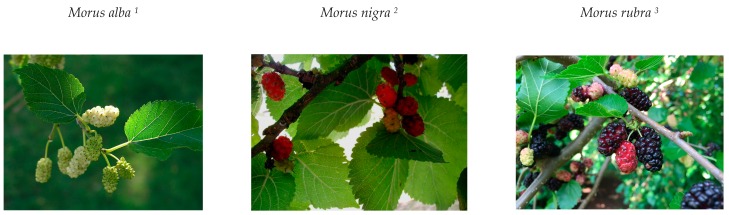
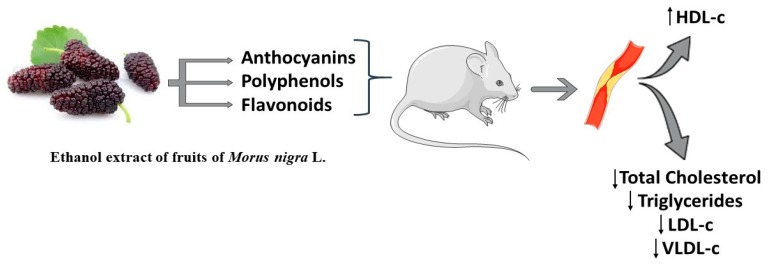
Many populations use medicinal plants as a therapeutic treatment, due to their lower cost and greater access. Among the plant species used for medicinal purposes are those of the genus Morus. The most known species are Morus alba, rubra, and nigra. This review aims to collect data from the literature, predominantly from cell and animal studies, which presents a possible nutraceutical and medicinal potential of the species Morus for use in metabolic dysfunctions. The fruits and leaves of mulberry are used for therapeutic purposes. For scientific confirmation of these effects, they were studied for laxative properties, antibacterial activity, anti-atherogenic activity, and hepatoprotective function. Furthermore, the genus Morus is recognized for the treatment and prevention of diabetes mellitus, through its hypoglycemic action. It may also provide health benefits through immunomodulatory, anti-inflammatory, and anti-nociceptive effects. It has been found that the Morus species have phenolic compounds, flavonoids, and anthocyanins that act as important antioxidants and promote beneficial effects on human health. These phytochemical compounds differ among species. Blackberry (Morus nigra) are rich in flavonoids, while the white mulberry (Morus alba) has low concentrations of flavonoids and anthocyanins. In addition, another important factor is to ensure a complete exemption of toxic risks in the use of medicinal plants for the treatment of diseases. Studies have shown no toxic effects by the administration of extracts of Morus species. Thus, the mulberry tree presents nutraceutical potential. It is therefore a promising alternative for medicinal products based on medicinal plants.
Keywords: Moraceae; antioxidants; diabetes mellitus; flavonoids; medicinal plants.
Conflict of interest statement
The authors declare no conflict of interest.
Figures
References
-
- Hosseinzadeh S., Jafarikukhdan A., Hosseini A., Armand R. The application of Medicinal Plants in Tradicional and Modern Medicine: A Review of Thymus vulgaris. Int. J. Clin. Med. 2015;6:635–642. doi: 10.4236/ijcm.2015.69084. - DOI
-
- Kumar V., Chauhan S. Mulberry: Life enhancer. J. Med. Plant. Res. 2008;2:271–278.
-
- Mena P., Sánchez-Salcedo E.M., Tassoti M., Martínez J.J., Hernández F., Del Rio D. Phytochemical evaluation of eight white (Morus alba L.) and black (Morus nigra L.) mulberry clones grown in Spain based on UHPLC-ESI-MSn metabolomic profiles. Food Res. Int. 2016;89:1116–1122. doi: 10.1016/j.foodres.2016.06.012. - DOI
Publication types
MeSH terms
Substances
LinkOut - more resources
Full Text Sources
Medical
Miscellaneous
