


Longitudinal Monitoring of Alpha-Fetoprotein by Dried Blood Spot for Hepatoblastoma Screening in Beckwith⁻Wiedemann Syndrome
- PMID: 30646549
- PMCID: PMC6356556
- DOI: 10.3390/cancers11010086
Longitudinal Monitoring of Alpha-Fetoprotein by Dried Blood Spot for Hepatoblastoma Screening in Beckwith⁻Wiedemann Syndrome
Abstract
Background: Hepatoblastoma screening in the Beckwith⁻Wiedemann spectrum (BWSp) is currently based on measuring a specific serum marker alpha-fetoprotein (αFP) every three months until the fourth birthday. Frequent blood draws can be a burden for patients and their families.
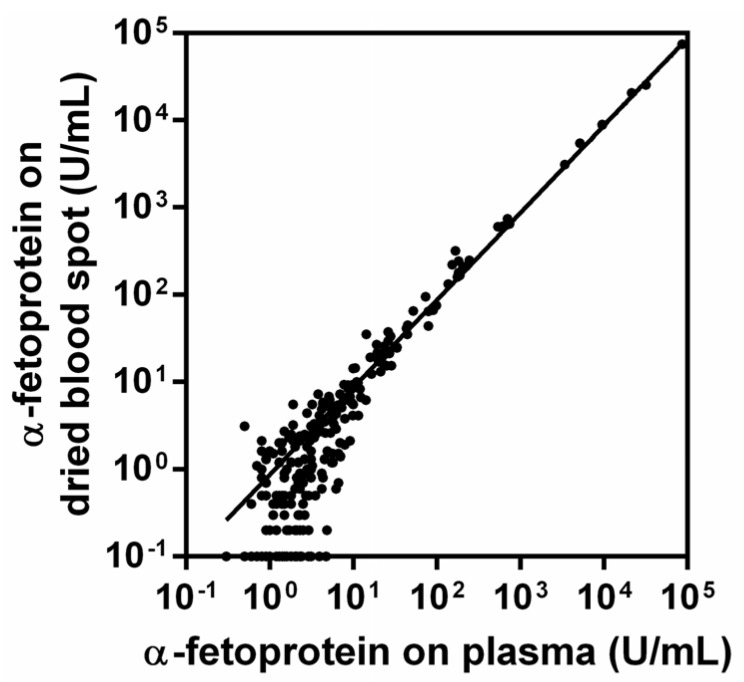
Methods: We have developed a less invasive alternative testing method based on measuring αFPs from dried blood spots (DBS). The method was validated with 259 simultaneous plasma and DBS αFP measurements in 171 children (132 controls and 39 patients with BWSp).
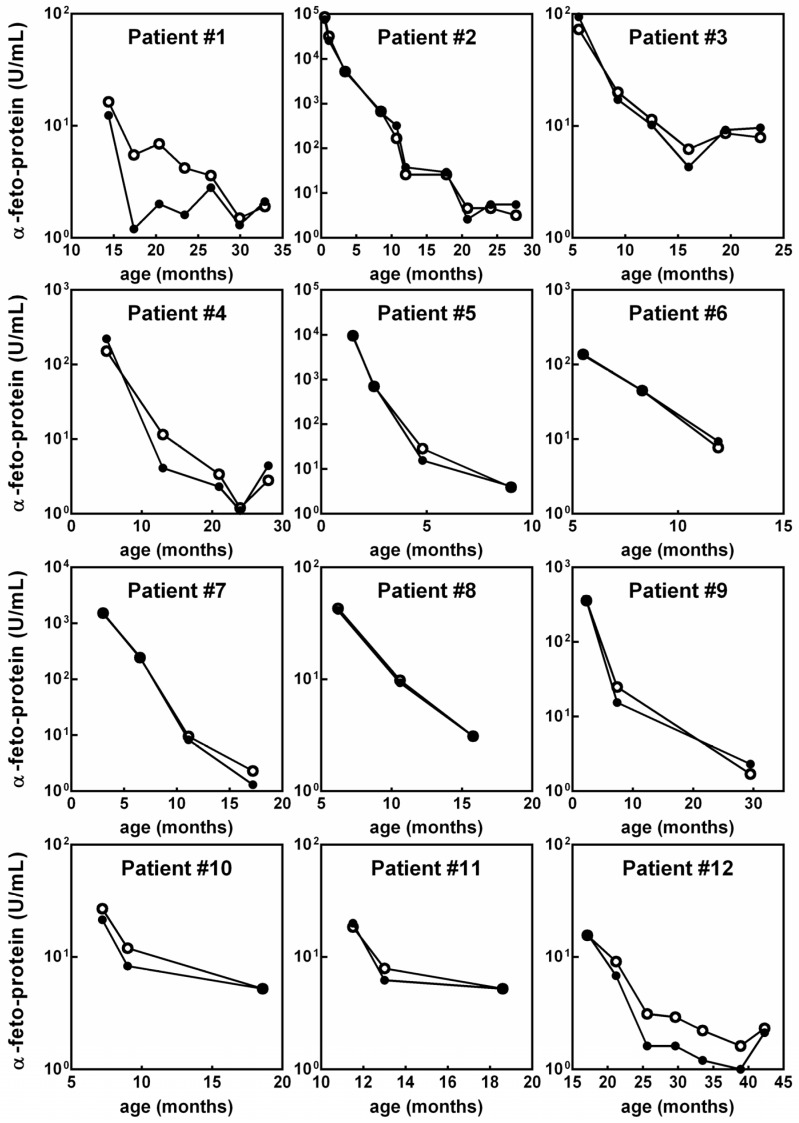
Results: The DBS and plasma measurements overlapped across the wide range of αFP concentrations independent of patient age (p < 0.0001), demonstrating the utility of this method for longitudinal monitoring. Occasional differences between measurements by the two techniques fell within standard laboratory error and would not alter clinical management.
Conclusions: This novel method shows consistent overlap with the traditional blood draws, thereby demonstrating its utility for hepatoblastoma screening in this setting and alleviating the burden of frequent blood draws. This also may help increase patient compliance and reduce costs of health care screening. The DBS-based method for the measurement of cancer biomarkers may also be applied to several other chronic diseases with increased risks of αFP-producing liver tumors.
Keywords: Beckwith–Wiedemann syndrome; alpha-fetoprotein; dried blood spot; hepatoblastoma; screening.
Conflict of interest statement
The authors declare no conflict of interest.
Figures
References
-
- Brioude F., Kalish J.M., Mussa A., Foster A.C., Bliek J., Ferrero G.B., Boonen S.E., Cole T., Baker R., Bertoletti M., et al. Expert consensus document: Clinical and molecular diagnosis, screening and management of Beckwith-Wiedemann syndrome: An international consensus statement. Nat. Rev. Endocrinol. 2018;14:229–249. doi: 10.1038/nrendo.2017.166. - DOI - PMC - PubMed
