Review
. 2019 Jan 14;19(2):308.
doi: 10.3390/s19020308.

NUV-Sensitive Silicon Photomultiplier Technologies Developed at Fondazione Bruno Kessler

Affiliations
Review

NUV-Sensitive Silicon Photomultiplier Technologies Developed at Fondazione Bruno Kessler

Alberto Gola et al. Sensors (Basel). .

Abstract

Different applications require different customizations of silicon photomultiplier (SiPM) technology. We present a review on the latest SiPM technologies developed at Fondazione Bruno Kessler (FBK, Trento), characterized by a peak detection efficiency in the near-UV and customized according to the needs of different applications. Original near-UV sensitive, high-density SiPMs (NUV-HD), optimized for Positron Emission Tomography (PET) application, feature peak photon detection efficiency (PDE) of 63% at 420 nm with a 35 um cell size and a dark count rate (DCR) of 100 kHz/mm². Correlated noise probability is around 25% at a PDE of 50% at 420 nm. It provides a coincidence resolving time (CRT) of 100 ps FWHM (full width at half maximum) in the detection of 511 keV photons, when used for the readout of LYSO(Ce) scintillator (Cerium-doped lutetium-yttrium oxyorthosilicate) and down to 75 ps FWHM with LSO(Ce:Ca) scintillator (Cerium and Calcium-doped lutetium oxyorthosilicate). Starting from this technology, we developed three variants, optimized according to different sets of specifications. NUV-HD⁻LowCT features a 60% reduction of direct crosstalk probability, for applications such as Cherenkov telescope array (CTA). NUV-HD⁻Cryo was optimized for cryogenic operation and for large photosensitive areas. The reference application, in this case, is the readout of liquid, noble-gases scintillators, such as liquid Argon. Measurements at 77 K showed a remarkably low value of the DCR of a few mHz/mm². Finally, vacuum-UV (VUV)-HD features an increased sensitivity to VUV light, aiming at direct detection of photons below 200 nm. PDE in excess of 20% at 175 nm was measured in liquid Xenon. In the paper, we discuss the specifications on the SiPM related to different types of applications, the SiPM design challenges and process optimizations, and the results from the experimental characterization of the different, NUV-sensitive technologies developed at FBK.

Keywords: Cherenkov light detection; PET; SiPM performance; VUV-light detection; cryogenic SiPM; liquid; liquid–Argon TPC; noble-gases scintillators; scintillation light readout; silicon photomultiplier (SiPM) technology.


Conflict of interest statement

The authors declare no conflicts of interest.

Figures
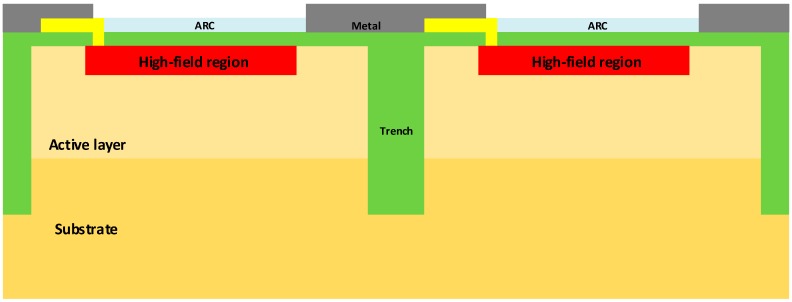
Figure 1
Figure 1
Structure of the cells of the NUV-HD technology (near-UV sensitive, HD stands for “high-density” of cells in the SiPM).
Figure 2
Figure 2
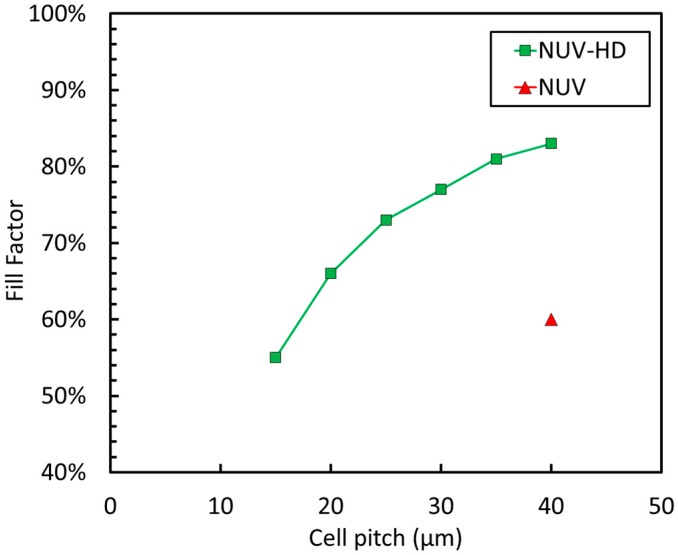
Fill factor (FF) as a function of the cell size for the NUV (red triangle) and NUV-HD (green squares) technologies.
Figure 3
Figure 3
Photon detection efficiency (PDE) as a function of wavelength at different overvoltage (OV) for the NUV-HD 40 µm cell.
Figure 4
Figure 4
PDE at 420 nm as a function of the OV measured on different cell sizes of the NUV-HD silicon photomultiplier (SiPM) technology.
Figure 5
Figure 5
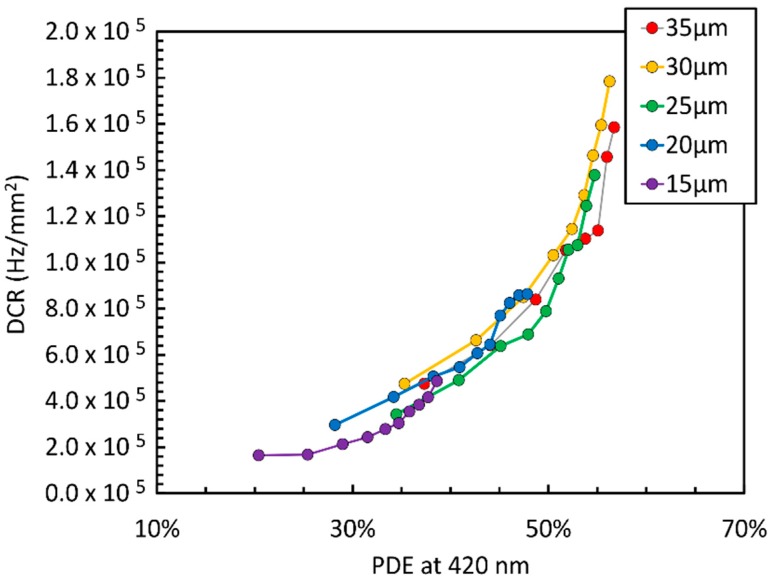
Dark count rate (DCR) as a function of the PDE at 420 nm for the different cell sizes of the NUV-HD SiPMs (from 15 µm to 35 µm).
Figure 6
Figure 6
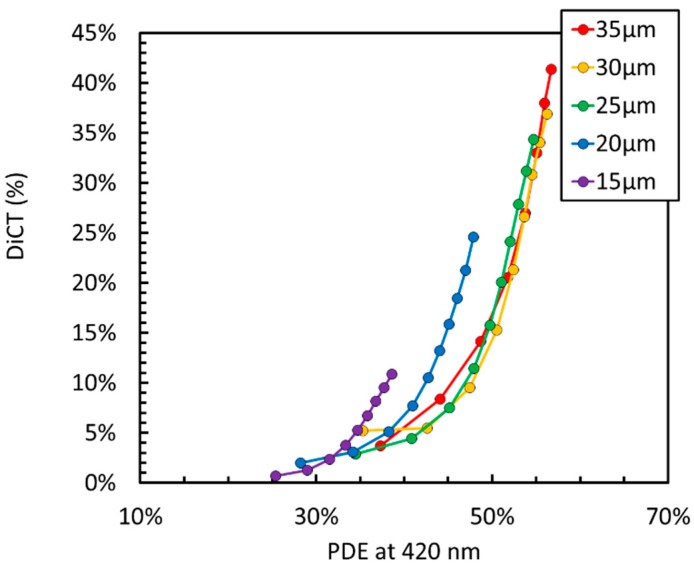
Direct optical Crosstalk (DiCT) as a function of PDE for the different cell sizes of the NUV-HD SiPMs (from 15 µm to 35 µm).
Figure 7
Figure 7
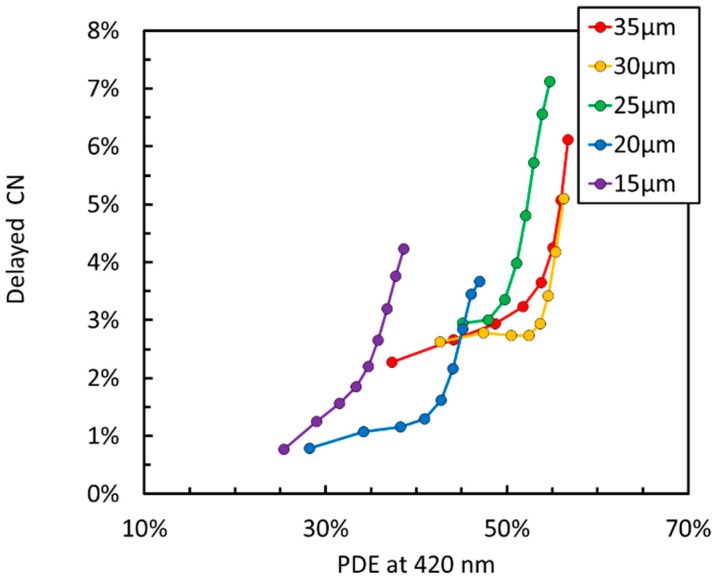
Delayed corrected noise (DeCN) as a function of PDE for the different cell sizes of the NUV-HD SiPMs (15 µm to 35 µm).
Figure 8
Figure 8
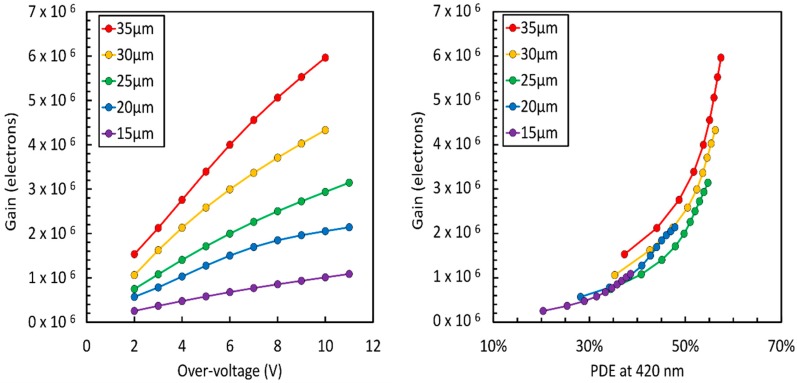
Left: Gain vs. overvoltage for all cell sizes. Right: Gain vs. PDE.
Figure 9
Figure 9
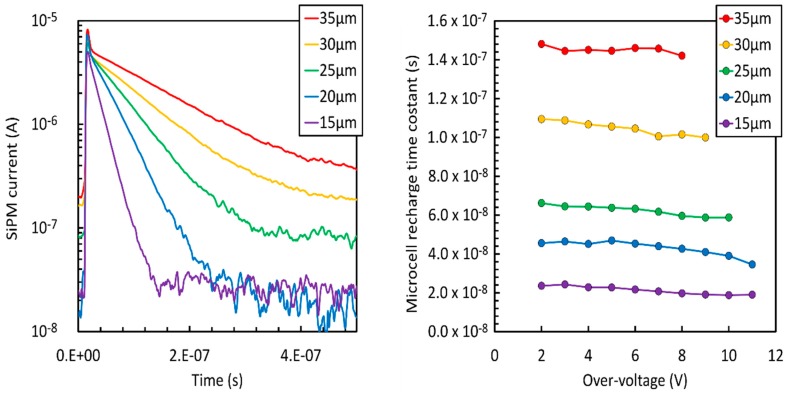
Left: Signal shape, in current, measured for all the cell sizes at 6 V overvoltage. Right: Recharge time constant, τr, vs. overvoltage for all cells.
Figure 10
Figure 10
Reverse current as a function of the overvoltage for the different cell sizes of the NUV-HD SiPMs (from 15 µm to 40 µm).
Figure 11
Figure 11
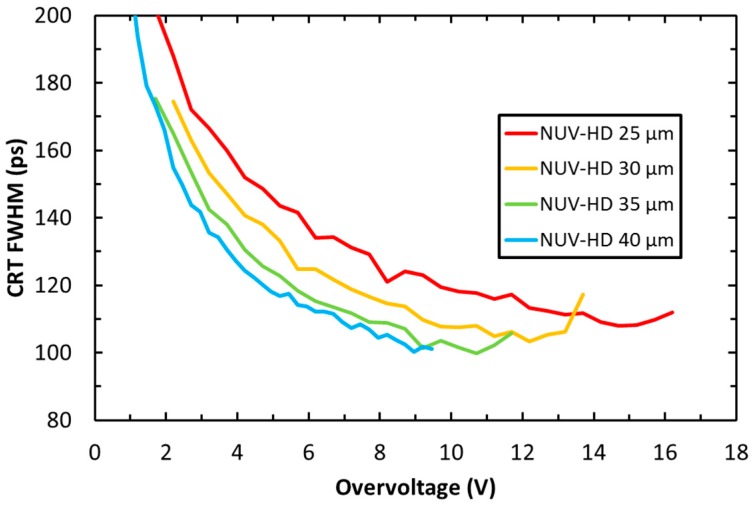
Coincidence reducing time (CRT) as a function of the OV, measured on different cell sizes of the NUV-HD technology.
Figure 12
Figure 12
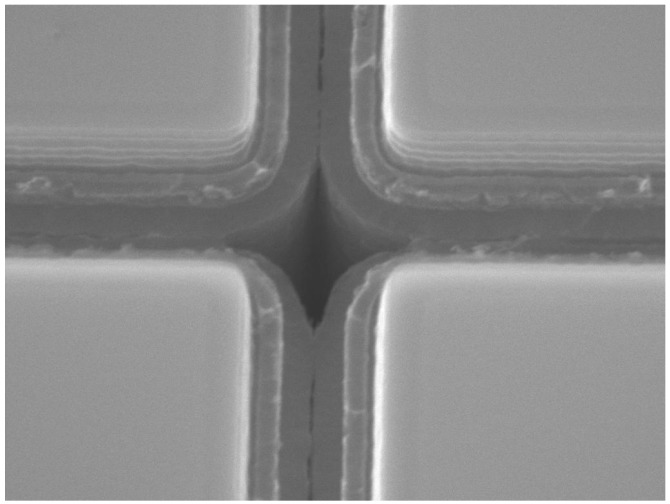
SEM image of SiPMs during the fabrication process, after the trench-filling step. Trenches are filled with SiO2 and highly doped polysilicon.
Figure 13
Figure 13
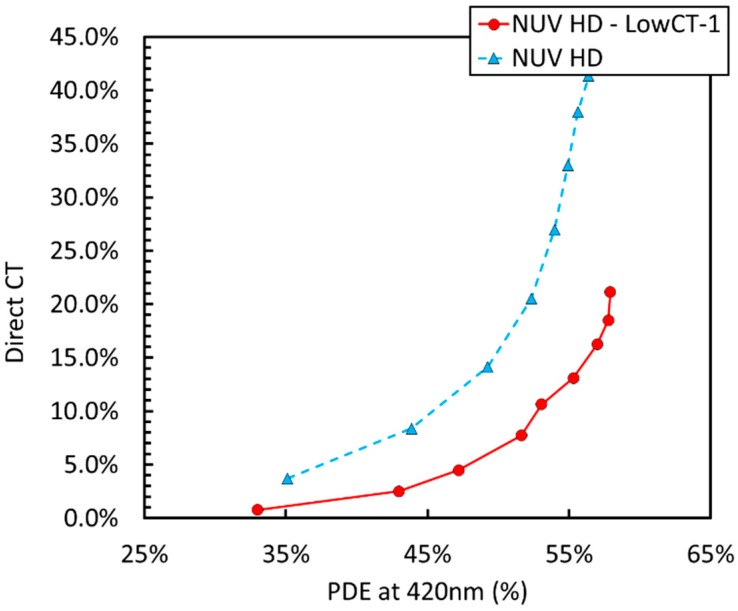
Probability of DiCT as a function of the PDE at 420 nm for standard NUV-HD and LowCT technologies.
Figure 14
Figure 14
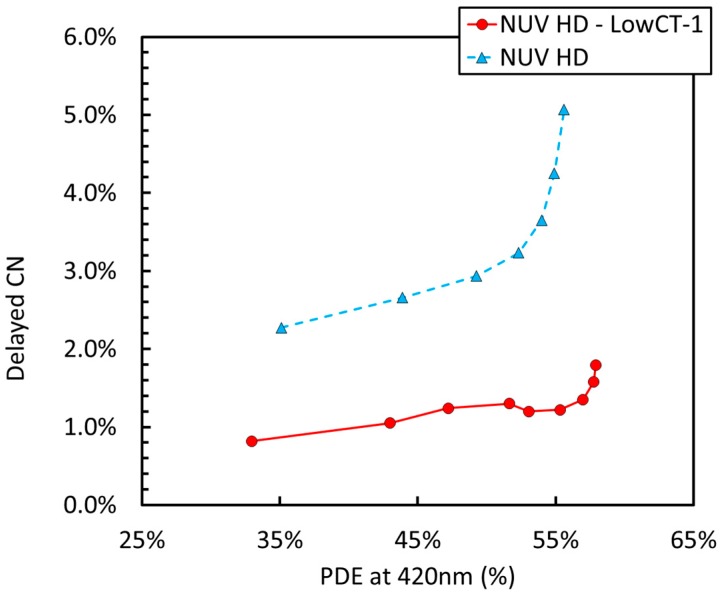
Probability of Delayed Correlated Noise (PDeCN) vs. PDE at 420 nm measured on NUV-HD and NUV-HD-LowCT-1 with 35 μm cell size.
Figure 15
Figure 15
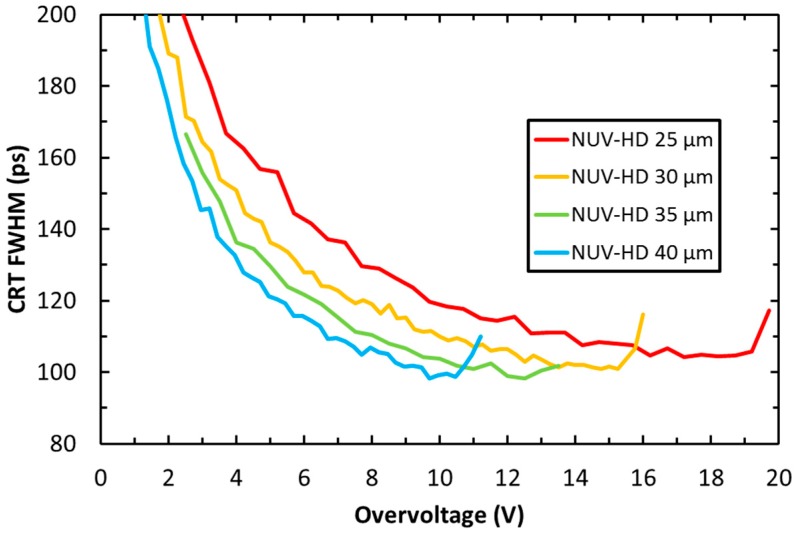
CRT as a function of the OV for NUV-HD LowCT SiPMs having different cell sizes.
Figure 16
Figure 16
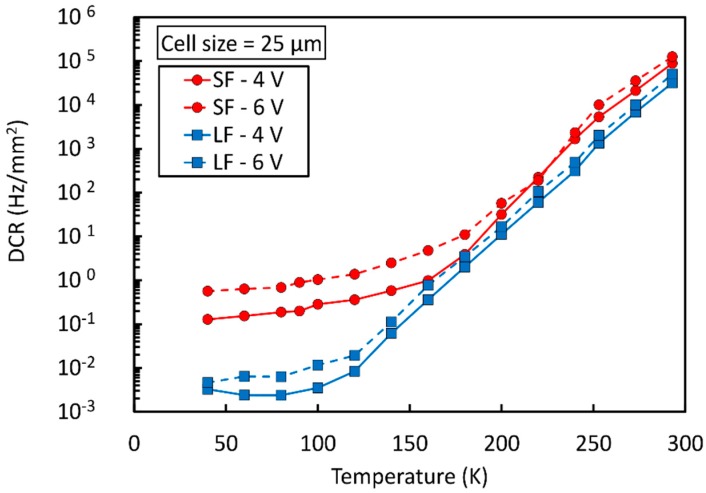
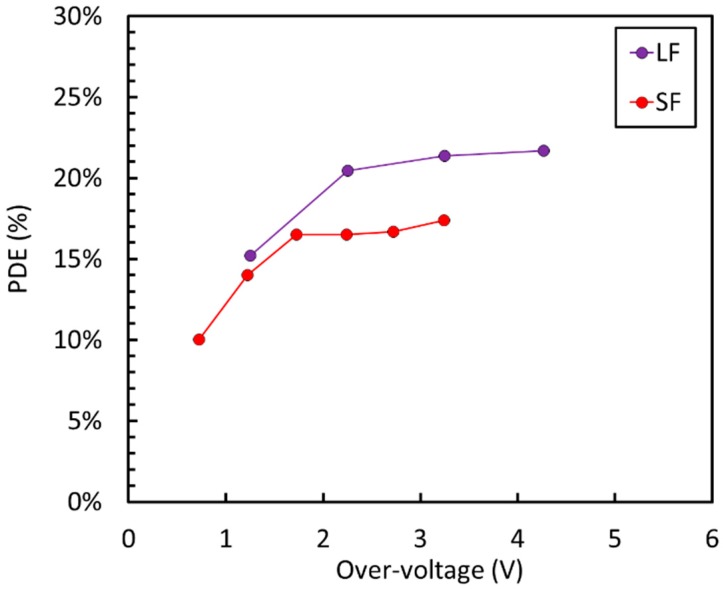
DCR as a function of temperature for the NUV-HD (SF) and NUV-HD-LF (LF) technologies at two values of OV. Measures taken from Reference [36]. SF: Standard field, LF: Low field.
Figure 17
Figure 17
DiCT as a function of the temperature and overvoltage for NUV-HD-LF SiPMs. Measures taken from Reference [36].
Figure 18
Figure 18
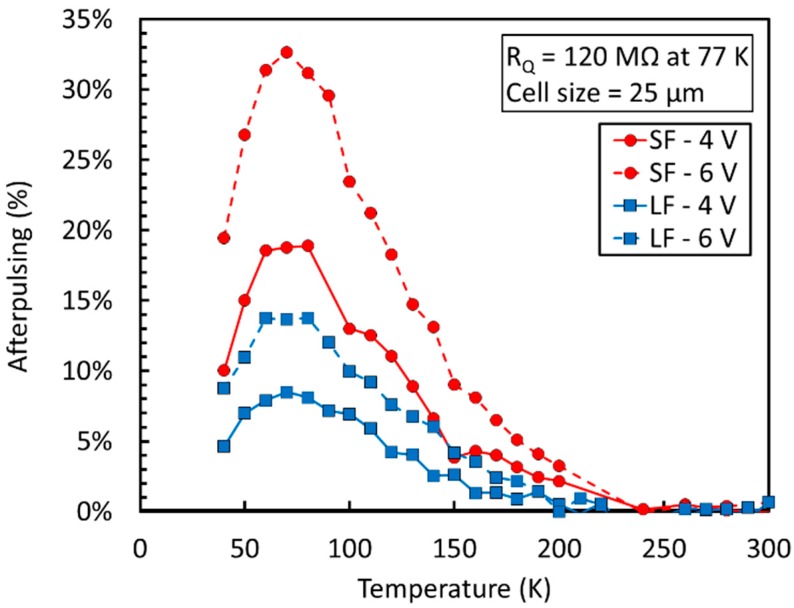
Afterpulsing probability (AP) as a function of the temperature for the NUV-HD and NUV-HD-LF technologies. Measures taken from Reference [36].
Figure 19
Figure 19
Reverse current-voltage characteristics measured at 77 K for the NUV-SF, NUV-LF and NUV-LF-LowAP SiPM.
Figure 20
Figure 20
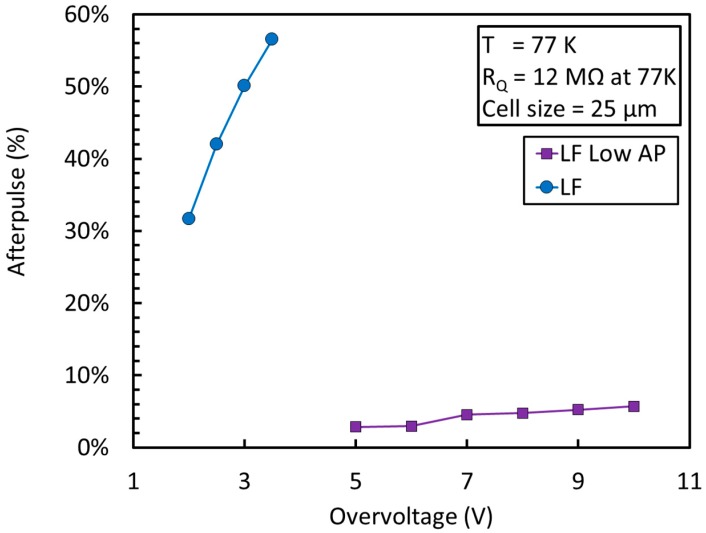
AP as a function of the OV at 77 K for the NUV-HD-LF and NUV-HD-LF-LowAP SiPMs.
Figure 21
Figure 21
Variations of the quenching resistor value for the standard and modified quenching resistor used in NUV-HD-LF, LowAP SiPMs.
Figure 22
Figure 22
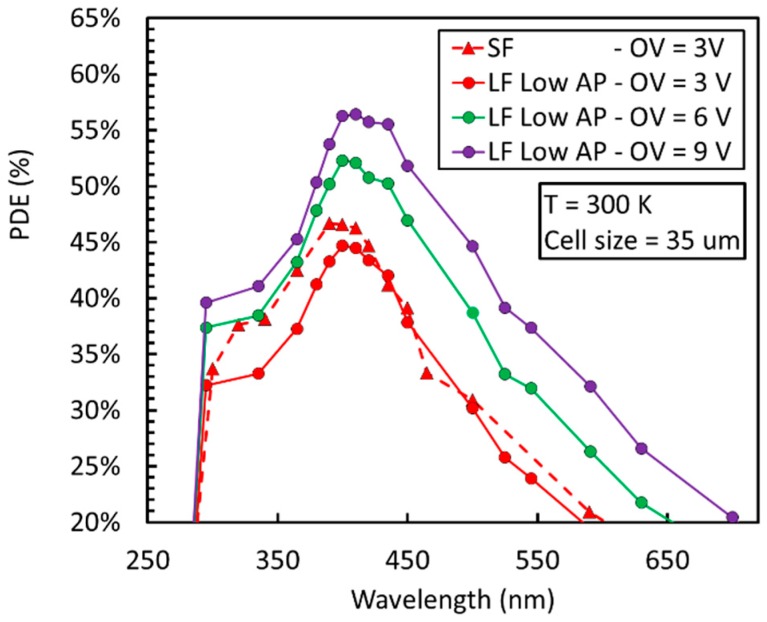
PDE measured at 293 K on 35 μm cell, NUV-HD–Cryo SiPM, compared to that of a standard NUV-HD SiPM, with the same cell size.
Figure 23
Figure 23
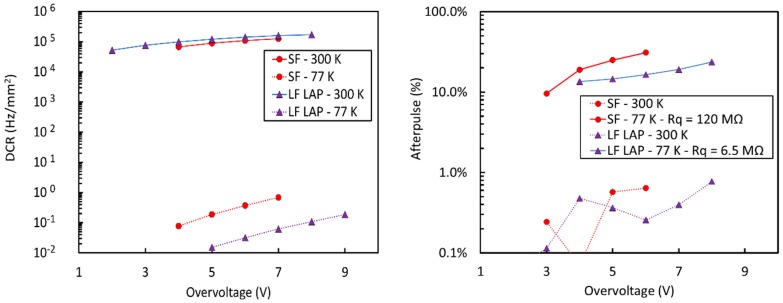
(left) DCR measured at 293 K and 77 K on 25 μm cell NUV-HD and NUV-HD–Cryo SiPMs; (right) Afterpulsing probability measured at 293 K and 77 K on 25 μm cell NUV-HD and NUV-HD–Cryo SiPMs with values of quenching resistor of 120 MOhm and 6.5 MOhm, respectively.
Figure 24
Figure 24
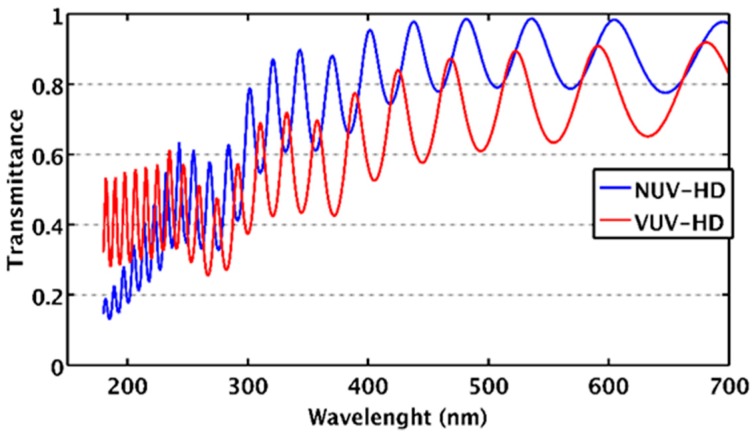
Calculated transmittance in silicon of normal incident light on the NUV-HD ARC (blue line) and on the modified ARC of VUV-HD SiPMs.
Figure 25
Figure 25
PDE at 175 nm, measured on VUV-HD SiPM with 35 μm cell size in LXe. Measures taken from Reference [41].

References

    1. Gundacker S., Auffray E., Jarron P., Meyer T., Lecoq P. On the comparison of analog and digital SiPM readout in terms of expected timing performance. Nucl. Instrum. Methods Phys. Res. Sect. A. 2015;787:6–11. doi: 10.1016/j.nima.2014.10.020. - DOI
    1. Piemonte C., Acerbi F., Ferri A., Gola A., Paternoster G., Regazzoni V., Zappala G., Zorzi N. Performance of NUV-HD silicon photomultiplier technology. IEEE Trans. Electron Devices. 2016;63:1111–1116. doi: 10.1109/TED.2016.2516641. - DOI
    1. Single-element MPPCs (SiPMs) [(accessed on 10 December 2018)]; Available online: https://www.hamamatsu.com/eu/en/product/optical-sensors/mppc/mppc_single....
    1. SiPM. [(accessed on 10 December 2018)]; Available online: https://www.ketek.net/sipm/
    1. Silicon Photomultipliers (SiPM) [(accessed on 10 December 2018)]; Available online: https://sensl.com/products/