. 2019 Jan 11:6:e6242.
doi: 10.7717/peerj.6242. eCollection 2019.

Genome-wide identification and expression analysis of the MYB transcription factor in moso bamboo (Phyllostachys edulis)

Affiliations

Genome-wide identification and expression analysis of the MYB transcription factor in moso bamboo (Phyllostachys edulis)

Kebin Yang et al. PeerJ. .

Abstract

The MYB family, one of the largest transcription factor (TF) families in the plant kingdom, plays vital roles in cell formation, morphogenesis and signal transduction, as well as responses to biotic and abiotic stresses. However, the underlying function of bamboo MYB TFs remains unclear. To gain insight into the status of these proteins, a total of 85 PeMYBs, which were further divided into 11 subgroups, were identified in moso bamboo (Phyllostachys edulis) by using a genome-wide search strategy. Gene structure analysis showed that PeMYBs were significantly different, with exon numbers varying from 4 to 13. Phylogenetic analysis indicated that PeMYBs clustered into 27 clades, of which the function of 18 clades has been predicted. In addition, almost all of the PeMYBs were differently expressed in leaves, panicles, rhizomes and shoots based on RNA-seq data. Furthermore, qRT-PCR analysis showed that 12 PeMYBs related to the biosynthesis and deposition of the secondary cell wall (SCW) were constitutively expressed, and their transcript abundance levels have changed significantly with increasing height of the bamboo shoots, for which the degree of lignification continuously increased. This result indicated that these PeMYBs might play fundamental roles in SCW thickening and bamboo shoot lignification. The present comprehensive and systematic study on the members of the MYB family provided a reference and solid foundation for further functional analysis of MYB TFs in moso bamboo.

Keywords: Functional prediction; Gene expression pattern analysis; MYB transcription factor; Phyllostachys edulis; Secondary cell wall.


Conflict of interest statement

All authors are employed by International Centre for Bamboo and Rattan, and have no competing interests.

Figures
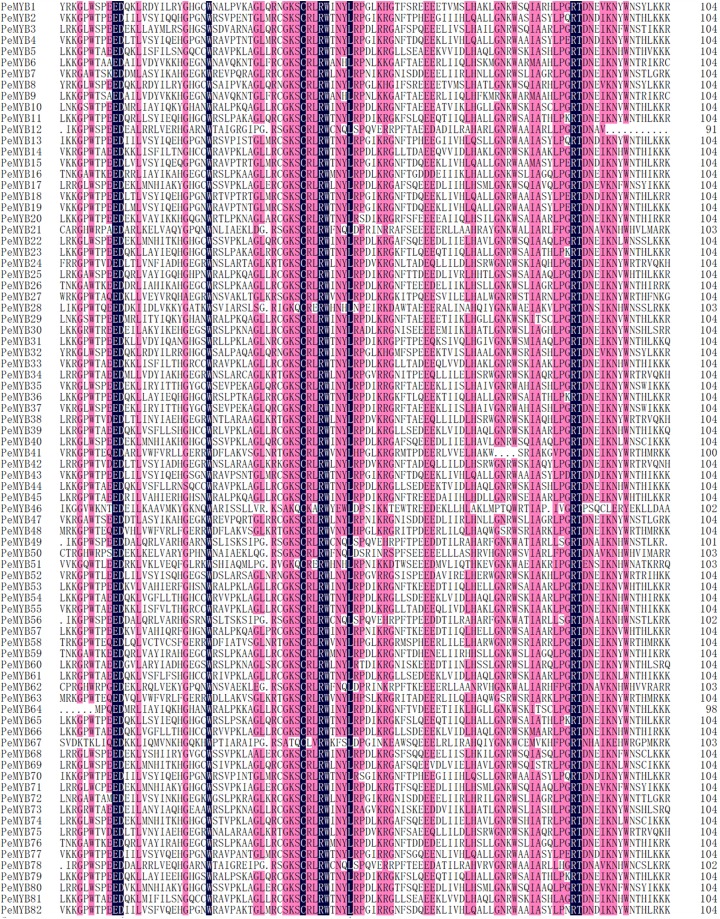
Figure 1
Figure 1. Multiple alignment of the amino acid sequences of 82 moso bamboo R2R3-MYB domains.
Figure 2
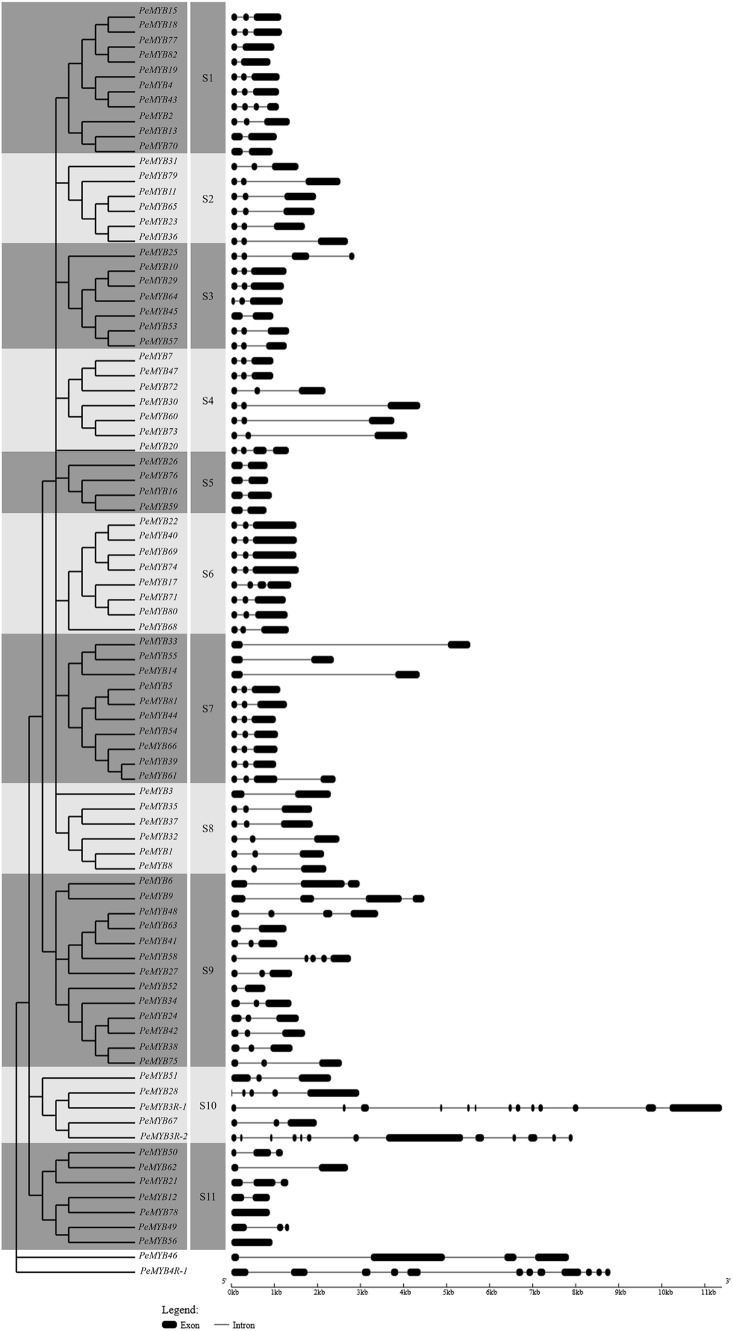
Figure 2. Phylogenetic relationships and gene structures of MYB genes in moso bamboo.
The amino acid sequences of 85 PeMYBs were aligned by the Clustal W program in MEGA, and the phylogenetic tree was constructed by the NJ method with 1,000 bootstrap replicates. Bootstrap values >50 were indicated on the nodes. Different subgroups were marked with alternating tones of a gray background to make subgroups identification easier. Exon/intron structures of the PeMYBs: black boxes represented exons and spaces between the black boxes correspond to introns.
Figure 3
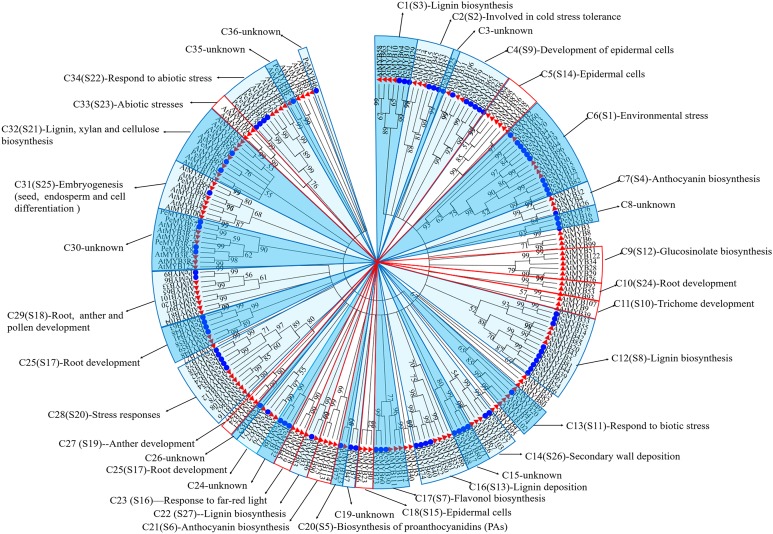
Figure 3. Putative functions of the MYB proteins in moso bamboo based on the phylogenetic tree along with MYBs from Arabidopsis.
The circular unrooted tree was generated by NJ method with 1,000 bootstrap replicates. Different subclades were marked with alternating tones of a blue background. The red boxes indicated that species-specific subclades of Arabidopsis.
Figure 4
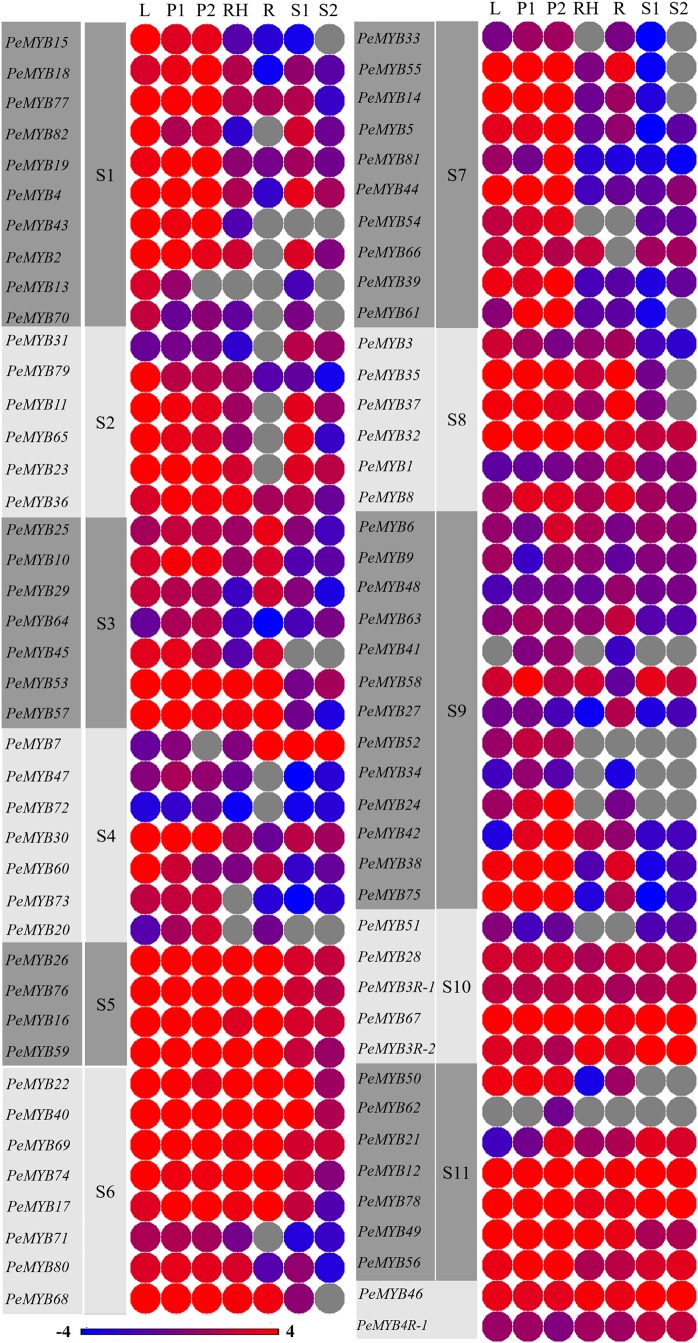
Figure 4. Expression profiles of PeMYBs in different tissues and development stages.
Heatmap showing the expression of 85 PeMYBs in different tissues analyzed. Color scale at the bottom of the picture represents log2 expression values: blue indicating low level and red indicating high level of transcript abundance. L, leaves; P1, early panicles; P2, advanced panicles; R, roots; Rh, rhizomes; SH1, 0.2 m shoots; SH2, 0.5 m shoots.
Figure 5
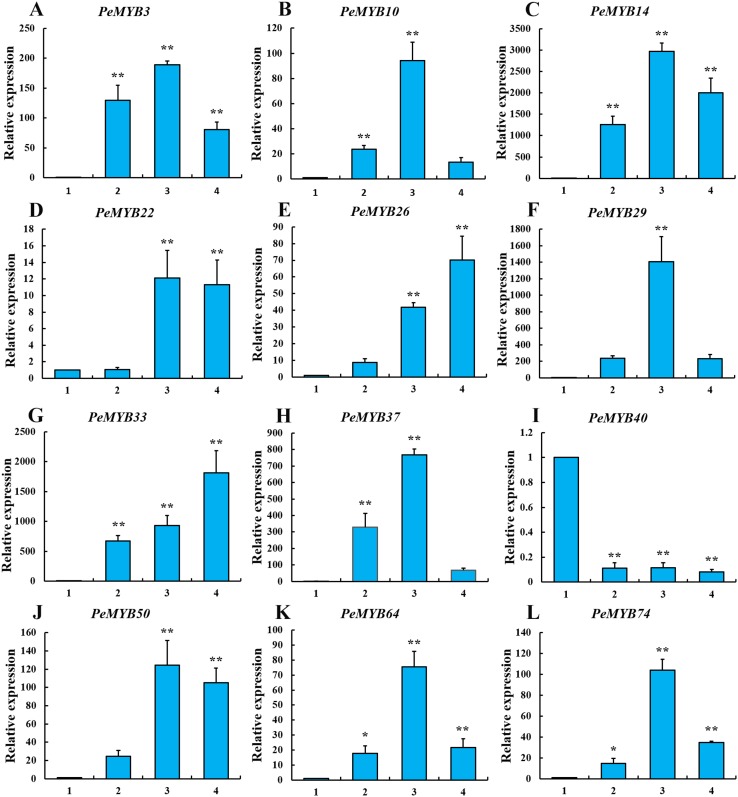
Figure 5. Expression analysis of 12 PeMYBs using qRT-PCR.
PeTIP41 was used as the reference gene. Average and error bars represent standard deviation of three biological replicates. Asterisks indicate a significant difference between the higher shoots and the 0.2 m shoots (*p < 0.05, **p < 0.01). (A) PeMYB3, (B) PeMYB10, (C) PeMYB14, (D) PeMYB22, (E) PeMYB26, (F) PeMYB29, (G) PeMYB33, (H) PeMYB37, (I) PeMYB40, (J) PeMYB50, (K) PeMYB64 and (L) PeMYB74. 1: 0.2 m shoots; 2: 1.0 m shoots; 3: 3.0 m shoots; 4: 6.7 m shoots.

References

    1. Ashrafi-Dehkordi E, Alemzadeh A, Tanaka N, Razi H. Meta-analysis of transcriptomic responses to biotic and abiotic stress in tomato. PeerJ. 2018;6:e4631. doi: 10.7717/peerj.4631. - DOI - PMC - PubMed
    1. Baumann K, Perez-Rodriguez M, Bradley D, Venail J, Bailey P, Jin HL, Koes R, Roberts K, Martin C. Control of cell and petal morphogenesis by R2R3 MYB transcription factors. Development. 2007;134(9):1691–1701. doi: 10.1242/dev.02836. - DOI - PubMed
    1. Carroll A, Somerville C. Cellulosic biofuels. Annual Review of Plant Biology. 2009;60(1):165–182. doi: 10.1146/annurev.arplant.043008.092125. - DOI - PubMed
    1. Cassan-Wang H, Goué N, Saidi MN, Legay S, Sivadon P, Goffner D, Grima-Pettenati J. Identification of novel transcription factors regulating secondary cell wall formation in Arabidopsis. Frontiers in Plant Science. 2013;4(4):189. doi: 10.3389/fpls.2013.00189. - DOI - PMC - PubMed
    1. Crooks GE, Hon G, Chandonia JM, Brenner SE. WebLogo: a sequence logo generator. Genome Research. 2004;14(6):1188–1190. doi: 10.1101/gr.849004. - DOI - PMC - PubMed

LinkOut - more resources