


Brainstem spreading depolarization and cortical dynamics during fatal seizures in Cacna1a S218L mice
- PMID: 30649209
- PMCID: PMC6351775
- DOI: 10.1093/brain/awy325
Brainstem spreading depolarization and cortical dynamics during fatal seizures in Cacna1a S218L mice
Abstract
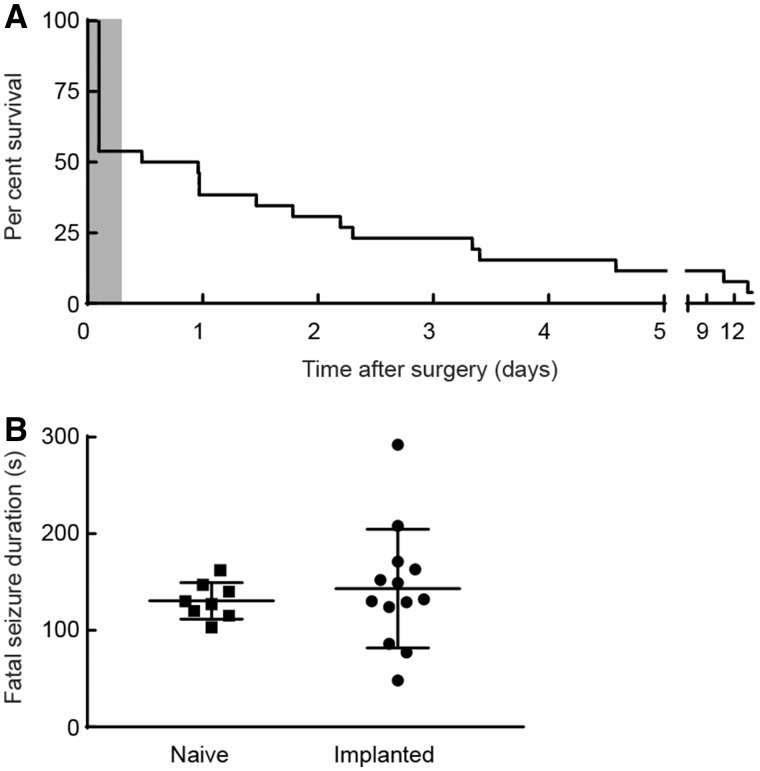
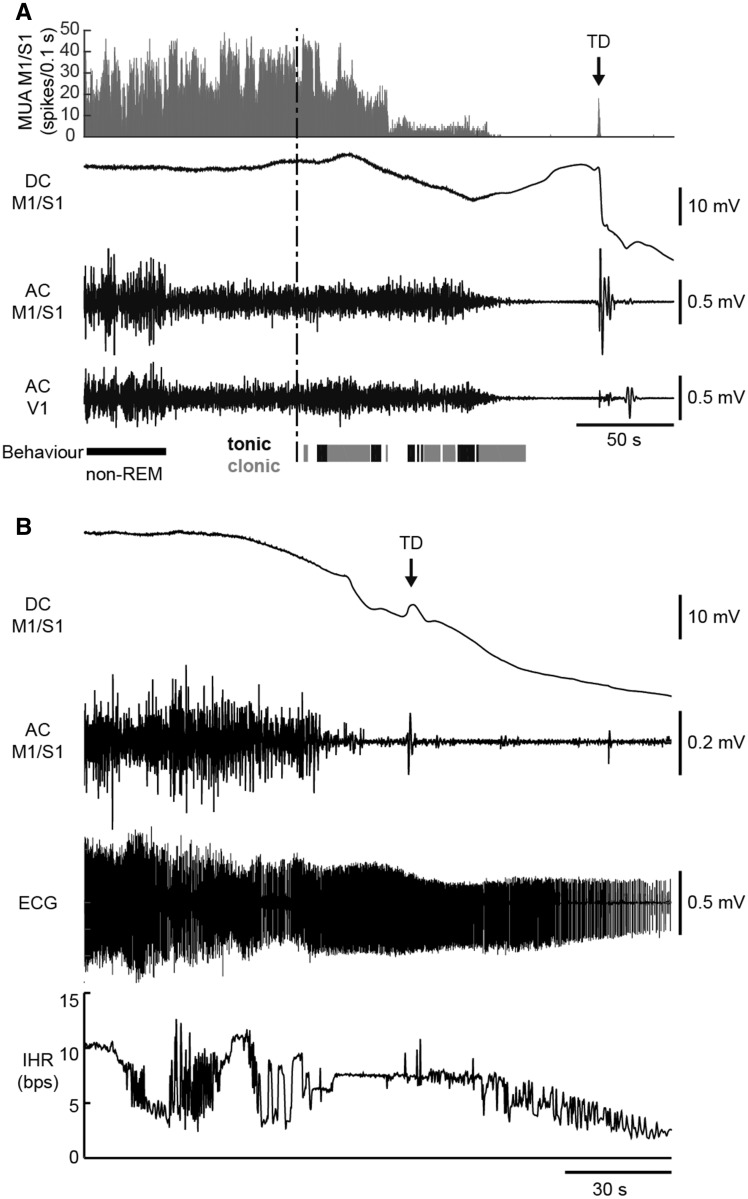
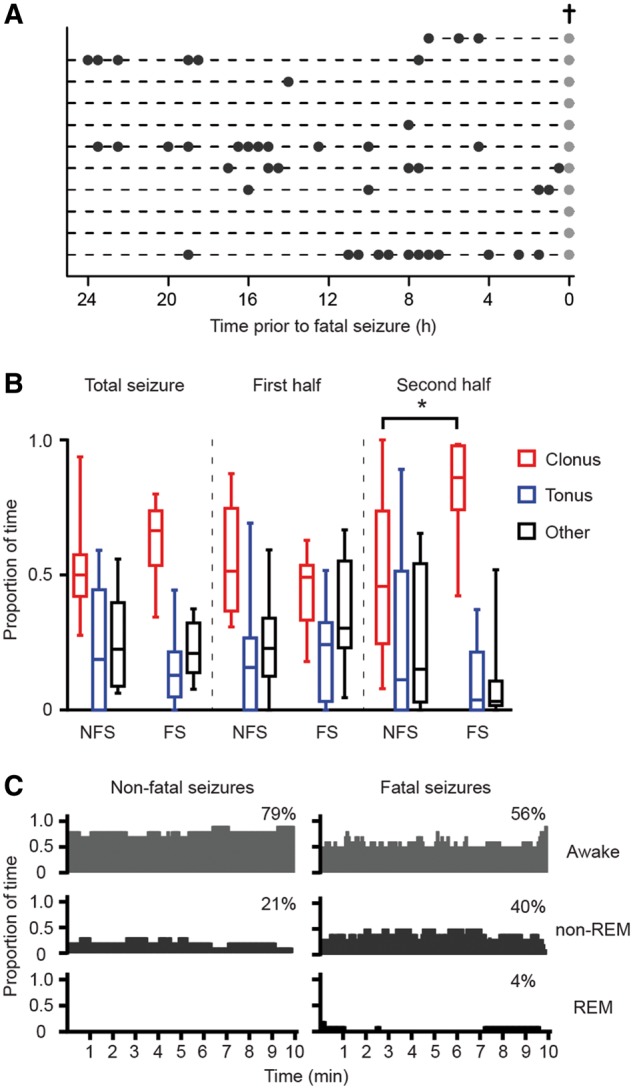
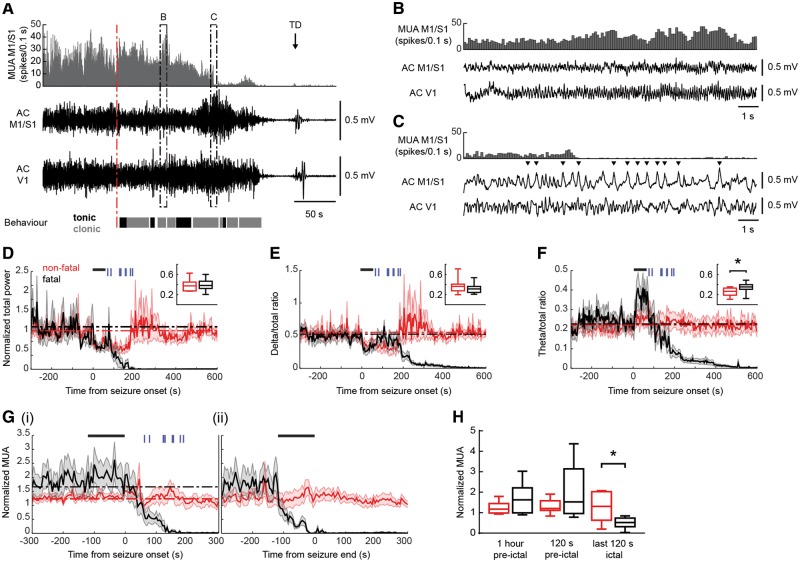
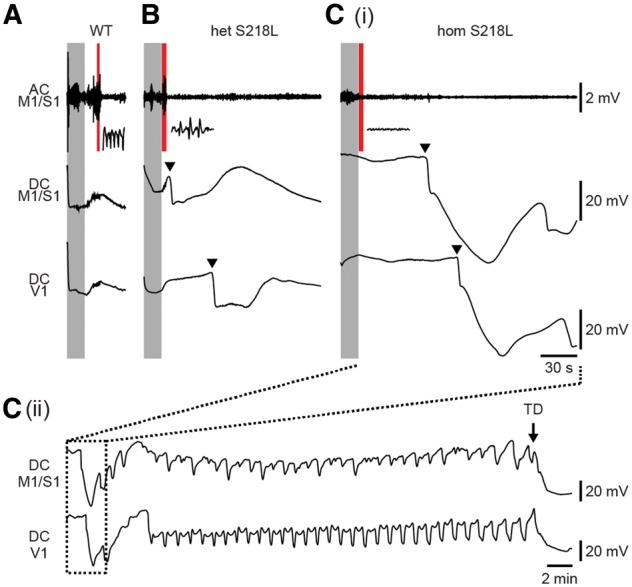
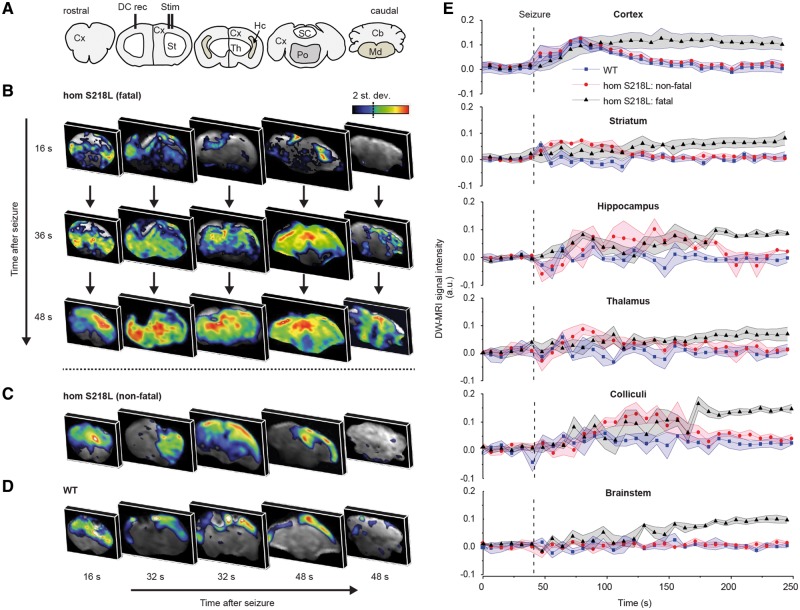
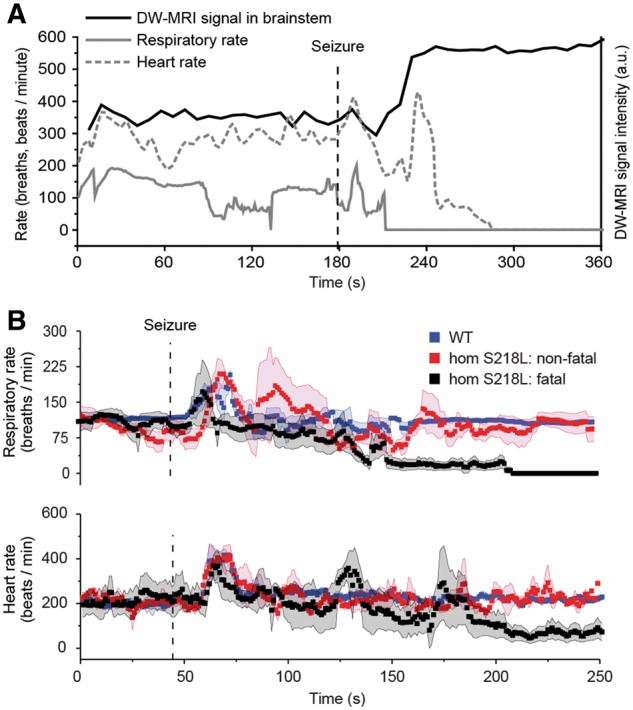
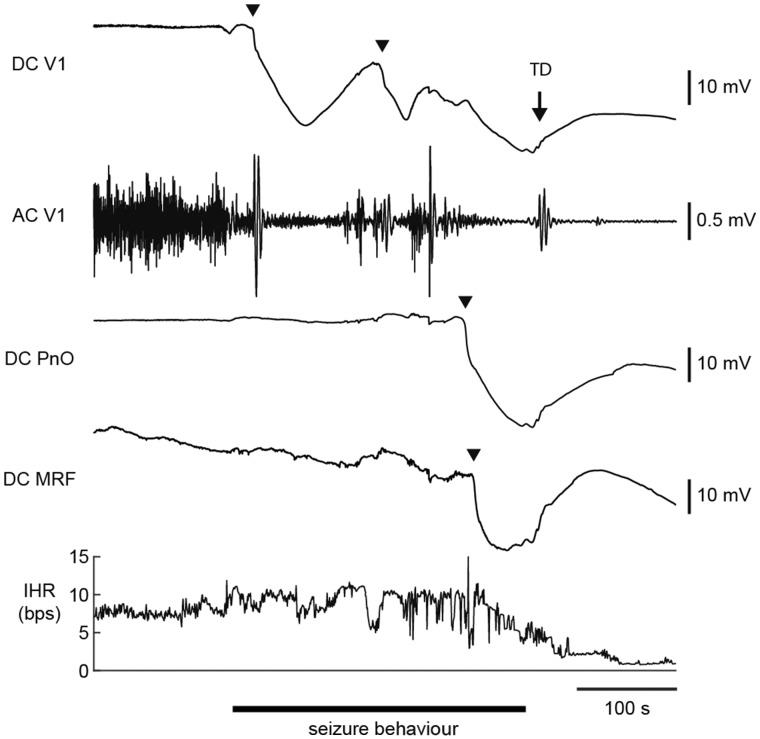
Sudden unexpected death in epilepsy (SUDEP) is a fatal complication of epilepsy in which brainstem spreading depolarization may play a pivotal role, as suggested by animal studies. However, patiotemporal details of spreading depolarization occurring in relation to fatal seizures have not been investigated. In addition, little is known about behavioural and neurophysiological features that may discriminate spontaneous fatal from non-fatal seizures. Transgenic mice carrying the missense mutation S218L in the α1A subunit of Cav2.1 (P/Q-type) Ca2+ channels exhibit enhanced excitatory neurotransmission and increased susceptibility to spreading depolarization. Homozygous Cacna1aS218L mice show spontaneous non-fatal and fatal seizures, occurring throughout life, resulting in reduced life expectancy. To identify characteristics of fatal and non-fatal spontaneous seizures, we compared behavioural and electrophysiological seizure dynamics in freely-behaving homozygous Cacna1aS218L mice. To gain insight on the role of brainstem spreading depolarization in SUDEP, we studied the spatiotemporal distribution of spreading depolarization in the context of seizure-related death. Spontaneous and electrically-induced seizures were investigated by video monitoring and electrophysiological recordings in freely-behaving Cacna1aS218L and wild-type mice. Homozygous Cacna1aS218L mice showed multiple spontaneous tonic-clonic seizures and died from SUDEP in adulthood. Death was preceded by a tonic-clonic seizure terminating with hindlimb clonus, with suppression of cortical neuronal activity during and after the seizure. Induced seizures in freely-behaving homozygous Cacna1aS218L mice were followed by multiple spreading depolarizations and death. In wild-type or heterozygous Cacna1aS218L mice, induced seizures and spreading depolarization were never followed by death. To identify temporal and regional features of seizure-induced spreading depolarization related to fatal outcome, diffusion-weighted MRI was performed in anaesthetized homozygous Cacna1aS218L and wild-type mice. In homozygous Cacna1aS218L mice, appearance of seizure-related spreading depolarization in the brainstem correlated with respiratory arrest that was followed by cardiac arrest and death. Recordings in freely-behaving homozygous Cacna1aS218L mice confirmed brainstem spreading depolarization during spontaneous fatal seizures. These data underscore the value of the homozygous Cacna1aS218L mouse model for identifying discriminative features of fatal compared to non-fatal seizures, and support a key role for cortical neuronal suppression and brainstem spreading depolarization in SUDEP pathophysiology.
Figures
Comment in
-
Brainstem spreading depolarization: rapid descent into the shadow of SUDEP.Brain. 2019 Feb 1;142(2):231-233. doi: 10.1093/brain/awy356. Brain. 2019. PMID: 30698758 Free PMC article.
References
-
- Alexandre V, Mercedes B, Valton L, Maillard L, Bartolomei F, Szurhaj W et al. Risk factors of postictal generalized EEG suppression in generalized convulsive seizures. Neurology 2015; 85(18): 1598–603. - PubMed
-
- Bagnall RD, Crompton DE, Petrovski S, Lam L, Cutmore C, Garry SI et al. Exome-based analysis of cardiac arrhythmia, respiratory control, and epilepsy genes in sudden unexpected death in epilepsy. Ann Neurol 2016; 79(4): 522–34. - PubMed
Publication types
MeSH terms
Substances
Grants and funding
LinkOut - more resources
Full Text Sources
Other Literature Sources
Medical
Molecular Biology Databases
Miscellaneous
