


GRASP depletion-mediated Golgi destruction decreases cell adhesion and migration via the reduction of α5β1 integrin
- PMID: 30649990
- PMCID: PMC6589770
- DOI: 10.1091/mbc.E18-07-0462
GRASP depletion-mediated Golgi destruction decreases cell adhesion and migration via the reduction of α5β1 integrin
Abstract
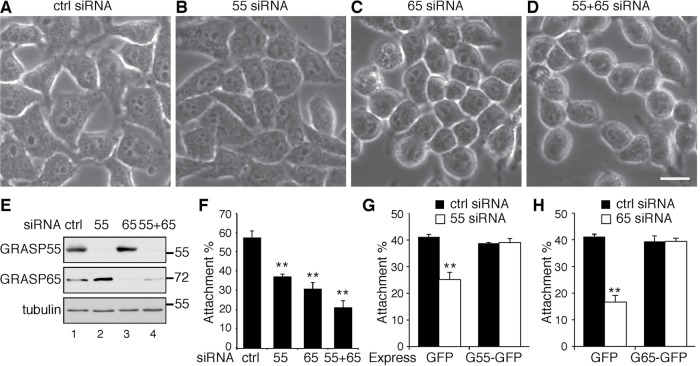
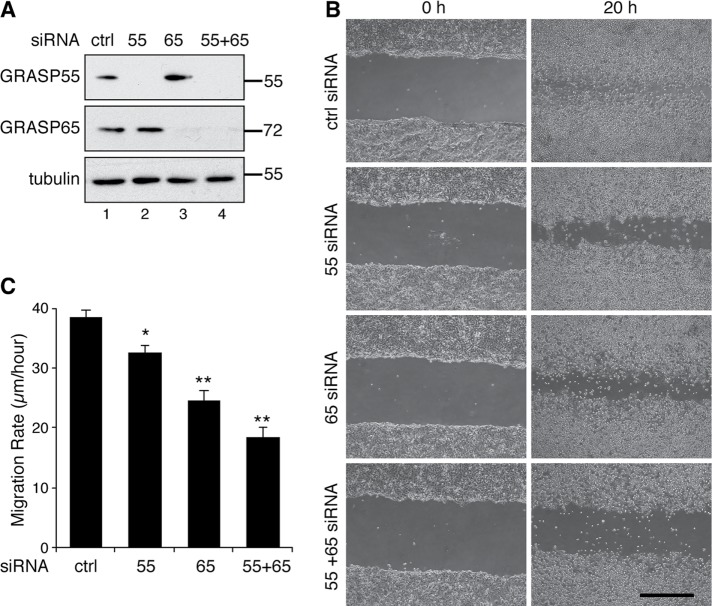
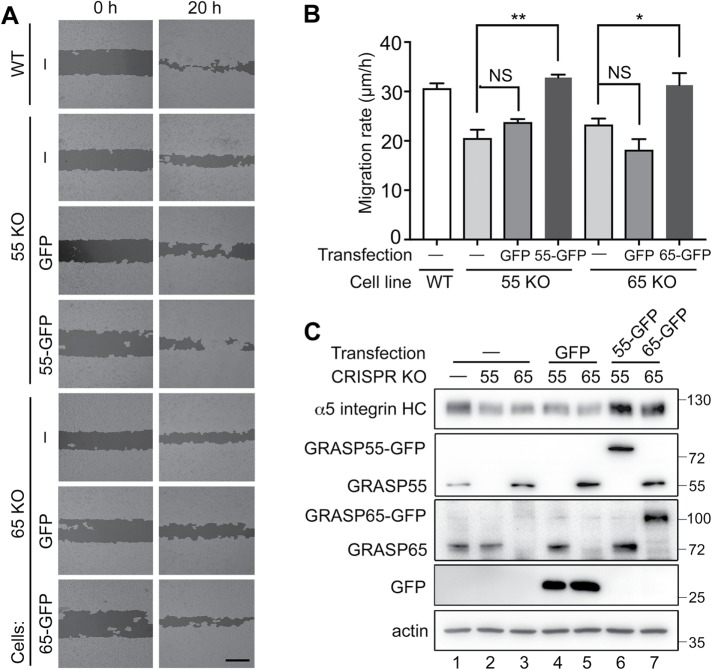
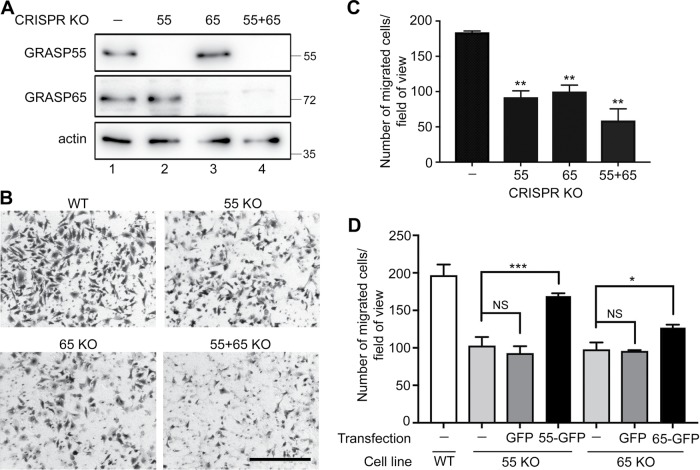
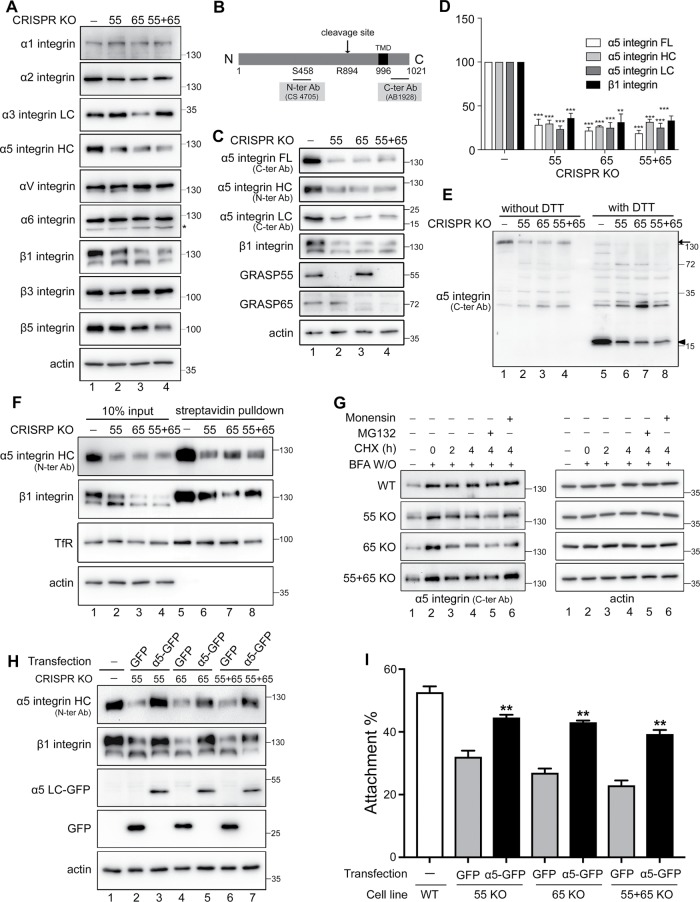
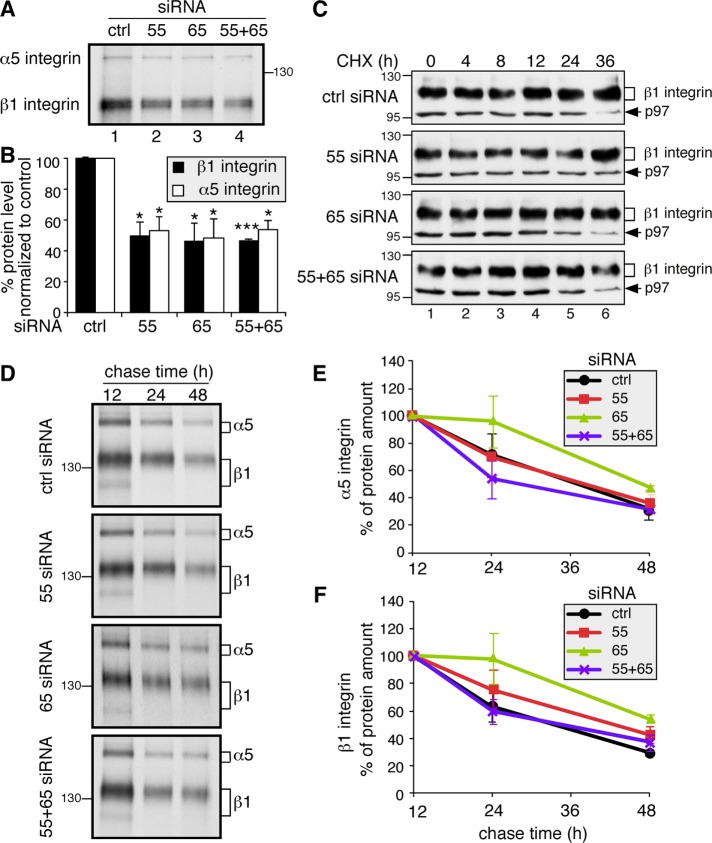
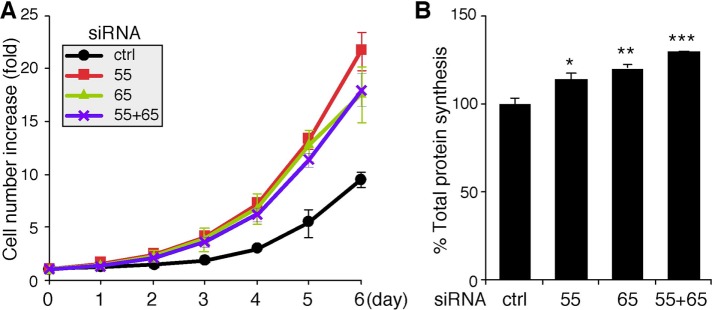
The Golgi apparatus is a membrane-bound organelle that serves as the center for trafficking and processing of proteins and lipids. To perform these functions, the Golgi forms a multilayer stacked structure held by GRASP55 and GRASP65 trans-oligomers and perhaps their binding partners. Depletion of GRASP proteins disrupts Golgi stack formation and impairs critical functions of the Golgi, such as accurate protein glycosylation and sorting. However, how Golgi destruction affects other cellular activities is so far unknown. Here, we report that depletion of GRASP proteins reduces cell attachment and migration. Interestingly, GRASP depletion reduces the protein level of α5β1 integrin, the major cell adhesion molecule at the surface of HeLa and MDA-MB-231 cells, due to decreased integrin protein synthesis. GRASP depletion also increases cell growth and total protein synthesis. These new findings enrich our understanding on the role of the Golgi in cell physiology and provide a potential target for treating protein-trafficking disorders.
Figures
References
-
- Aridor M, Balch WE. (1999). Integration of endoplasmic reticulum signaling in health and disease. Nat Med , 745–751. - PubMed
-
- Barr FA, Puype M, Vandekerckhove J, Warren G. (1997). GRASP65, a protein involved in the stacking of Golgi cisternae. Cell , 253–262. - PubMed
-
- Bizzaro N, Pasini P, Ghirardello A, Finco B. (1999). High anti-Golgi autoantibody levels: an early sign of autoimmune disease? Clin Rheumatol , 346–348. - PubMed
Publication types
MeSH terms
Substances
Grants and funding
LinkOut - more resources
Full Text Sources
Miscellaneous
